A door is one of the few finishes that is handled, seen, and heard every day. It frames the first impression at the front of the home, separates busy living zones from quiet rooms, and can make a renovation feel carefully resolved rather than simply updated. The strongest 2026 door trends are not about chasing a short-lived look. They favor character, proportion, material quality, and details that continue to perform well after the paint has dried.
For homeowners planning a new build, renovation, or targeted room upgrade, the opportunity is to choose doors that suit the architecture of the home and the way it is lived in. Here is where door design is heading, and how to make those ideas work in a real property.
2026 Door Trends Favor Warmth and Definition
For several years, bright white interiors and minimal flat surfaces have dominated many homes. In 2026, interiors are becoming warmer and more layered. Doors are playing a larger role in that shift, with subtle texture, thoughtful profiles, and natural-looking finishes creating definition without visual clutter.
This does not mean every room needs a dramatic feature door. A consistent internal door style, paired with well-proportioned architraves and skirting, can bring a sense of order to a home. Where a statement is wanted, it is being used deliberately: at an entrance, between living and dining spaces, or along a wall of storage.
The result is a more considered finish. Doors are no longer treated as a final building item to select at the end of a project. They are part of the design language from the beginning.
Statement Entry Doors With Lasting Presence
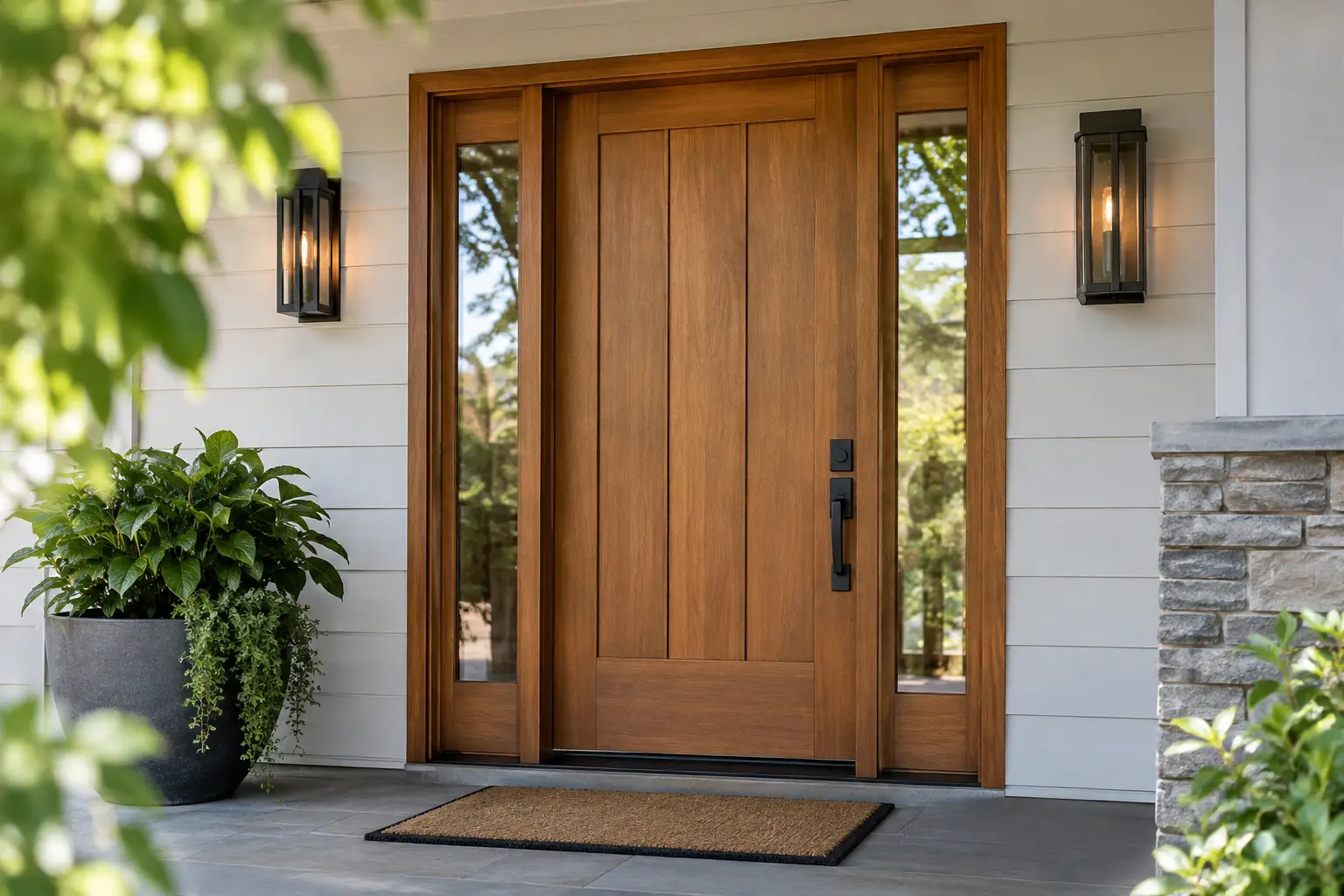
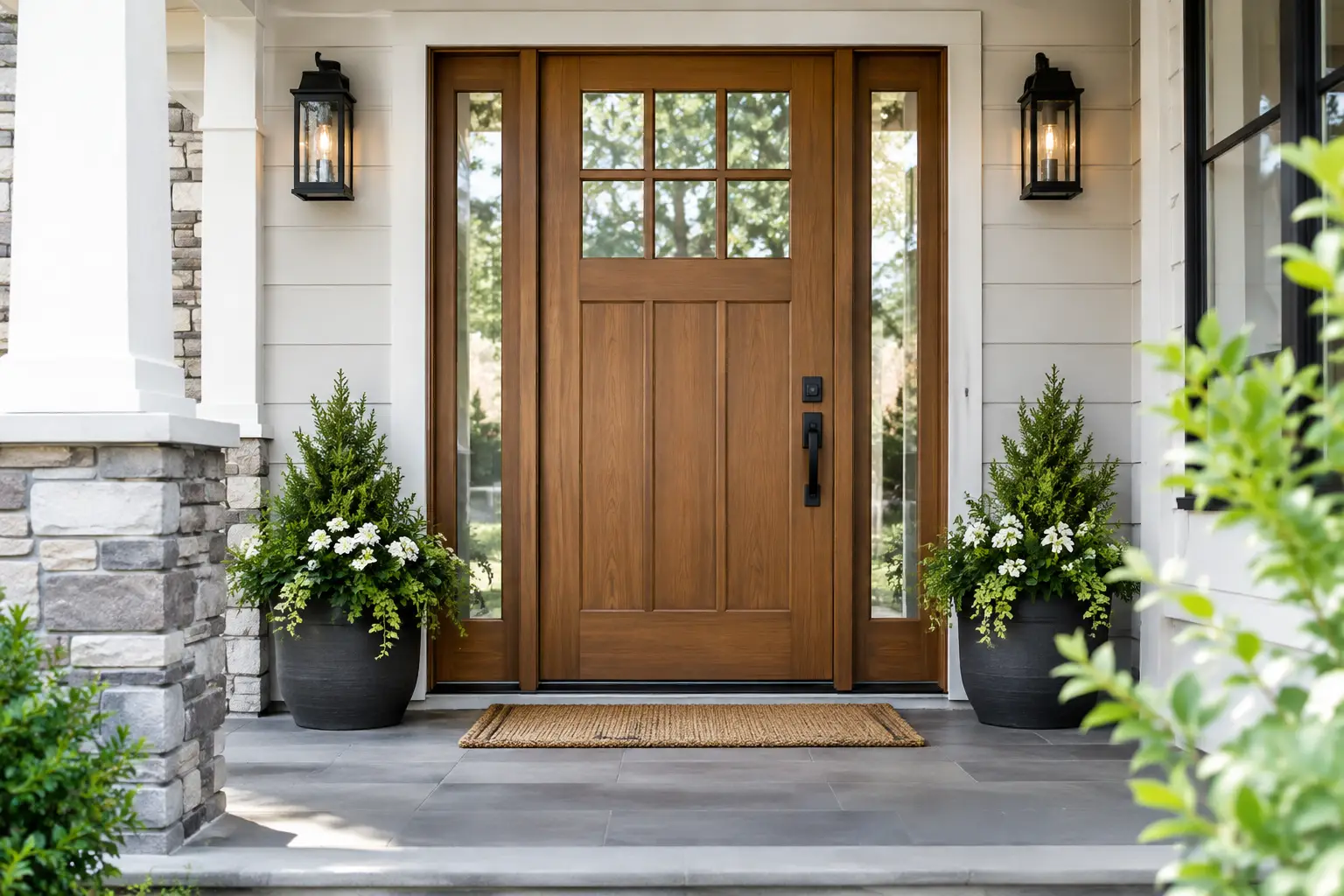
Front doors are becoming more substantial in scale and appearance. Homeowners are looking beyond a standard painted panel and choosing entry doors with richer timber grain, broader stiles, vertical grooves, glazed inserts, or sidelights that bring natural light into the hallway.
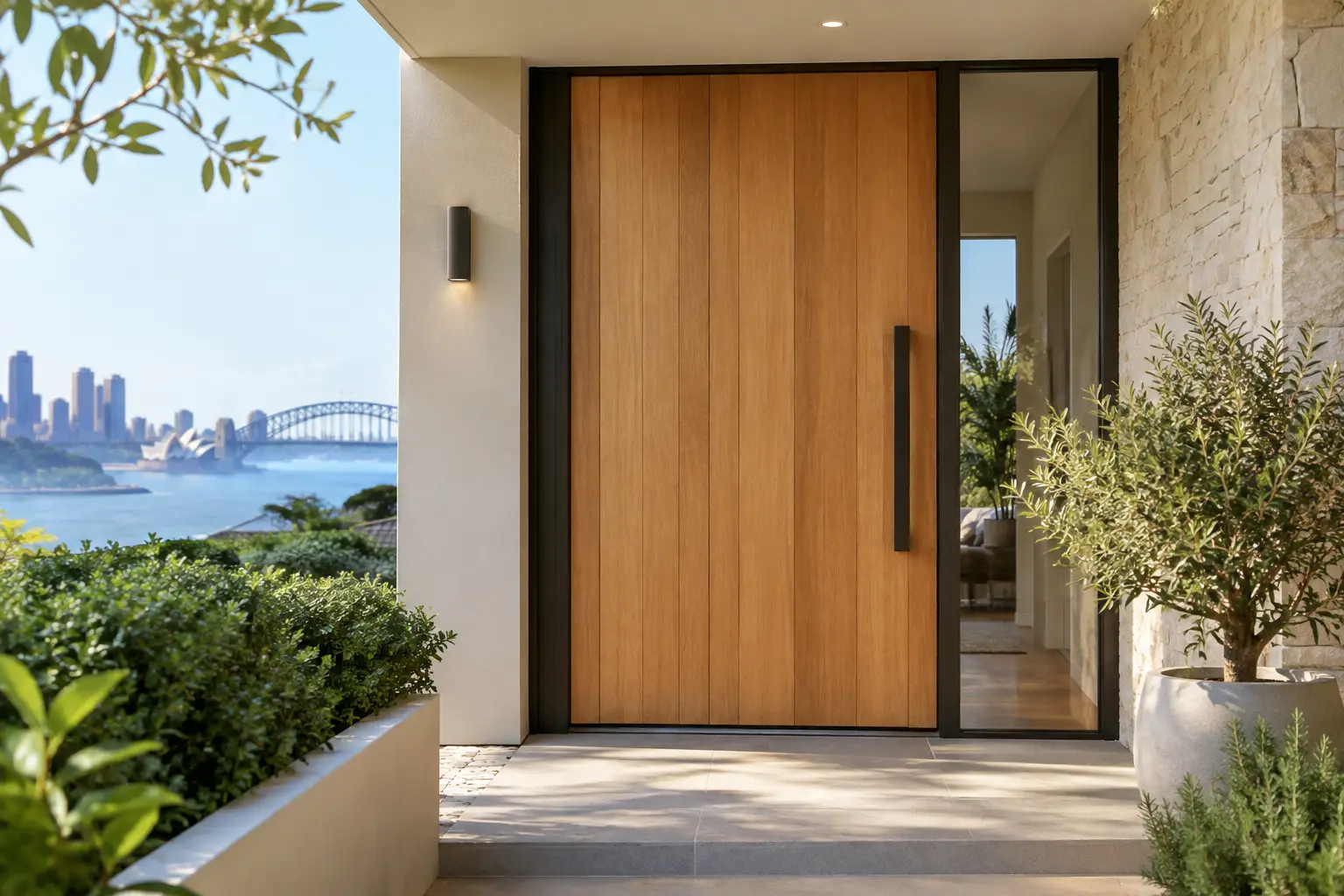
A pivot-style appearance and oversized proportions can be striking, but scale needs to match the facade. A very large door can overwhelm a modest brick home or create practical issues if the opening, frame, and hardware are not designed to support it. Often, a beautifully proportioned hinged entrance door with a side panel delivers the same sense of arrival while offering familiar operation and dependable weather sealing.
Dark charcoal, soft black, deep green, and warm stained timber remain strong choices for exterior doors. At the same time, lighter timber tones are gaining attention for homes with contemporary, coastal, or organic finishes. The right color depends on the surrounding brick, cladding, roofing, and window frames. A quality entry door should complement those fixed elements rather than compete with them.
Security remains central to the trend. A statement door still needs a stable frame, appropriate locks, reliable hinges, and professional installation. Appearance and performance should be specified together.
Glass That Brings Light Without Losing Privacy
Glazing at the entry is being used with more restraint and purpose. Narrow vertical glass panels, reeded glass, frosted sections, and sidelights can brighten a dark entry while preserving privacy. This is particularly valuable in homes where the front door opens directly to a hallway or living area.
Clear glass works well when there is a landscaped setback or a private front garden. In a closer suburban setting, textured or obscured glass is often the more practical choice. It gives the entry a lighter feel without placing the interior on display.
Shaker Doors Remain a Reliable Interior Choice
Shaker doors continue to earn their place because their simple recessed panels work across many styles. They have enough profile to add interest, yet they do not feel overly decorative. In 2026, the preference is moving toward clean, well-balanced panel layouts rather than ornate molding.
Single-panel shaker doors suit modern and transitional homes, while two- and four-panel versions can bring a more traditional rhythm to bedrooms, studies, and hallways. Taller doors are also becoming more popular where ceiling height allows. Increasing the door height can make an ordinary corridor feel more generous, but it requires accurate planning for jambs, frames, wall structure, and adjoining finishes.
Painted shaker doors in warm white, mushroom, taupe, muted green, and earthy gray are appearing more often than stark, cool white. These tones work especially well when matched with timber flooring, brushed metal hardware, or stone-look surfaces. For a quieter finish, many homeowners keep the door and architrave in the same color so the profile, rather than contrast, creates the detail.
Natural Timber and Timber-Look Finishes Add Depth
Natural materials are influencing 2026 door design, particularly in living spaces that need warmth. Timber entrance doors, timber veneer internal doors, and carefully selected timber-look finishes can add depth that paint alone cannot achieve.
The best choice depends on location and maintenance expectations. Solid timber can offer exceptional character, but exterior timber needs appropriate finishing and ongoing care to withstand sun, moisture, and seasonal movement. A well-made engineered or veneer option may provide a more stable, practical result in some applications while retaining the visual warmth homeowners want.
For internal doors, timber-look finishes are especially effective in open-plan homes with pale walls and hard flooring. They help break up large expanses of neutral color. Consistency matters: choose a tone that works with the flooring rather than attempting an exact match. A near-match can look accidental, while a purposeful contrast often looks more refined.
Black Hardware Is Becoming More Selective
Matte black hardware is still popular, but 2026 brings a more balanced approach. Instead of black handles appearing on every door, homeowners are mixing finishes to suit each area. Satin nickel, brushed brass, bronze, and gunmetal offer softer alternatives that can better complement warm timber, earthy paint colors, and natural stone.
Hardware should feel right in the hand and be suitable for the door’s weight and use. A lightweight lever may not suit a heavy entry door, while privacy hardware for bedrooms and bathrooms needs dependable operation before decorative appeal. Matching door stops, hinges, locks, and handles creates a more polished result than selecting the handle in isolation.
Flexible Openings for Connected Living
Homes are being designed to work harder. A study may become a guest room, a dining room may need to close off for focused work, and outdoor entertaining areas need better connection to the interior. This is driving interest in doors that divide spaces without permanently closing them in.
French doors remain a strong option for studies, dining rooms, and living areas because their glazed panels share light between rooms. They can feel more formal than a single hinged door, so they suit homes with generous openings and an architectural style that supports their presence.
Barn doors continue to appeal where wall space is available and a visible sliding track suits the room. They offer character and save swing space, but they are not the best choice where acoustic privacy is essential. Because they sit in front of the opening rather than sealing into a frame like a hinged door, they can allow more sound, light, and air to pass through.
Bi-fold doors remain valuable for wider openings, especially where indoor and outdoor areas meet. Their success depends on quality hardware, accurate alignment, and consideration of the stacking area. A door system that looks excellent in a showroom can become frustrating if the opening is not prepared precisely.
Integrated Trim Makes the Difference
One of the most influential 2026 door trends is not the door leaf itself. It is the surrounding finish. Door jambs, architraves, and skirting are being selected as part of one coordinated package, creating cleaner lines and a stronger sense of craftsmanship.
Wider, square-edge architraves suit contemporary homes, while stepped or more detailed profiles can support heritage-inspired interiors. Flush or minimal trim looks can be striking, but they demand highly accurate walls and installation. In many homes, a restrained architrave provides a more forgiving and equally elegant transition between the door frame and plaster.
This is where professional fitting has real value. Even a premium door can look ordinary when gaps are uneven, the reveal is poorly aligned, or the hardware sits incorrectly. Precise installation protects both appearance and day-to-day operation.
Choose Trends That Suit Your Home
The most successful door choices are not copied directly from a display home or social media image. They respond to the home’s architecture, the amount of natural light, the required privacy, and the level of maintenance the household is prepared to manage. A dramatic timber pivot-style entry may suit one property, while a painted shaker entrance with glazed sidelights is the better investment for another.
For homeowners across Sydney’s western suburbs, heat, sun exposure, and everyday family use should be considered alongside style. The right door should open smoothly, close securely, tolerate its environment, and continue to look considered through years of use.
When planning your next update, begin with the spaces you move through most. A well-chosen entrance door, a pair of French doors, or a coordinated set of internal doors can change how a home feels without changing its footprint. The best result is one that looks intentional from the first glance and feels dependable every time you reach for the handle.