A rear opening can change how a home feels every day. It affects the view from the kitchen, the way fresh air moves through the room, and how easily people step outside for a barbecue or gather around the dining table. When comparing French doors versus bifolds, the best choice is rarely about which option is more fashionable. It is about the size of the opening, how you use the space, and the finish you want to live with for years.
French doors offer a classic, balanced look with a practical everyday opening. Bifolds create a broader connection between indoors and outdoors, especially where a large entertaining area is the priority. Both can be exceptional additions when they are correctly specified and professionally fitted.
French Doors Versus Bifolds at a Glance
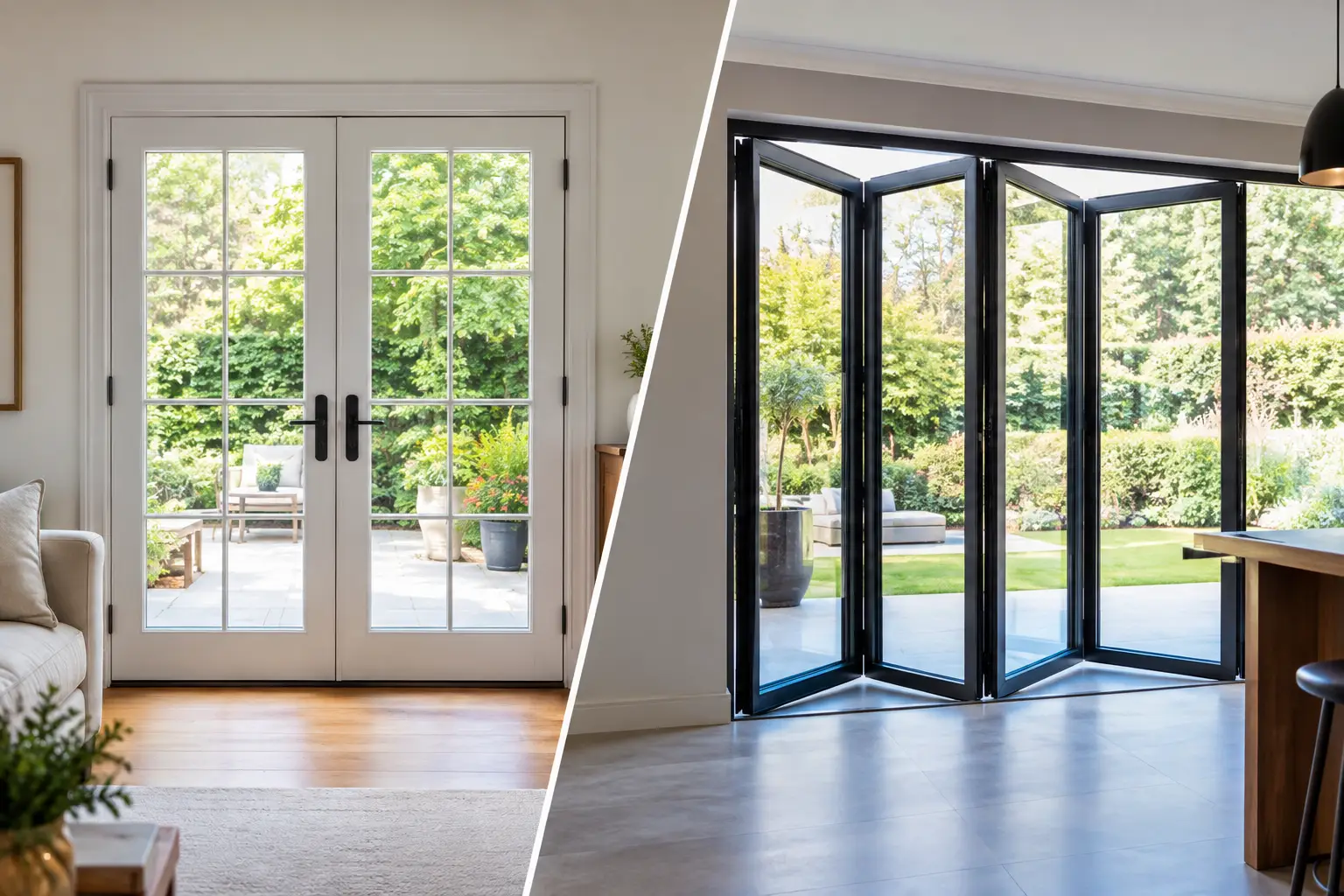
French doors are a pair of hinged doors that meet in the center. One door is typically used as the main daily entry, while opening both doors creates a generous, welcoming passage. Their divided-glass appearance works beautifully in traditional homes, Hamptons-inspired interiors, heritage updates, and modern spaces that need some architectural character.
Bifold doors are made up of multiple panels that fold and slide along a track, stacking to one or both sides of the opening. They are designed to open up wider spans than standard hinged doors. This makes them a strong choice for homes where the living room, kitchen, or dining room leads directly to a patio, deck, courtyard, or pool area.
The practical difference is simple: French doors prioritize timeless form and a straightforward entry, while bifolds prioritize opening width and indoor-outdoor flow. Neither is automatically better. The right answer depends on the opening and the lifestyle it needs to support.
Consider the Opening Before the Look
A pair of French doors suits many standard-width openings and can make a compact room feel lighter without overwhelming the wall. Because the doors swing on hinges, they need clear floor space on one or both sides. This is easy to accommodate in some layouts, but it can be inconvenient where furniture, a narrow deck, or a busy walkway sits close to the doorway.
Bifolds are generally better suited to wider openings. When open, the panels stack to the side, allowing a much larger portion of the wall to disappear. That can make a meaningful difference in a home designed for entertaining. A kitchen island may remain the social center, but the open doorway lets guests move freely between the kitchen, dining area, and outdoor setting.
There is a trade-off. Stacked bifold panels still occupy space at the side of the opening, and the track system requires careful planning. The structure above the opening must also be properly assessed, particularly when enlarging an existing wall opening. A larger door system is not just a joinery decision. It can involve glazing requirements, weatherproofing, drainage, framing, and finish details that need to work together.
Think About Daily Use, Not Just Open-Day Use
It is easy to picture bifolds fully folded back on a sunny Saturday afternoon. Consider how the doors will work on a normal weekday, too. If the household mainly uses one leaf for quick access to the yard, French doors can feel intuitive and efficient. A quality latch and well-fitted hardware make them simple to use without opening the full pair.
Bifolds can also be used partially open, but they have more panels, hinges, and moving components. They are ideal when their opening capacity will be used regularly, rather than simply admired on occasion. For a family that hosts often or has a generous alfresco area, that wider opening can be worth the additional investment.
Light, Views, and Ventilation
Both door types can bring welcome natural light into a room. The amount of glass, the frame color, and the orientation of the home will influence the result more than the name of the door alone.
French doors frame the view with a central meeting point and, depending on the design, glazing bars. This creates a composed, architectural look. It can be particularly effective when the garden itself is part of the view, such as a landscaped courtyard or a symmetrical entertaining area. For rooms where privacy matters, glass selection can be adjusted to soften visibility while retaining light.
Bifolds usually provide a more expansive glass wall when closed. With fewer visual interruptions across a broad opening, they can make an outdoor area feel visually closer to the interior. When open, they provide excellent cross-ventilation, particularly when paired with windows or another opening on the opposite side of the room.
For west-facing rooms, however, more glass can also mean stronger afternoon sun and heat gain. Consider shading, eaves, blinds, glazing performance, and the placement of outdoor living areas as part of the decision. The most attractive door arrangement should also be comfortable through the hotter months.
Style and Architectural Fit
French doors have enduring appeal because they add detail without demanding attention. White or light-painted timber doors can soften a contemporary extension, while darker finishes create contrast and definition. They also work well internally, separating a home office, formal lounge, or dining room while preserving light between spaces.
Bifolds make more of a visual statement through scale. They tend to suit contemporary renovations, open-plan homes, and new builds where wide openings are already part of the architecture. Slimmer frames can create a clean, modern appearance, while timber finishes can bring warmth to a space dominated by stone, tile, or rendered walls.
The surrounding details matter. Door jambs, architraves, flooring transitions, handles, and threshold finishes should be selected as a complete package. A premium door can look underwhelming if the trim is poorly matched or the installation line is untidy. Conversely, carefully chosen timber components and precise fitting can make a practical doorway feel like a considered design feature.
Cost, Maintenance, and Long-Term Performance
French doors are often the more cost-conscious option, particularly in a standard opening. Their construction is comparatively straightforward, and fewer moving parts can mean simpler maintenance over time. They still need quality hinges, reliable seals, appropriate glazing, and accurate installation to prevent sticking, drafts, or water ingress.
Bifolds typically cost more because they involve multiple panels, specialized hardware, tracks, and more complex installation. The final cost varies with opening size, material, glass specification, configuration, and whether structural changes are needed. For the right project, the value lies in the wider opening and the effect it has on the home’s usable entertaining space.
Maintenance should not be overlooked. French door hinges and locking points benefit from periodic checks, while bifold tracks should be kept clean of grit and leaves. Operate either system gently, rather than forcing a door that has become difficult to move. Early adjustment is usually far simpler than allowing a minor alignment issue to affect hardware or seals.
Installation Quality Is Part of the Product
External doors are exposed to weather, movement, and regular use. Even the best-designed system relies on accurate measurements, correct clearances, level tracks, secure fixing, and properly installed seals. This is especially true for bifolds, where panel alignment and track performance directly affect how the system feels in use.
Professional supply and installation also helps ensure the door suits the wall construction and threshold conditions. In renovations across western Sydney, older openings can reveal uneven floors, out-of-square walls, or concealed structural considerations. Addressing those details before installation protects both the appearance and durability of the finished result.
Which Door Is Right for Your Home?
Choose French doors if you want a refined, classic feature, have a moderate-sized opening, or prefer a simple everyday access point with less mechanical complexity. They are an excellent fit for formal rooms, smaller patios, and homes where character is as important as connection.
Choose bifolds if your priority is opening a wide wall to the outdoors, supporting frequent entertaining, or making a living area feel larger and more connected to a deck or courtyard. They demand more planning, but they can deliver a dramatic and highly practical transformation.
The strongest choice starts with measuring the opening, studying the swing or stacking space, and considering how the room is used on an ordinary day. A carefully selected and precisely installed door does more than fill a wall opening. It gives your home a better way to welcome light, air, and people in.