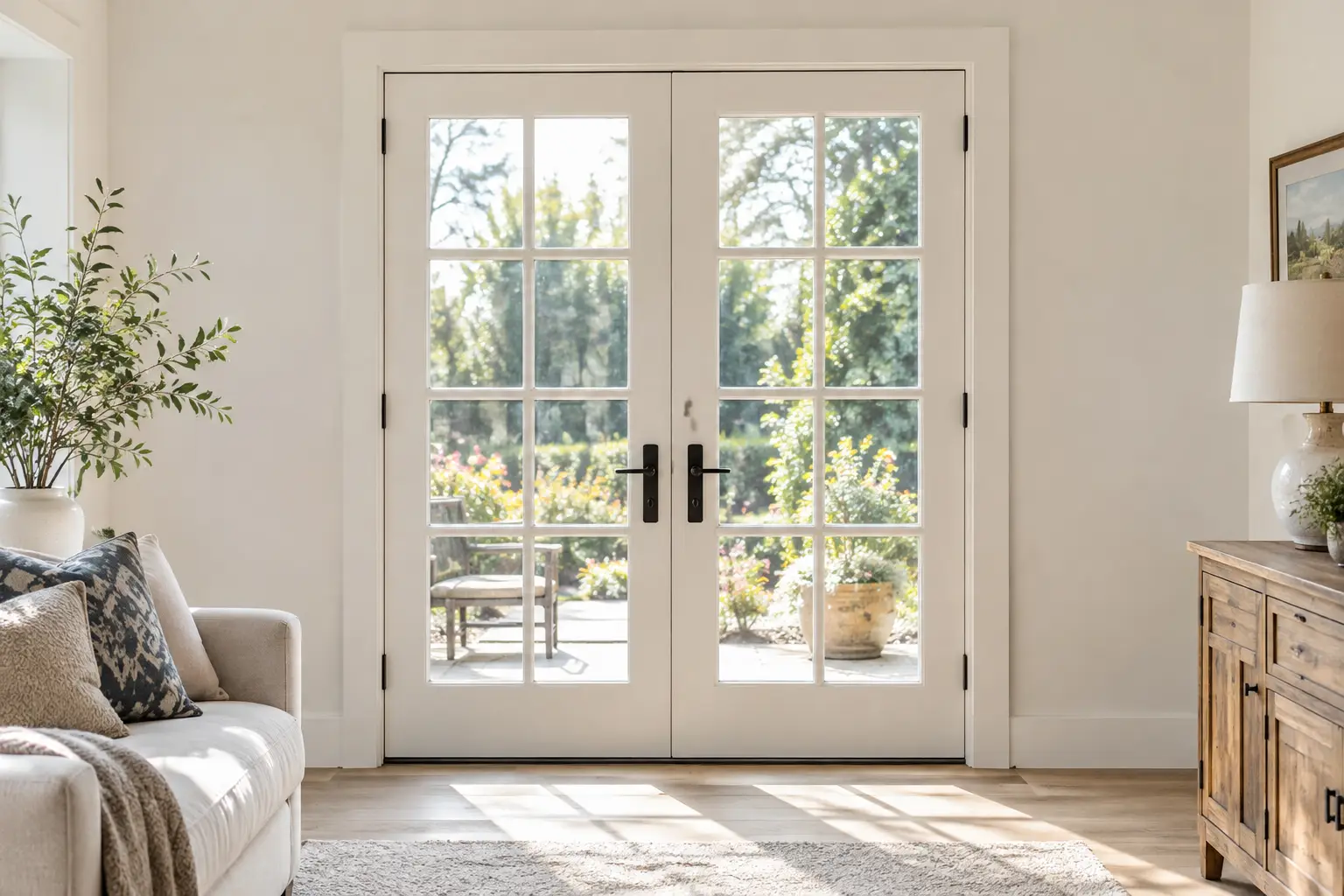
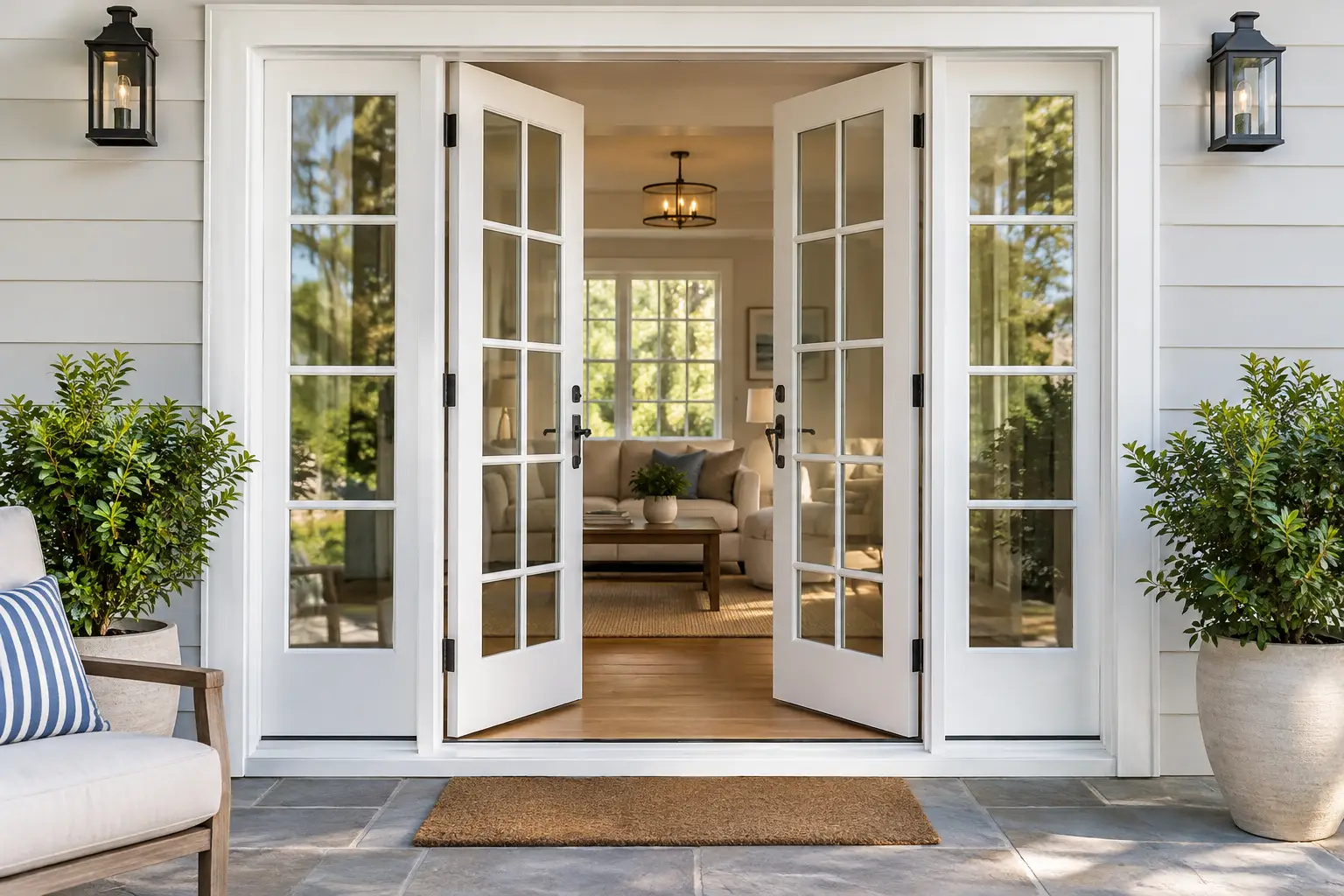
French doors can make a room feel more open before a wall has moved an inch. This guide to choosing French doors focuses on the decisions that shape the finished result: where the doors will sit, how they will open, what they need to withstand, and the details that make them feel properly considered rather than simply fitted.
A well-chosen pair creates a strong connection between rooms, frames a garden or patio, and brings natural light into darker areas of the home. But French doors are not a one-size-fits-all feature. The best choice balances visual impact with security, privacy, clearance, weather protection, and the quality of the opening itself.
Start with the purpose of the doors
The first question is not which style looks best. It is what the doors need to do every day. Internal French doors are often chosen to share light between a living room, dining room, home office, or hallway while preserving the option to close off noise and activity. In this setting, fine profiles and clear or decorative glass may take priority over insulation.
External French doors face a different brief. They need to provide a reliable barrier against weather, offer appropriate security, and stand up to regular use. A pair leading to a deck, courtyard, or garden should feel easy to operate while also sealing correctly when closed. If the doors will receive strong afternoon sun, driving rain, or frequent use by children and pets, material selection and installation quality become especially important.
Also consider whether the doors are primarily a passageway or a visual feature. A wide opening that is used constantly may benefit from a configuration with one active leaf and one fixed or less frequently used leaf. For a formal lounge or a quiet study, symmetrical double doors may be the right design choice even if both leaves are not opened every day.
Choosing French doors for the opening
French doors need room to swing. Before selecting a design, establish the clear space on both sides of the opening, including furniture, walkways, rugs, and nearby cabinetry. An inward-swinging pair can be practical where the exterior space is exposed, while outward-swinging doors can free up room inside. Neither option is automatically better. It depends on how the space is used and where water is likely to collect.
Door handing matters as well. Think about which leaf should be opened most often, where the handle will be easiest to reach, and whether an open door could interrupt a circulation path. This is particularly relevant in compact rooms, narrow hallways, and areas adjoining kitchens.
Accurate measuring is essential. French doors rely on a properly prepared frame, correct clearances, and aligned hardware to close cleanly at the center. In older homes, openings may not be perfectly square or level. That does not rule out French doors, but it does make professional assessment valuable before ordering. A door that looks exceptional in a showroom can only perform as intended when its jamb, threshold, and surrounding structure are prepared with the same care.
Think beyond the door slab
The frame, jamb, sidelights, architraves, and threshold are part of the overall design. A deep-profile architrave can give internal French doors a more substantial, traditional presence. A clean, minimal trim profile can suit a contemporary renovation. For exterior doors, the threshold should be selected for the conditions of the opening, helping manage water while maintaining an easy step through the doorway.
When French doors replace an existing opening, check whether floor finishes will need to be repaired or extended. This small detail is often overlooked until installation day, particularly where a new threshold sits differently from the previous door system.
Select a style that belongs in the home
French doors are defined by divided glass panels, but there is considerable flexibility within that familiar form. Traditional designs tend to use multiple smaller lites, giving the doors a classic, detailed appearance that works well in period homes, Hamptons-inspired interiors, and refined family spaces. Fewer, larger glass panels create a cleaner look for contemporary homes and can maximize the view beyond the door.
The right grid pattern should relate to the property rather than compete with it. A highly decorative door can feel out of place in a simple modern extension, while an overly minimal design may look flat beside detailed trim, shaker cabinetry, or heritage features. Matching the proportions of nearby windows is often a reliable way to create visual consistency.
Color and finish deserve the same attention. White French doors remain popular because they reflect light and work with most interior palettes. Darker finishes can create contrast and turn the opening into a focal point, particularly against light walls. Timber finishes offer warmth and character, but they should be chosen with a realistic view of maintenance requirements, especially in exposed exterior locations.
Choose material for performance, not just appearance
Material affects stability, upkeep, insulation, and the character of the finished doors. Timber is valued for its natural detail, repairability, and ability to suit both classic and premium custom designs. It can be an excellent choice where craftsmanship and a painted or stained finish are central to the look. However, exterior timber requires the right finish and regular maintenance to protect it from sun and moisture.
Fiberglass and engineered options can offer a more stable, lower-maintenance solution in demanding external conditions. They may be especially practical where the opening is exposed or where homeowners want the appearance of a painted door with less ongoing care. The trade-off is that they may not provide the same natural grain, depth, or refinement as quality timber.
For internal applications, lighter materials can be suitable when weather resistance is not a concern. Even then, do not overlook construction quality. Doors that are opened and closed frequently should feel solid, remain aligned, and hold their hardware securely over time.
Get the glass right for light, privacy, and comfort
Glass is the feature that gives French doors their appeal, but it should be chosen for the room and its orientation. Clear glass gives the strongest sightlines and allows daylight to travel between spaces. It is ideal for connecting a living area to a garden or for brightening an enclosed hallway.
Where privacy is needed, frosted, reeded, patterned, or obscured glass can retain light without putting the entire room on display. A home office, bathroom-adjacent space, or doorway facing a close neighbor may benefit from this approach. Decorative glass can add character, though it should complement the home’s architecture rather than become a short-lived trend.
For external doors, glazing performance matters too. Energy-efficient glass can help reduce heat transfer and improve comfort near the opening. Safety glass may be required or advisable in certain locations, particularly near floors, stairways, or high-traffic access points. The correct glazing choice should be confirmed as part of the overall door specification rather than treated as an afterthought.
Do not compromise on hardware and security
Handles, hinges, locks, and flush bolts are highly visible on French doors. They also determine how the doors feel in use. Select hardware that suits the style of the door, whether that means polished chrome for a crisp modern finish, black hardware for contrast, or a warmer metal tone for a more traditional scheme.
External French doors should have a dependable locking arrangement, secure hinges, and a properly fitted meeting stile where the two leaves come together. The inactive leaf generally uses flush bolts to secure it at the top and bottom, while the active leaf carries the primary handle and lock. These elements should operate smoothly without forcing or rattling.
Avoid choosing hardware solely from a photo. Its weight, grip, projection, finish durability, and compatibility with the selected door all matter. A quality handle can elevate the whole installation; poorly matched hardware can undermine an otherwise beautiful door.
Make installation part of the decision
French doors are precise by nature. Small errors in leveling, packing, sealing, or hardware adjustment can lead to uneven gaps, difficult operation, drafts, and premature wear. For exterior applications, poor installation can also affect water management and the long-term condition of surrounding finishes.
A professional supply-and-install service helps coordinate the door, frame, hardware, trim, and fitting process as one considered project. This reduces the risk of a high-quality product being compromised by incorrect preparation or rushed final adjustments. It also gives homeowners, builders, and property managers a clear point of contact from selection through to completion.
For homes across Penrith and the wider Sydney region, Meriton Doors can help assess the opening, refine the design, and provide a finish that looks intentional from every angle. The goal is not simply to install doors that close. It is to create an opening that adds light, proportion, and lasting value to the space.
A French door should feel natural in the home from the first time it is opened: balanced in scale, quiet in operation, secure when closed, and considered down to the final handle. Choosing with that standard in mind will lead to a result worth enjoying every day.
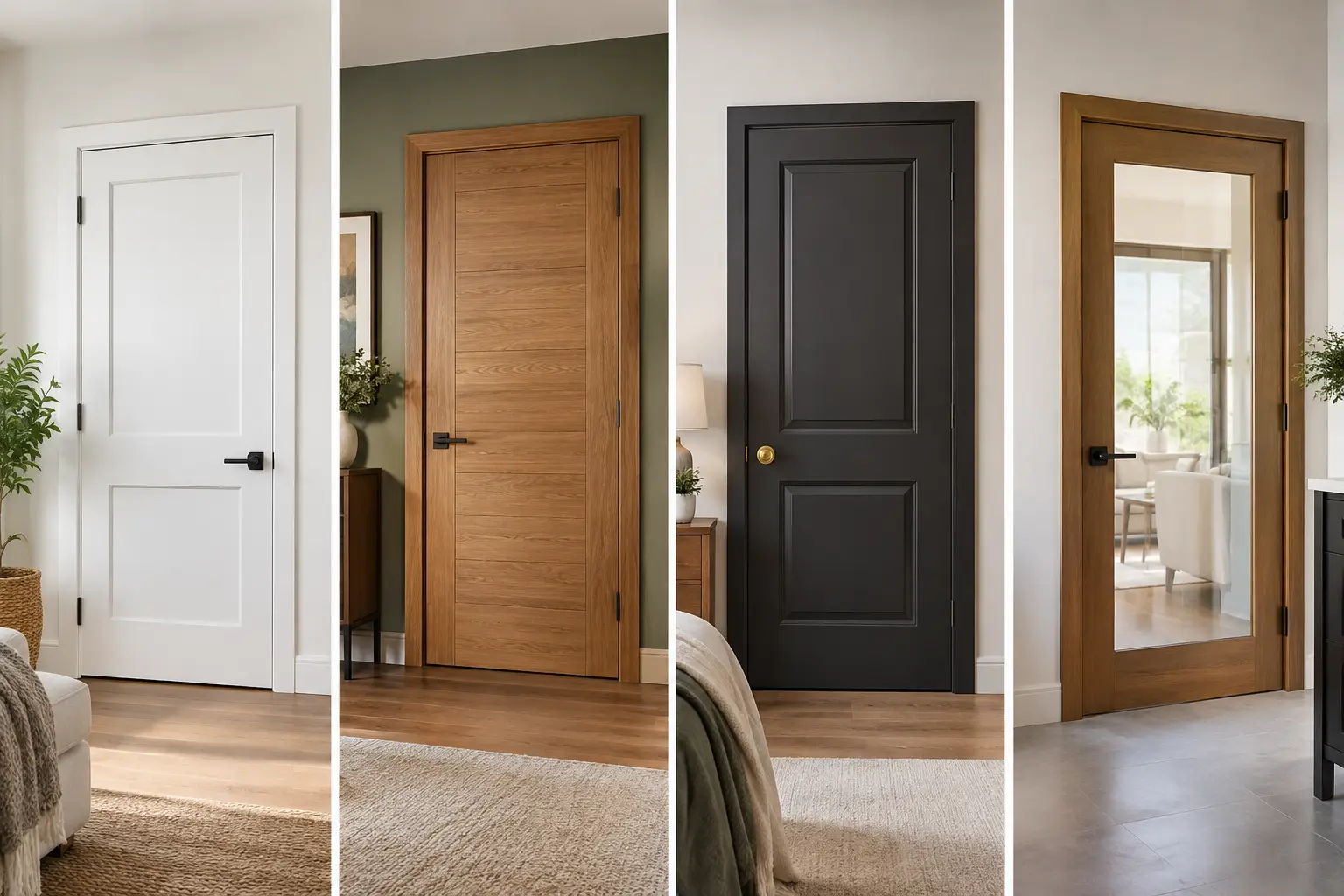
Interior Door Finishes That Suit Every Room
Compare interior door finishes for durability, maintenance, and style. Choose painted, stained, veneer, or laminate doors with confidence for your home.