A new internal door can look right in the showroom and still feel out of place once it is installed beside your flooring, trim, cabinetry, and wall color. That is why interior door finishes deserve as much consideration as the door style itself. The finish affects how a door reflects light, handles everyday marks, complements the room, and continues to look polished after years of use.
For homeowners, renovators, builders, and property managers, the best choice is rarely just the most fashionable one. It is the finish that suits the door construction, the room’s traffic level, the desired maintenance routine, and the overall character of the property.
What a Door Finish Really Changes
A door finish is the visible protective layer or surface treatment applied to the door. It may be paint, stain and clear coat, timber veneer, laminate, or a factory-applied coating. Each creates a different visual result, but durability and repairability vary significantly.
Finish should also be considered alongside the door material. A solid timber door can be painted or stained, while a molded or primed internal door is generally designed for paint. Veneer doors present a real timber face over an engineered core, delivering timber character with greater consistency. Laminate and other factory-finished surfaces can offer dependable performance where regular cleaning and hard use are expected.
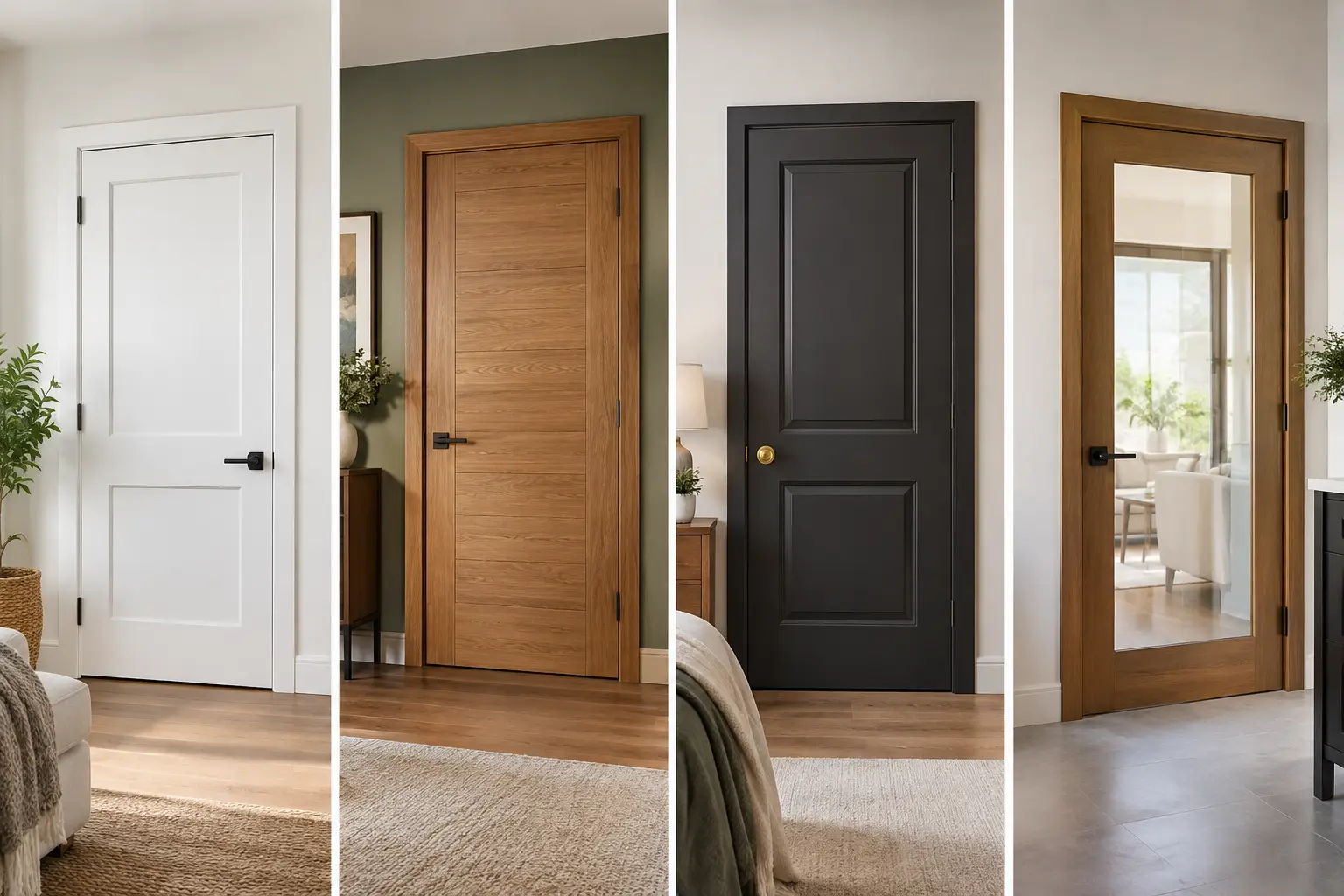
The right decision begins with a simple question: should the door blend into the room, add contrast, or become a design feature? A crisp white door often supports a clean, timeless interior. A natural timber finish adds warmth and texture. A dark painted door can give a hallway, study, or bedroom a more tailored feel, but it needs careful coordination with surrounding finishes.
Popular Interior Door Finishes and Where They Work
Painted doors: flexible and enduring
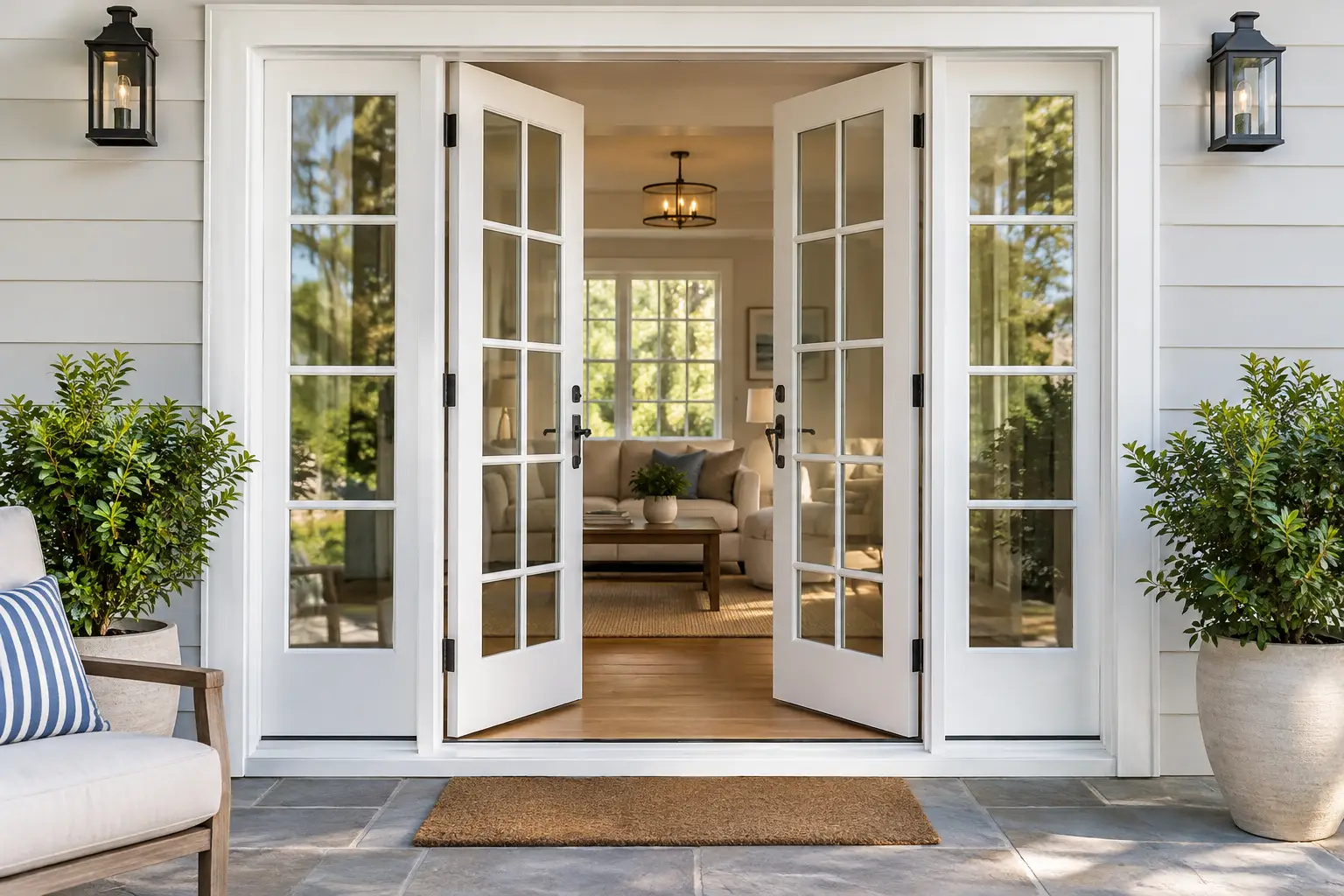
Painted doors remain the most versatile choice for many homes. They work especially well with shaker doors, flush doors, French doors, and molded profiles because paint highlights their form without competing with the rest of the room.
White and soft neutral painted finishes are popular for good reason. They pair easily with changing furniture and wall colors, help smaller spaces feel brighter, and create a consistent relationship between doors, architraves, and skirting. In a renovation, this can be the most reliable way to bring old and new sections of a house together.
The sheen level matters. Matte and low-sheen finishes have a refined, contemporary appearance and hide minor surface irregularities well. They can, however, show scuffs more readily in busy corridors. Satin provides a subtle glow and is generally easier to wipe clean. Semi-gloss reflects more light and offers strong cleanability, although it can emphasize imperfections if preparation is rushed.
Dark paint, such as charcoal, deep green, or black, gives an internal door more presence. It is particularly effective in well-lit spaces with pale walls or natural timber flooring. The trade-off is that dust, fingerprints, and chips can be more noticeable than on mid-tone or white doors.
Stained and clear-coated timber: warmth with character
A stained or clear-coated timber door gives a room texture that paint cannot replicate. Grain variation, knots, and natural color shifts become part of the design, making this finish especially suited to homes with timber floors, warm neutral palettes, or a more architectural style.
Clear coatings allow the natural timber tone to remain visible, while stains can deepen the color or bring different timber elements into closer visual alignment. A light oak appearance can feel relaxed and contemporary; a richer walnut tone may better suit a formal living area or study.
Natural timber requires realistic expectations. It will not look perfectly uniform from door to door, and that is part of its appeal. Strong sunlight can gradually alter timber color, while scratches may require more specialist touch-up than a painted surface. Choosing a quality coating and fitting the door with care helps protect the finish around handles, edges, and high-contact areas.
Veneer doors: timber appearance with consistency
Timber veneer doors use a thin layer of real wood over a stable engineered core. They are a practical option when a project calls for the visual depth of timber but benefits from a more controlled, repeatable finish across several rooms.
Veneers can be an excellent fit for contemporary homes, apartments, offices, and light commercial spaces. They create a considered result without requiring every door to be custom-made from solid timber. Grain direction and panel layout still matter, particularly for taller doors, paired doors, or a hallway where multiple leaves are visible at once.
Because the face layer is thin, veneer should be treated thoughtfully. Harsh abrasives, excessive moisture, and aggressive sanding can damage the surface. Regular dusting and gentle cleaning are usually all that is needed for day-to-day care.
Laminate and factory-finished doors: practical performance
Laminate and factory-finished doors are designed for dependable everyday use. Their consistent color and surface can suit rental properties, family homes, medical or office environments, and any setting where easy cleaning is a priority.
These finishes are available in plain colors and timber-look designs, including convincing modern oak and walnut effects. While they may not have the depth of real timber veneer, they can provide a clean, durable result at a more controlled budget. They are also useful where matching a large number of doors is more important than showcasing natural grain variation.
Not all factory finishes are equal. Edge quality, core construction, and the precision of the installation affect how well a door performs over time. A good-looking surface can still be compromised by poor gaps, unsuitable hardware, or unsealed cutouts around locks and latches.
Match the Finish to the Room
A finish that suits a quiet bedroom may not be the best choice for a laundry or a heavily used family hallway. In bedrooms and living areas, visual warmth and style often lead the decision. Low-sheen painted doors, veneer, and clear-coated timber can all work beautifully where cleaning demands are modest.
For hallways, children’s rooms, and busy household spaces, consider a finish that tolerates regular wiping and occasional impact. Satin-painted doors and quality factory-finished options are sensible choices. If the door is likely to be handled with wet hands or exposed to humidity, such as near a bathroom or laundry, the substrate and edge sealing are just as important as the face finish.
For wardrobes, pantries, and utility spaces, continuity can be more valuable than statement-making. Matching the internal doors to the architraves creates a calm, cohesive backdrop. In contrast, a barn door, French door, or glazed internal door can become a feature between living zones, where the finish should relate closely to flooring, cabinetry, and hardware.
Do Not Overlook Trim, Hardware, and Light
Doors are rarely viewed in isolation. Their finish sits beside jambs, architraves, skirting boards, door stops, hinges, and handles. Painting the door and trim in the same color is a classic way to create a unified finish. Selecting a slightly different shade can add definition, but only if the contrast is intentional.
Hardware changes the final impression as well. Brushed nickel and satin chrome feel clean and versatile with white or pale timber doors. Matte black hardware brings contrast to lighter finishes and can reinforce a more contemporary scheme. Warmer brass or bronze tones often pair well with oak, walnut, and darker painted doors.
Always assess samples in the actual room, not only under showroom lighting. Natural morning light, warm evening lamps, and nearby wall colors can all change how paint, stain, or veneer appears. This is particularly important with white, greige, and timber tones, which can reveal unexpected undertones once installed.
Preparation and Installation Protect the Result
Even premium interior door finishes can disappoint if the door is poorly prepared or fitted. A painted door needs proper sanding, priming where required, and adequate drying time between coats. Timber and veneer doors need clean handling, appropriate storage, and careful machining for hinges and hardware.
Correct installation protects both appearance and function. Consistent gaps, straight reveals, smooth latching, and properly aligned hardware prevent rubbing that can damage edges and paintwork. In humid areas, suitable clearances help reduce the risk of seasonal sticking or surface wear.
For a whole-home project, it is worth deciding on the finish before doors, trim, and hardware are ordered. This reduces last-minute compromises and gives the finished spaces a deliberate, well-crafted look. Meriton Doors can help coordinate door style, finish direction, and professional fitting so each detail works together.
A well-chosen finish does more than complete an internal door. It gives everyday rooms a sense of consistency, quality, and care – the kind of detail you notice each time a door closes cleanly and looks exactly where it belongs.
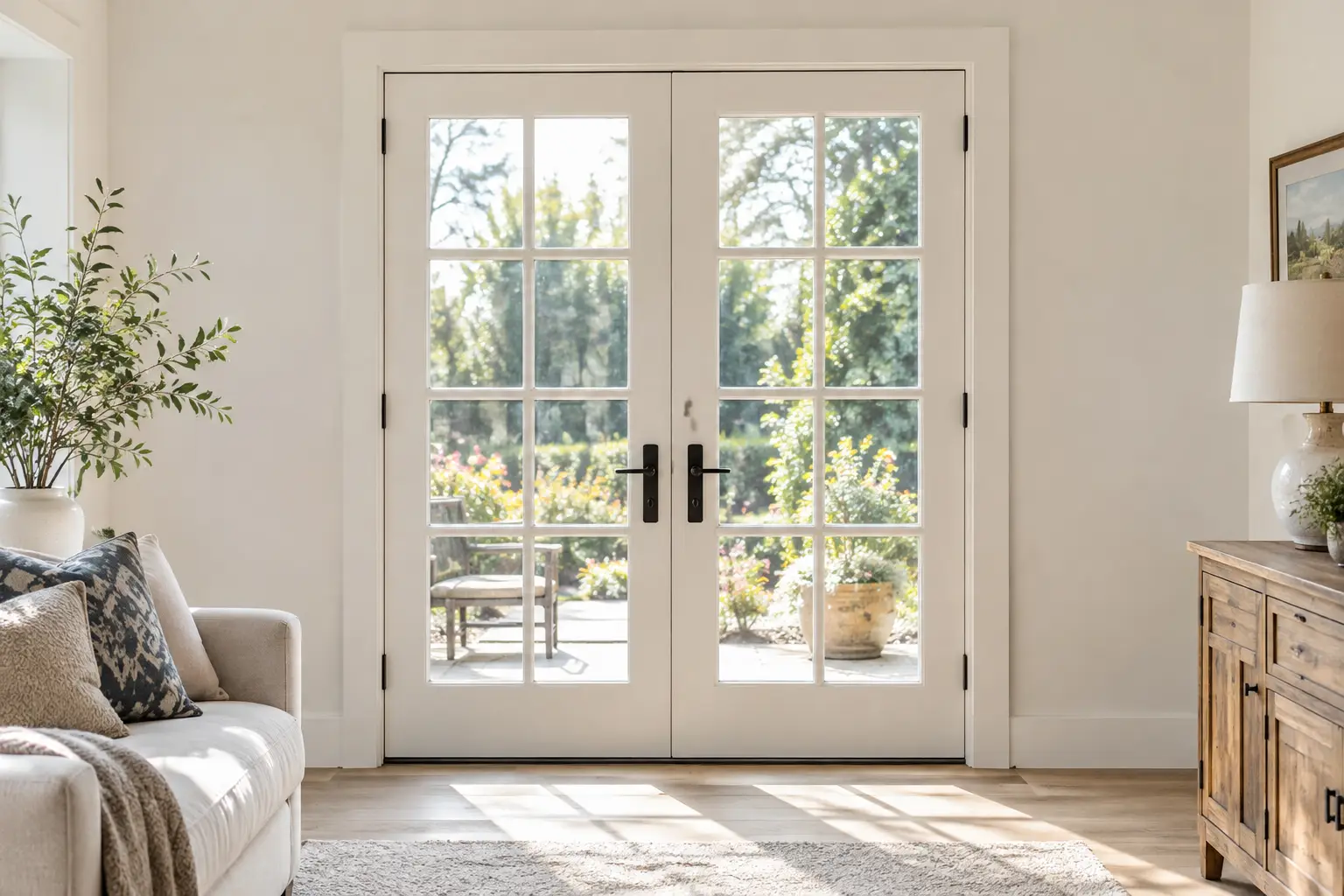
French Doors That Bring Light and Lasting Style
French doors bring light, character, and flexible room connections. Learn how to choose styles, glass, materials, and installation details for your home.