A door can solve a frustrating floor-plan problem or create one. When comparing barn doors versus pocket doors, the right choice comes down to more than appearance: it depends on where the door sits, how the room is used, what is inside the wall, and the level of privacy you expect.
Both options are designed to free up swing space, which makes them especially appealing in bathrooms, laundries, pantries, studies, and compact bedrooms. Yet they work in very different ways. A barn door becomes a visible design feature on the wall. A pocket door disappears into it. Understanding that difference before framing, renovating, or ordering a door will help you achieve a result that looks considered and performs well for years.
Barn Doors Versus Pocket Doors: The Key Difference
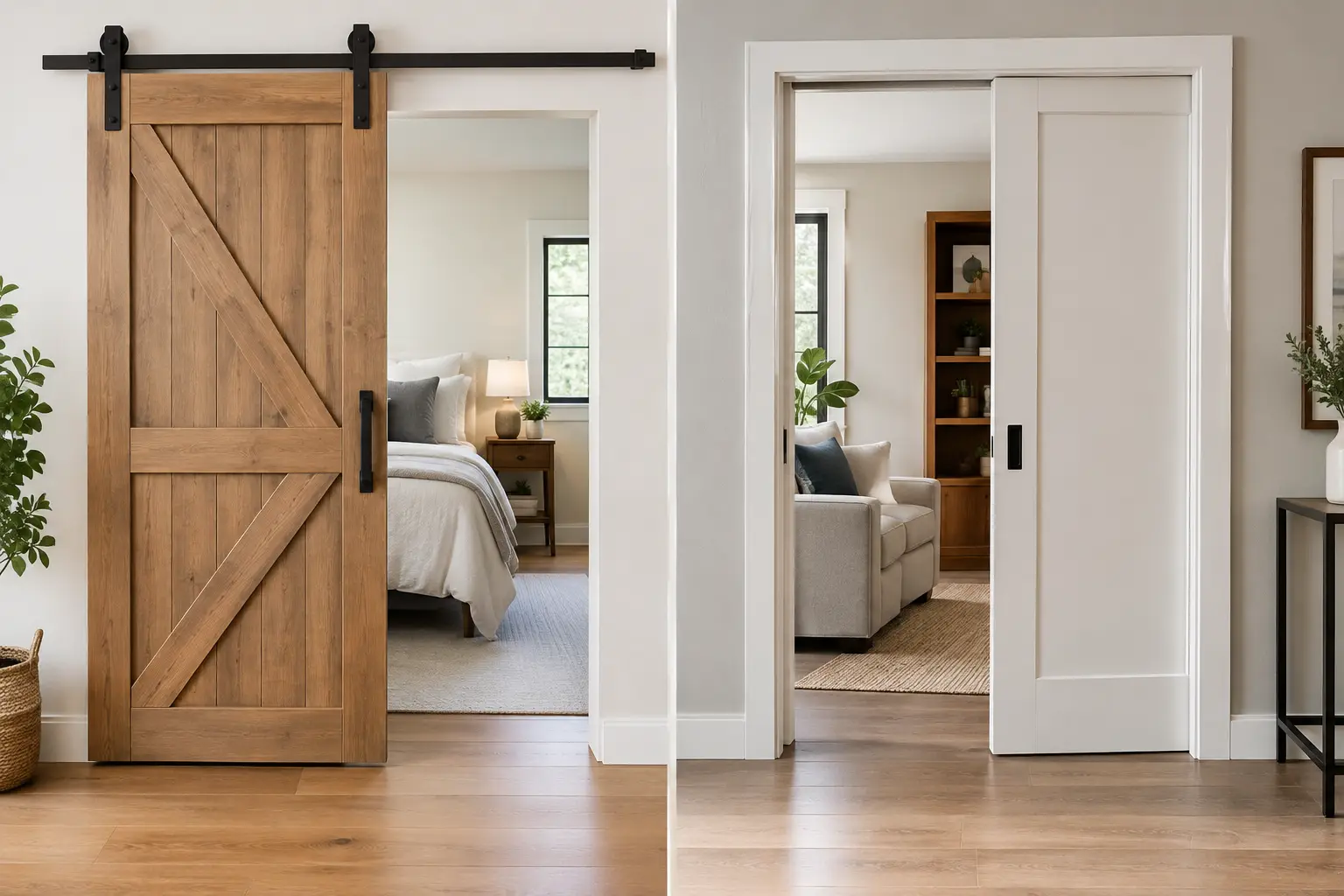
A barn door slides along the outside face of the wall on an exposed track. When open, it remains visible beside the doorway. The hardware is part of the look, whether you choose a black steel track for contrast, a softer brushed finish, or a more refined system that suits a contemporary interior.
A pocket door slides into a cavity built inside the wall. When the door is open, it is almost completely concealed. The result is clean and unobtrusive, with no door panel occupying the room or wall surface.
Neither option is automatically better. A barn door generally provides a more straightforward retrofit and makes a strong visual statement. A pocket door delivers a more integrated finish, but it requires the wall cavity to be planned properly. For a new build or major renovation, a pocket door is often easiest to accommodate early. For an existing home where opening a wall is undesirable, a barn door can be the practical choice.
When a Barn Door Makes Sense
Barn doors suit homeowners who want the door itself to add character. They work particularly well where there is a generous, uninterrupted section of wall beside the opening. In a living area, pantry, home office, or walk-in wardrobe, a well-proportioned sliding barn door can turn a functional opening into a feature.
They are also a smart solution when a traditional hinged door would conflict with furniture, cabinetry, or circulation. A bathroom door that swings into a narrow hallway, for example, can make a compact area feel cramped. A barn door removes that swing arc without requiring the wall to be rebuilt.
Installation is typically less invasive than installing a pocket door, but it still calls for precision. The track must be fixed to adequate structural support, the opening must be measured correctly, and the door needs enough overlap to cover the doorway when closed. The wall beside the opening also has to remain clear. You cannot place tall furniture, artwork that projects significantly, switches in the wrong location, or open shelving where the door needs to travel.
Style and material choices
Barn doors offer considerable flexibility in design. A solid timber door brings warmth and texture to a relaxed, traditional, or coastal home. Shaker profiles suit classic interiors and can connect visually with cabinetry. A flush painted door can feel more restrained in a contemporary setting, while a door with glass inserts can borrow light between rooms.
The hardware should be selected with the same care as the door panel. Oversized industrial hardware can overwhelm a refined interior, while a minimal track may better suit a clean modern renovation. The scale, finish, and placement all affect whether the final result feels purposeful.
The privacy trade-off
Because barn doors sit in front of the opening rather than within a sealed jamb, small gaps remain around the edges. This means they do not provide the same acoustic separation, light control, or odor containment as a well-fitted hinged door. They can be suitable for a powder room in some homes, but they are usually not the first recommendation for a main bathroom, bedroom, or any space where privacy is a priority.
A quality soft-close system can make a barn door feel controlled and quiet in daily use. However, soft-close hardware improves operation, not the perimeter seal. This distinction matters when choosing a door for a busy family home.
When a Pocket Door Is Worth the Planning
Pocket doors are ideal when you want to preserve clear walls and create a more streamlined interior. Once open, the door vanishes into the cavity, leaving the opening free of a visible panel and external sliding hardware. This is especially valuable in narrow corridors, ensuite bathrooms, laundries, and compact rooms where every inch of usable wall matters.
They can also support a quieter visual scheme. If your interior includes carefully selected wall finishes, artwork, built-in storage, or furniture layouts, a pocket door avoids interrupting those elements. It is an elegant way to save space without making the door a focal point.
The important consideration is what the wall contains. A pocket door cannot simply slide into any wall. Plumbing, electrical wiring, ductwork, structural posts, and other services may prevent a cavity from being formed. Load-bearing walls need particular attention. An experienced installer or builder should assess the wall before a pocket system is specified, not after finishes are underway.
Costs and construction considerations
Pocket doors generally cost more to install than barn doors because the work often involves opening the wall, fitting a cavity frame, relocating services if necessary, and repairing plasterboard and finishes. In a renovation, those additional trades can influence both budget and timing.
For new construction, planning a pocket door at the framing stage can make the process more efficient. The cavity system, rough opening, door thickness, finished floor level, and architrave details should be coordinated early. Doing so helps avoid common issues such as a door that sits too high, does not close neatly, or conflicts with trim.
Quality hardware matters. A poorly specified pocket door can rattle, bind, or become difficult to service after the wall is closed. A well-built cavity frame with durable rollers and accessible adjustment points is a better long-term investment, particularly for doors used many times a day.
Privacy and performance
Pocket doors usually close more closely to the opening than barn doors, but they may still offer less sound reduction than a standard hinged door with a full jamb, stops, and perimeter seals. If acoustic privacy is critical for a bedroom, media room, or home office, a hinged solid-core door may remain the strongest option.
For bathrooms and similar spaces, a pocket door can be a polished, space-saving solution when specified with a privacy lock and installed accurately. Consider ventilation as well. A door can improve visual privacy, but it does not replace appropriate exhaust and airflow planning.
Compare Space Beyond the Door Swing
It is easy to assume both doors save the same amount of space because neither swings into the room. In practice, they use space differently.
A barn door needs clear wall space equal to at least the width of the opening, often more depending on the required overlap and hardware. That wall cannot be used freely while the door is open. This can affect light switches, shelving, mirrors, and furniture placement.
A pocket door needs no exposed wall travel area, but it claims space inside the wall. That can limit where you run services or install certain wall-mounted fittings. The benefit is that, once the door is open, the room can be arranged right up to the opening area without a door panel in view.
For a small laundry, a pocket door may provide the cleanest layout. For a study opening onto a larger living area, a barn door may offer more design impact with less construction disruption. The best answer comes from looking at the full room plan rather than the doorway alone.
Choose the Right Door Panel and Hardware
The sliding system is only part of the decision. Door weight, thickness, finish, and core construction influence durability and everyday feel. A lightweight hollow-core panel may be easier to move, but it can feel less substantial and will provide limited sound control. A solid-core or quality engineered timber door feels more premium and often performs better in active homes.
For barn doors, make sure the panel is wide and tall enough to cover the opening with appropriate overlap. For pocket doors, confirm that the selected panel suits the cavity system and will fit within the finished wall thickness. Handles require thought as well. A barn door can use a surface pull, while a pocket door needs a recessed pull and often an edge pull to draw it fully from the cavity.
Professional measurement and installation make the difference between a door that merely slides and one that operates with quiet precision. This is where detailed planning protects the finish of the whole room.
A Practical Decision for Your Home
Choose a barn door when you want a visible design feature, have clear wall space, and need a lower-disruption way to eliminate a door swing. Choose a pocket door when visual simplicity and uninterrupted wall space matter most, and the wall can be designed or altered to accommodate a cavity.
Before making a final selection, stand in the room and picture the door open as well as closed. Consider the furniture, switches, storage, noise, privacy, and the way people move through the space. A carefully chosen sliding door should not just save room – it should make the room feel better to use every day.
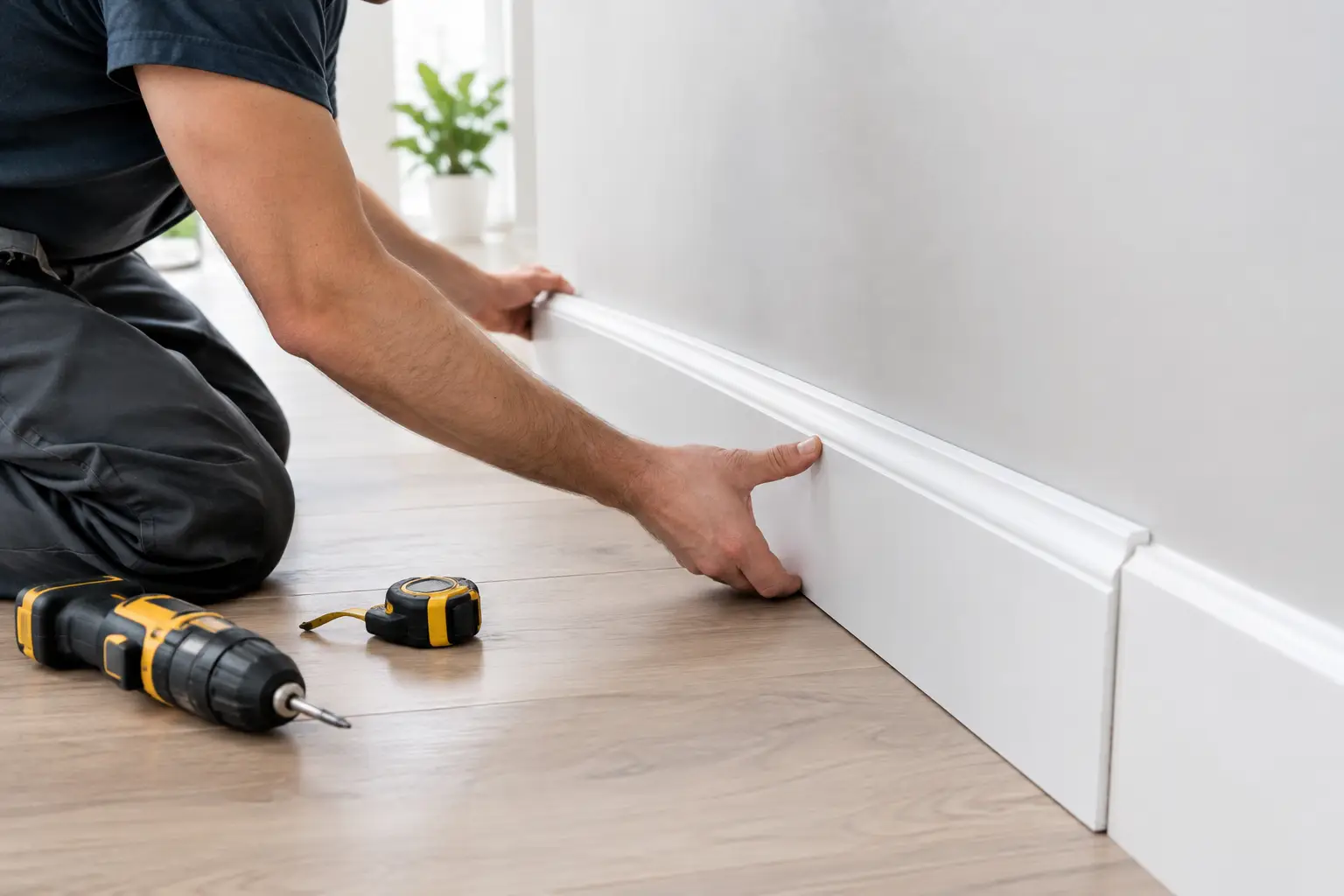
Skirting Board Installation for a Clean Finish
Professional skirting board installation creates crisp wall lines, protects finishes, and completes your Sydney renovation with lasting precision at home.