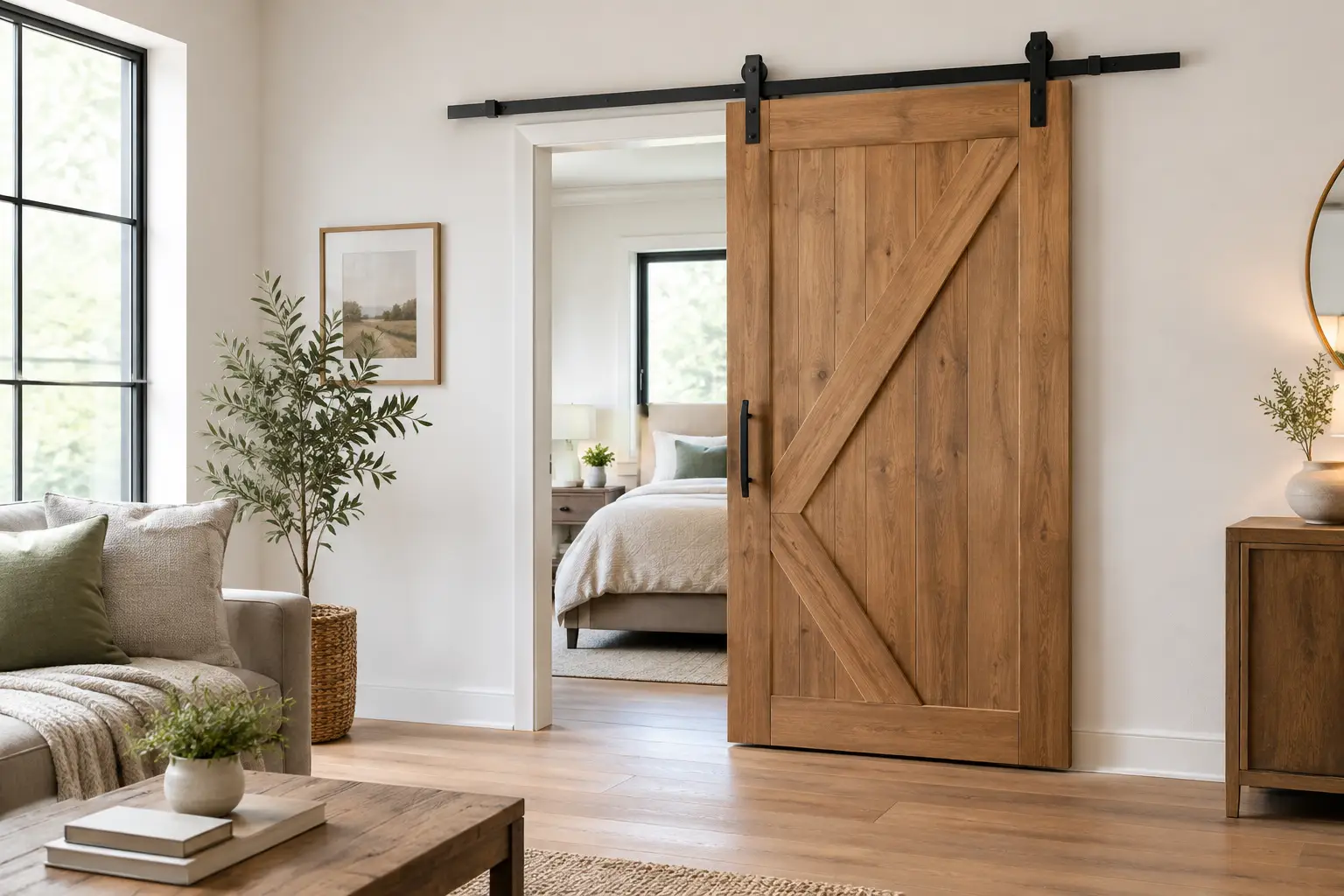
A door that swings into a narrow hallway, laundry, ensuite, or pantry can make an otherwise well-planned room feel cramped. Barn doors solve that problem by sliding neatly along the wall, while also becoming a considered design feature rather than something to hide. The right choice adds warmth, texture, and practical everyday function. The wrong one can leave gaps, clash with the room, or feel awkward to use.
For homeowners renovating or building, the best result comes from treating a barn door as a complete system: the door panel, wall space, track, hardware, opening, and installation all need to work together.
Why barn doors work so well in modern homes
Barn doors are often associated with rustic interiors, but their appeal is far broader. A clean Shaker profile in a crisp painted finish can suit a contemporary home. A natural timber panel can soften a neutral interior. Slim black hardware and a simple flat panel can create a more industrial or architectural look.
Their key advantage is space. Unlike a hinged door, a sliding door does not require a swing area, so it can be an excellent option where furniture, circulation, or a tight layout makes a conventional door inconvenient. This is particularly useful for bathrooms, wardrobes, studies, laundries, and walk-in pantries.
That space-saving benefit does have a condition: the wall beside the opening must have enough clear width for the door to slide across. Light switches, artwork, windows, cabinetry, and nearby doors all need to be considered early. A barn door needs room to travel, not just an opening to cover.
Choosing the right barn door style
The door should relate to the rest of the home rather than competing with it. Look at existing internal doors, trim, flooring, cabinetry, and hardware finishes before selecting a panel style. Consistency gives a renovation a more resolved, premium appearance.
Shaker and paneled designs
Shaker barn doors are a strong choice for classic, Hamptons-inspired, transitional, and family homes. Their clean recessed lines add detail without being overly decorative, and they can be painted to match existing interior doors or wall colors. They are especially effective when paired with simple black, bronze, or brushed metal hardware.
More detailed paneled doors can work beautifully in heritage-style homes, but scale matters. In a compact room, a highly detailed panel may feel visually heavy. A simpler profile usually keeps the space feeling open.
Flat panels and modern finishes
For contemporary homes, flat-panel barn doors deliver a quieter, more streamlined result. A smooth painted surface can blend into the interior, while a timber veneer or textured finish can create a warm focal point. These doors are often chosen for studies, media rooms, and newer open-plan spaces where clean lines are central to the design.
A darker finish can be striking, particularly against pale walls, but it will have more visual weight. Lighter painted or timber tones tend to make smaller rooms feel less enclosed.
Glass inserts and light flow
A barn door with glass inserts can be useful where privacy is needed without losing natural light. Frosted or reeded glass is often suited to a home office, hallway, laundry, or ensuite because it softens views while allowing light to travel between rooms.
Clear glass is better for spaces where visual connection is the goal, such as a dining room or study. It is less suitable for rooms requiring genuine privacy or acoustic separation.
Size, clearance, and coverage matter
A barn door should be wider and taller than the opening it covers. This overlap is what helps block sightlines and reduces the visible gaps at the sides. As a general guide, the door needs enough additional width to extend past both sides of the opening when closed, while the track must be long enough for the panel to clear the opening fully when open.
Height also deserves attention. The door and track sit above the opening, so ceiling height, cornices, bulkheads, and nearby cabinetry can affect what is possible. In some homes, a standard track arrangement will suit perfectly. In others, a low-clearance hardware system or a custom approach may be needed.
This is where accurate measuring makes a real difference. Measuring only the doorway is not enough. The surrounding wall, trim, floor level, ceiling line, and any obstructions all influence the final fit and operation.
Hardware is part of the design, not an afterthought
The track and rollers are highly visible, so they should complement the door rather than look like an add-on. Matte black remains a popular choice because it provides a clear, defined frame around timber and painted doors. Stainless or brushed finishes can suit lighter contemporary interiors, while bronze or antique-toned hardware may better suit classic homes.
Appearance is only one part of the decision. Quality hardware should support the weight of the chosen door, run smoothly, and include stops to control travel. Floor guides are also essential. They keep the panel aligned at the bottom and prevent it from swinging away from the wall during use.
For a quieter home, ask about soft-close hardware. It slows the door near the end of its travel, helping prevent slamming and giving the operation a more refined feel. It is a worthwhile consideration for bedrooms, nurseries, and frequently used family spaces.
Understand privacy and sound trade-offs
Barn doors are not designed to seal against the frame in the same way as a traditional hinged door. Because they sit in front of the opening and require a small clearance for movement, there can be gaps around the panel. That means they generally offer less sound control and less privacy than a properly fitted hinged door with seals.
For a pantry, laundry, closet, or study that is used occasionally, this is rarely a concern. For a main bathroom, bedroom, or room used for confidential work, it deserves more thought. A wider panel, good overlap, careful placement, and a solid-core door can improve the result, but they will not create the same seal as a hinged door.
It depends on how the room is used. If saving floor space and making a visual statement are the priorities, a barn door can be ideal. If acoustic privacy is non-negotiable, a hinged, cavity sliding, or other sealed door solution may be the better choice.
Installation determines how the door performs
A barn door track must be fixed securely to suitable structural support. The door is carried by the track, and a heavy solid-core or timber door places real load on that mounting point. Fixing hardware into drywall alone is not sufficient.
Professional installation begins with confirming the wall construction and locating the correct fixing points. A header board may be used where needed to provide a solid mounting surface and create a polished visual finish. The installer then sets the track level, positions the stops, aligns the floor guide, and checks that the door opens and closes smoothly without rubbing against trim or flooring.
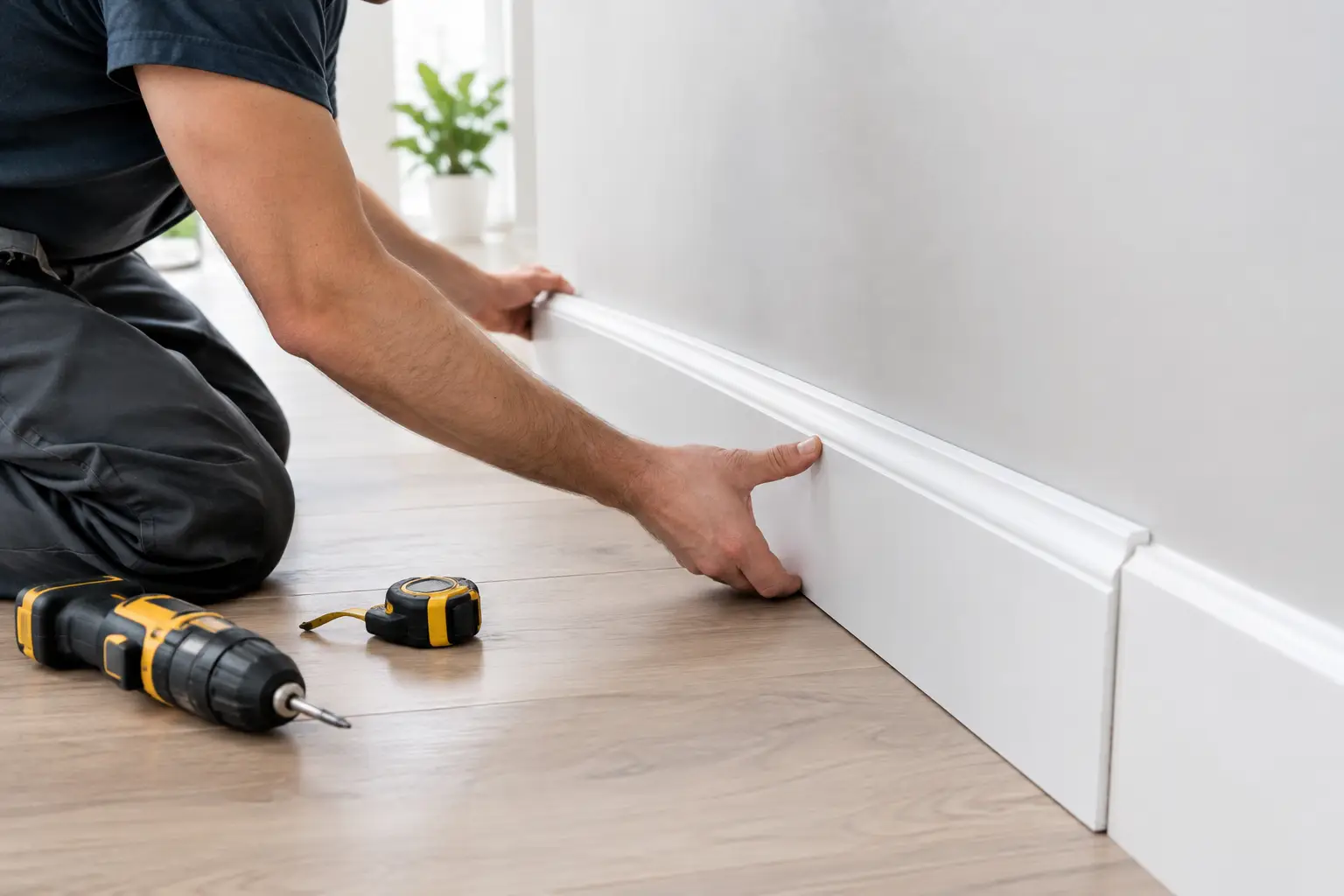
Small details affect the finished look. Uneven floors can change the visible gap beneath the door. Out-of-plumb walls can make a panel appear misaligned. Existing baseboards may need to be accommodated or adjusted so the door sits correctly. These are not reasons to avoid barn doors, but they are reasons to have the opening assessed before ordering.
Where a barn door adds the most value
Barn doors are most effective when they solve a genuine layout issue while adding an intentional design element. A pantry door can become a feature in an open kitchen. A laundry door can free up a narrow passage. A study door can provide separation without consuming valuable floor space. In a primary suite, a barn door can create a graceful transition to a dressing area, provided the privacy expectations suit the application.
For property managers and builders, consistency is equally valuable. Selecting a durable door panel, dependable hardware, and a professional installation approach helps reduce adjustment issues after handover. It also gives the interior a finished quality that buyers and tenants notice immediately.
At Meriton Doors, the strongest barn door projects begin with a close look at the opening and the room around it. Choosing the panel first is tempting, but confirming wall space, sizing, hardware, and function first is what produces a door that looks exceptional and performs reliably for years.
A well-chosen barn door should feel effortless in daily use: clear the opening fully, close with confidence, suit the home’s style, and make the room work better than it did before.
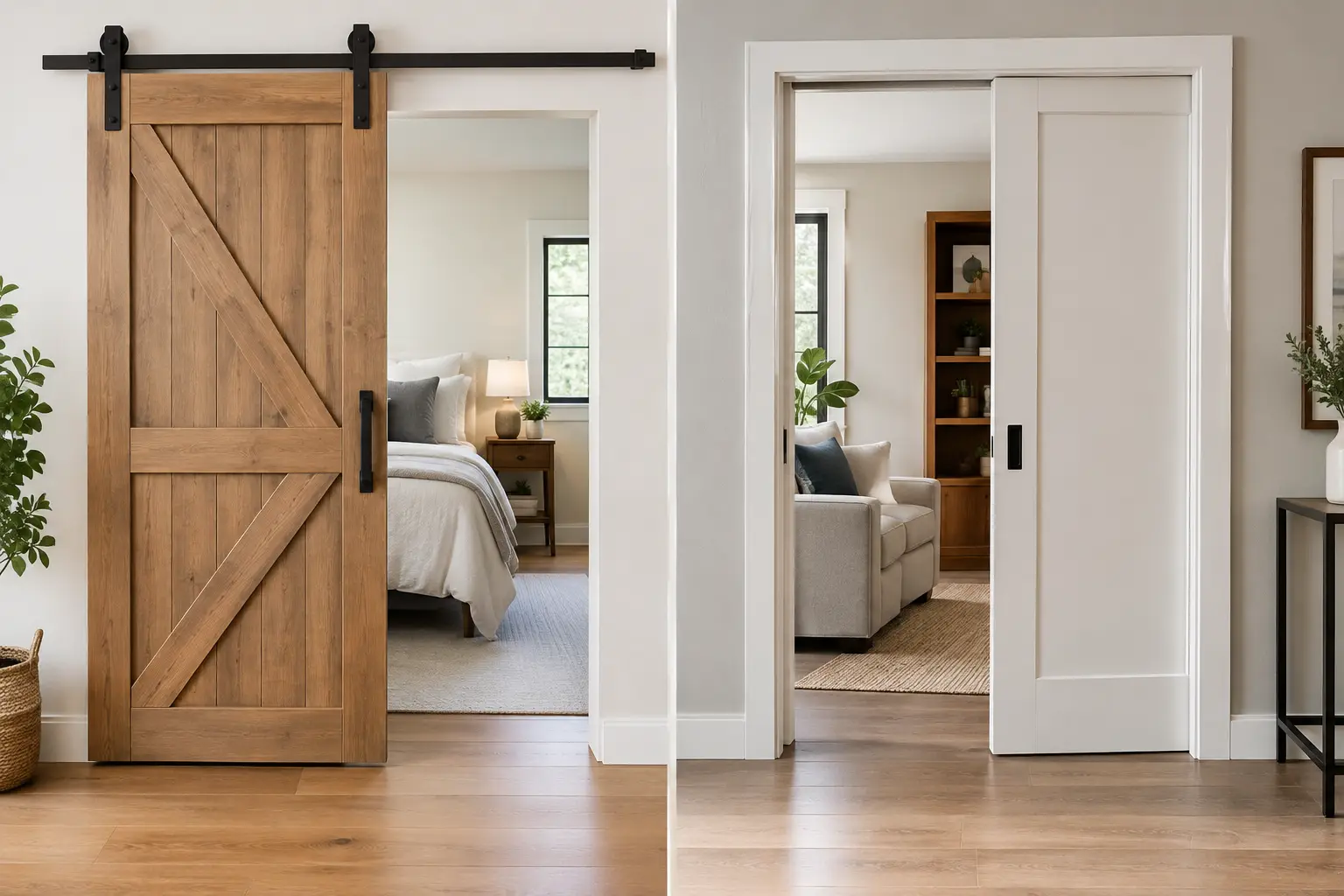
Barn Doors Versus Pocket Doors for Your Home
Barn doors versus pocket doors differ in space, privacy, cost, and style. Compare both options to choose the right interior door for your home today.