
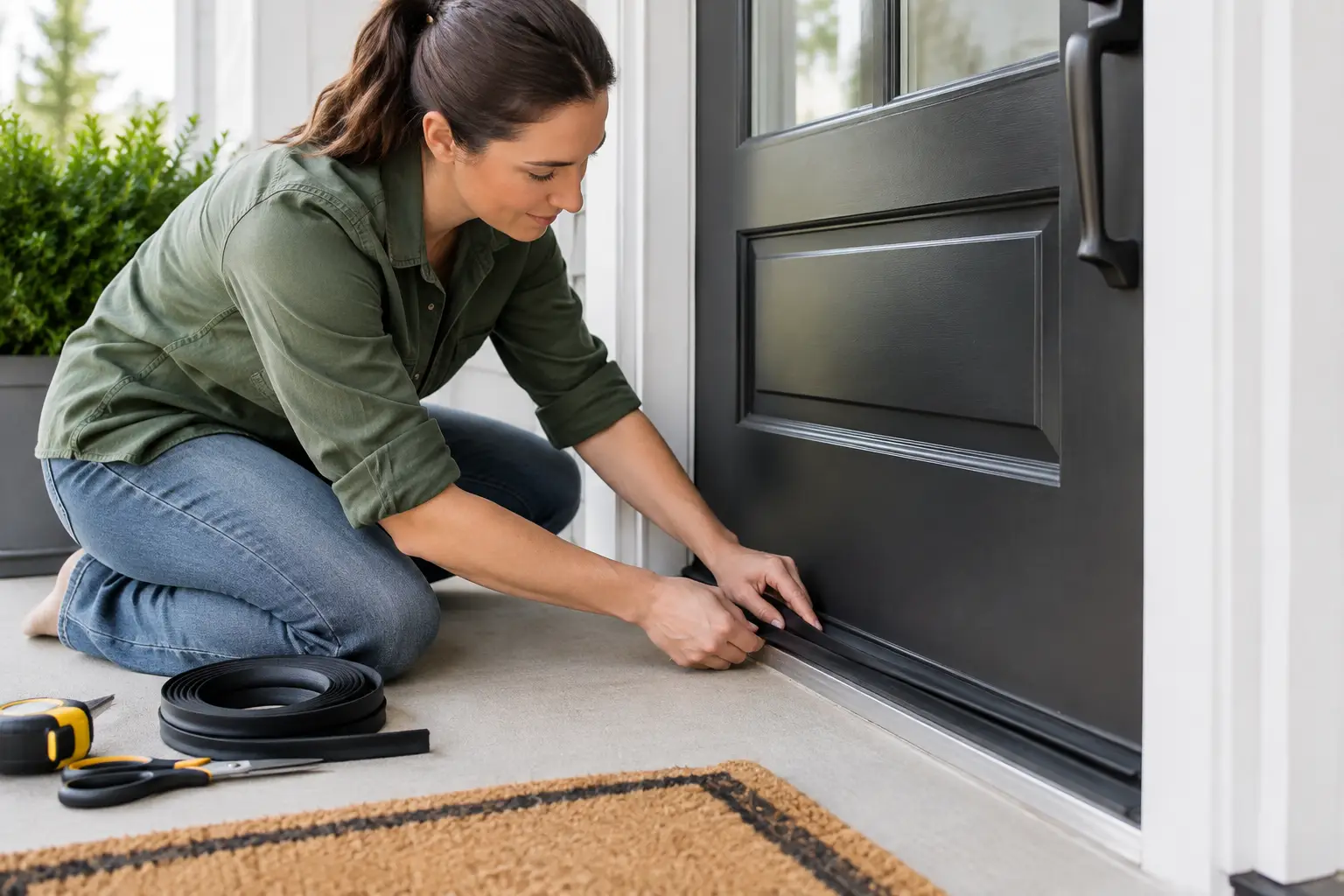
A front door can look beautifully finished and still let in a surprising amount of outside air. If you feel a draft near the entry, notice dust gathering along the threshold, or hear more street noise than you should, learning how to seal exterior doors is a practical place to start. The right seal improves comfort, protects interior finishes from moisture and dust, and helps a well-designed entrance perform as well as it looks.
The key is not simply adding more material around the frame. A durable result comes from identifying where the gap is, choosing a seal that suits that location, and making sure the door itself is correctly hung. Even premium doors need precise adjustment and quality finishing to achieve a tight, reliable close.
Start by Finding the Source of the Draft
Before buying weatherstripping, inspect the door on a calm day with the door closed and locked. Look for visible daylight around the perimeter, particularly at the top corners and along the latch side. Run your hand slowly around the frame to feel for moving air. At night, have someone shine a flashlight from outside while you inspect the edges from indoors.
Pay close attention to the gap below the door. This is often the largest opening, especially where an older threshold has worn down or the door has settled over time. If light, insects, water, or leaves can pass underneath, a door sweep alone may not be enough. The threshold may also need adjustment or replacement.
Not every issue is a weatherstripping issue. A door that rubs, sticks, drops at the latch side, or requires force to lock can create uneven gaps around the frame. Address the alignment first. Otherwise, new seals may compress too heavily in one area and fail to touch the door in another.
Check the Door, Hinges, and Frame First
A properly sealed exterior door should close firmly without needing to be slammed. Open the door and inspect the hinges for loose screws, worn hinge leaves, or movement in the jamb. Tightening screws can sometimes improve a minor sag, but stripped screw holes or a significantly misaligned door usually call for a more considered repair.
Next, check the strike plate. If the latch does not enter the strike cleanly, the door may not pull tightly against the weatherstripping. A small adjustment to the strike plate can improve the seal, but avoid moving it so far that the latch no longer provides secure engagement.
Inspect the frame for cracks, separation between trim and wall, and damaged timber. Exterior-grade caulk can seal narrow, stable gaps around the outside of the frame. It should not be used as a substitute for repairing rot, a loose jamb, or failed flashing. Where water is entering around the frame, the source may sit behind the trim and deserves professional attention before it affects surrounding materials.
Choose the Right Weatherstripping for Each Gap
Weatherstripping works best when it is matched to the size and movement of the gap. It needs enough compression to stop air, but not so much that it makes the door difficult to close or causes the adhesive to fail early.
Compression Weatherstripping for the Sides and Top
Foam weatherstripping is easy to install and works well for small, even gaps. It is a reasonable option for a quick improvement, although lower-cost foam can flatten over time in high-use entryways. Choose a closed-cell product for better resistance to moisture and compression.
Rubber or silicone bulb seals are generally a more durable choice for exterior doors. They are designed to compress consistently, handle regular use, and tolerate changing temperatures. Many quality door jamb systems use an integrated compression seal for this reason.
Measure the gap before selecting a profile. If the material is too thin, it will not seal. If it is too thick, the door may spring back after closing or place unnecessary pressure on hinges and hardware. When the gap varies significantly from top to bottom, correct the door alignment rather than trying to compensate with oversized weatherstripping.
Door Sweeps for the Bottom Edge
A door sweep closes the space between the door slab and threshold. Brush sweeps are useful where the floor surface is uneven, but they are generally less effective against wind-driven rain and drafts than a flexible rubber or silicone sweep.
For many hinged exterior doors, a surface-mounted sweep with a flexible fin provides dependable coverage. It should lightly contact the threshold across the full width of the door without dragging excessively. If the threshold is damaged, deeply uneven, or missing its original sealing insert, replacing or upgrading the threshold may deliver a better long-term result.
An automatic drop seal is another option for doors where appearance matters and a traditional sweep is not desirable. The seal drops into place when the door closes and lifts when it opens, reducing wear against the floor. It requires accurate fitting, so it is often best installed as part of a professional door upgrade.
Threshold Seals and Adjustable Sills
The threshold is your first line of defense against water, dust, and air entering beneath the door. Many modern thresholds have an adjustable sealing surface that can be raised slightly to meet the bottom of the door. Make small adjustments, then test the door several times. Raising it too far can make operation difficult and wear the seal prematurely.
If your entry is exposed to heavy rain, do not rely on a door sweep alone. The sill, drainage path, exterior caulking, and door overhang all influence how well the opening handles weather. A beautifully detailed door installation considers this complete system, not only the visible edge of the door.
How to Seal Exterior Doors Step by Step
Once the door is operating correctly and you have selected the appropriate materials, installation is straightforward when done carefully.
First, remove old weatherstripping, adhesive residue, and loose caulk. Clean the contact surfaces with a suitable household cleaner and let them dry completely. Adhesive-backed seals fail quickly when applied over dust, oil, dampness, or peeling paint.
Measure each side of the door frame separately. Older openings are rarely perfectly square, so do not assume both vertical pieces are the same length. Cut weatherstripping neatly with sharp scissors or a utility knife, following the product instructions. Begin at the top of the frame, then fit the vertical sections so the corners meet cleanly without bunching.
Apply adhesive-backed weatherstripping gradually rather than peeling off the entire backing at once. Press it firmly into position and keep the profile straight. After installation, close and latch the door. It should compress the seal evenly along the top and sides. If the door will not latch, reduce the thickness of the seal or reassess the alignment.
For a surface-mounted door sweep, close the door and position the sweep so its flexible edge just meets the threshold. Mark the screw locations, pre-drill where needed, then secure the sweep. Trim the ends carefully so they do not interfere with the jamb or catch when the door opens. Test the door repeatedly before considering the job complete.
Do Not Seal the Door So Tightly That It Creates New Problems
A tighter door is usually better, but sealing needs to respect how the building works. Exterior doors require normal clearance for reliable opening, closing, and seasonal movement. Timber doors in particular can expand and contract with humidity, while metal and fiberglass doors can be affected by temperature changes.
Avoid blocking designed drainage channels in thresholds, sill pans, or door systems. These channels allow incidental water to escape. Filling them with caulk may seem like extra protection, but it can trap water where it does the most damage.
Also consider ventilation separately from drafts. A home may need mechanical ventilation, exhaust fans, or planned air transfer between rooms, particularly after other energy-efficiency improvements. An exterior door should be weather-tight, but the answer is not to create uncontrolled moisture problems elsewhere in the home.
Signs It Is Time for Professional Door Work
New weatherstripping is a sensible maintenance task when the door and frame are sound. However, recurring drafts, water staining, a door that will not stay aligned, visible frame deterioration, or a threshold that has separated from the floor point to a larger issue.
Professional assessment is especially worthwhile for entrance doors, French doors, and double-door configurations. These openings depend on accurate jamb preparation, hinge placement, hardware alignment, and threshold detailing. Small installation errors can affect security, weather resistance, and the finished appearance of the entry.
At Meriton Doors, the focus is on door solutions that bring together exceptional design, dependable hardware, and precise installation. For homeowners planning a replacement entrance door or addressing persistent sealing issues, getting the frame, threshold, and door system right from the start is often the most durable investment.
A well-sealed exterior door should feel solid when it closes: no rattle, no visible gaps, no cold line across the floor, and no need to force the handle. That quiet, confident fit is what turns an attractive door into an entrance that performs for years.