A door that suddenly catches on the jamb, needs a hard shove to latch, or springs back open can make an otherwise well-finished room feel neglected. More than an inconvenience, it can affect privacy, security, energy efficiency, and the long-term condition of the door and frame. So, why do doors stop closing? Usually, the answer is movement: in the hinges, the timber, the frame, or the structure around it.
The right fix depends on where the door is binding and whether the problem is new, seasonal, or gradually getting worse. A careful inspection is far better than immediately sanding or planing the door. Removing material from the wrong edge may hide the symptom while making the final fit look uneven.
Why Do Doors Stop Closing Properly?
Most hinged doors rely on very small, consistent gaps around all four sides. When a hinge loosens, a jamb shifts, or moisture causes timber to expand, those gaps disappear. The door then rubs, drags, jams, or misses the latch.
Start by closing the door slowly and watching where it makes first contact. Check the top corner on the latch side, the hinge side, the bottom edge, and the strike plate. A pencil can help reveal the contact point: lightly mark the edge of the door, close it, then look for rubbed-off marks. This simple test often identifies the source before any adjustment is made.
Loose hinges let the door sag
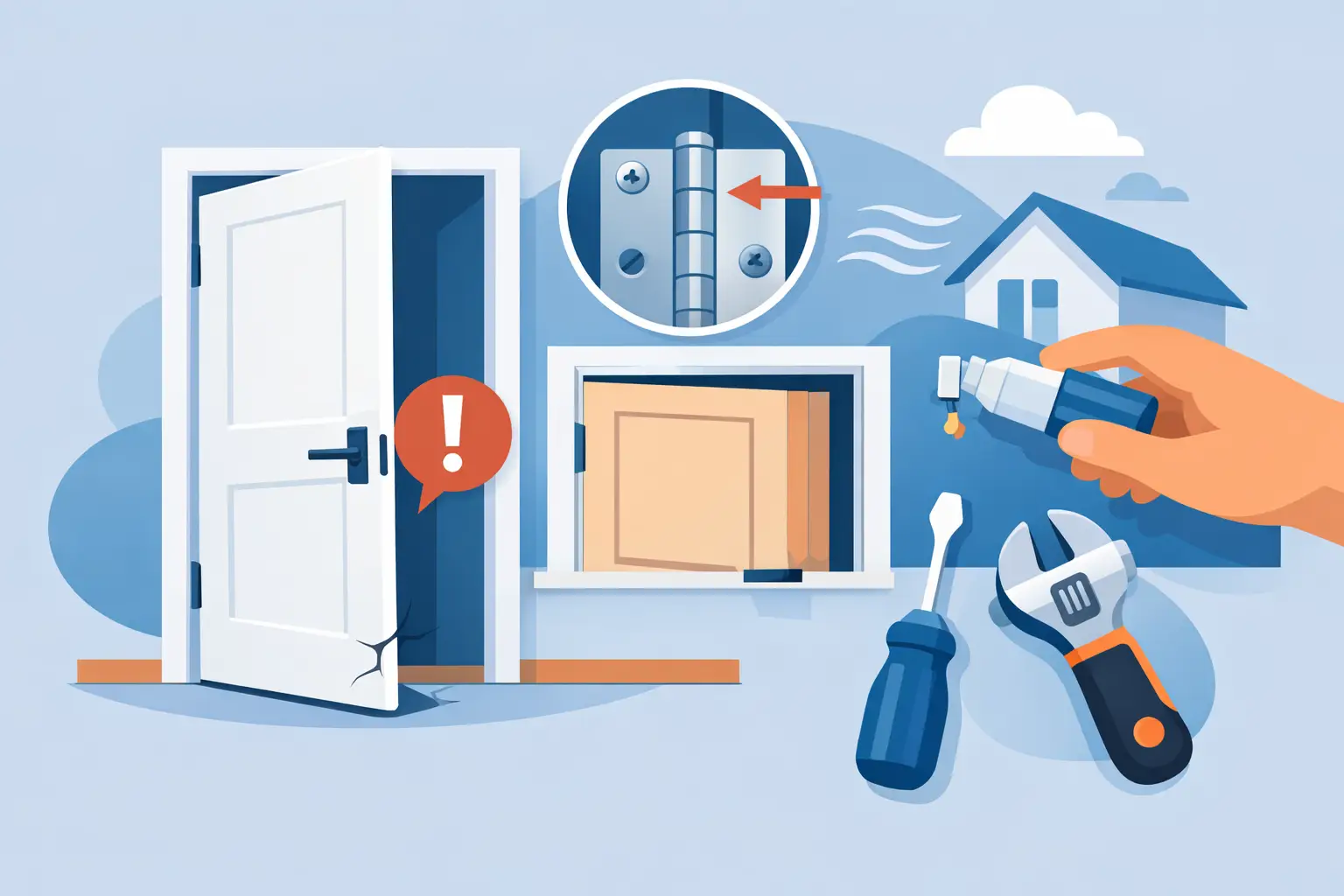
Loose hinge screws are one of the most common reasons a door stops closing. The door’s weight gradually pulls on the top hinge, particularly with solid-core internal doors, tall entrance doors, or doors fitted with heavy hardware. Even a small amount of movement can cause the top latch-side corner to rub against the frame.
Open the door and check each hinge for movement. Tighten any loose screws by hand so they are firm but not overtightened. If a screw turns without gripping, the timber beneath it may be worn. Simply using a longer screw is not always the answer, especially if it could interfere with wiring, plumbing, or the frame construction.
A qualified installer can repair stripped fixing points properly, assess hinge alignment, and ensure the door is supported evenly. This is particularly worthwhile for front doors, French doors, and other feature doors where a poor adjustment can affect both operation and appearance.
Seasonal moisture makes timber swell
Timber is a natural material. In humid weather, it can absorb moisture and expand. In drier conditions, it may contract. Doors and frames that were fitted with tight clearances can begin rubbing during wet periods, often along the top or latch edge.
This does not automatically mean the door needs to be cut down. If the issue appears only during a humid spell, allow time for conditions to stabilize and confirm that ventilation is adequate. Bathrooms, laundries, poorly ventilated hallways, and entry doors exposed to wind-driven rain are especially prone to moisture-related movement.
Exterior doors need a suitable protective finish on every face and edge, including the top and bottom. Unsealed edges can draw in moisture and lead to recurring swelling. For a timber entrance door, maintaining the coating is part of protecting the fit, not just preserving the color and finish.
The frame or house has moved
A door can be perfectly sound while the jamb around it is no longer square. Homes move for many reasons: normal settlement, changes in temperature and moisture, renovations, foundation movement, or shifting wall framing. In older properties, several small movements over years can eventually affect how a door closes.
Signs of a frame-related problem include uneven gaps around the door, cracks in nearby plaster or trim, a latch that no longer lines up with the strike plate, or more than one door in the same area developing issues. If the gap is narrow at the top and wide at the bottom, or the opposite, the frame may be out of alignment.
Minor strike plate adjustments can restore a smooth latch when the door itself is still hanging correctly. However, if the door is binding heavily or the jamb is visibly distorted, the lasting repair may involve rehanging the door, correcting the jamb, or investigating the surrounding wall. Forcing the latch in this situation can damage the lock, hinges, and frame.
Common Closing Problems and What They Suggest
The exact way a door behaves provides useful clues. A door that rubs at the top latch-side corner often points to sagging hinges. One that catches along its entire top edge may indicate a swelling door, a rising floor, or a frame that has moved. A bottom edge that scrapes across flooring can result from loose hinges, changed floor finishes, or seasonal timber movement.
If the door closes but will not stay shut, focus on the latch and strike plate. The latch may be hitting above, below, or beside the strike opening. Look for fresh scratches on the strike plate. A small adjustment may be enough, but confirm that the hinges are secure first. Moving the strike plate before correcting a sagging door can create a second problem later.
A door that swings open or closed by itself often indicates that the jamb is not plumb. This can be noticeable with a new installation, but it may also develop after structural movement. Adjusting hinges can improve some cases, while more significant lean in the frame needs professional assessment.
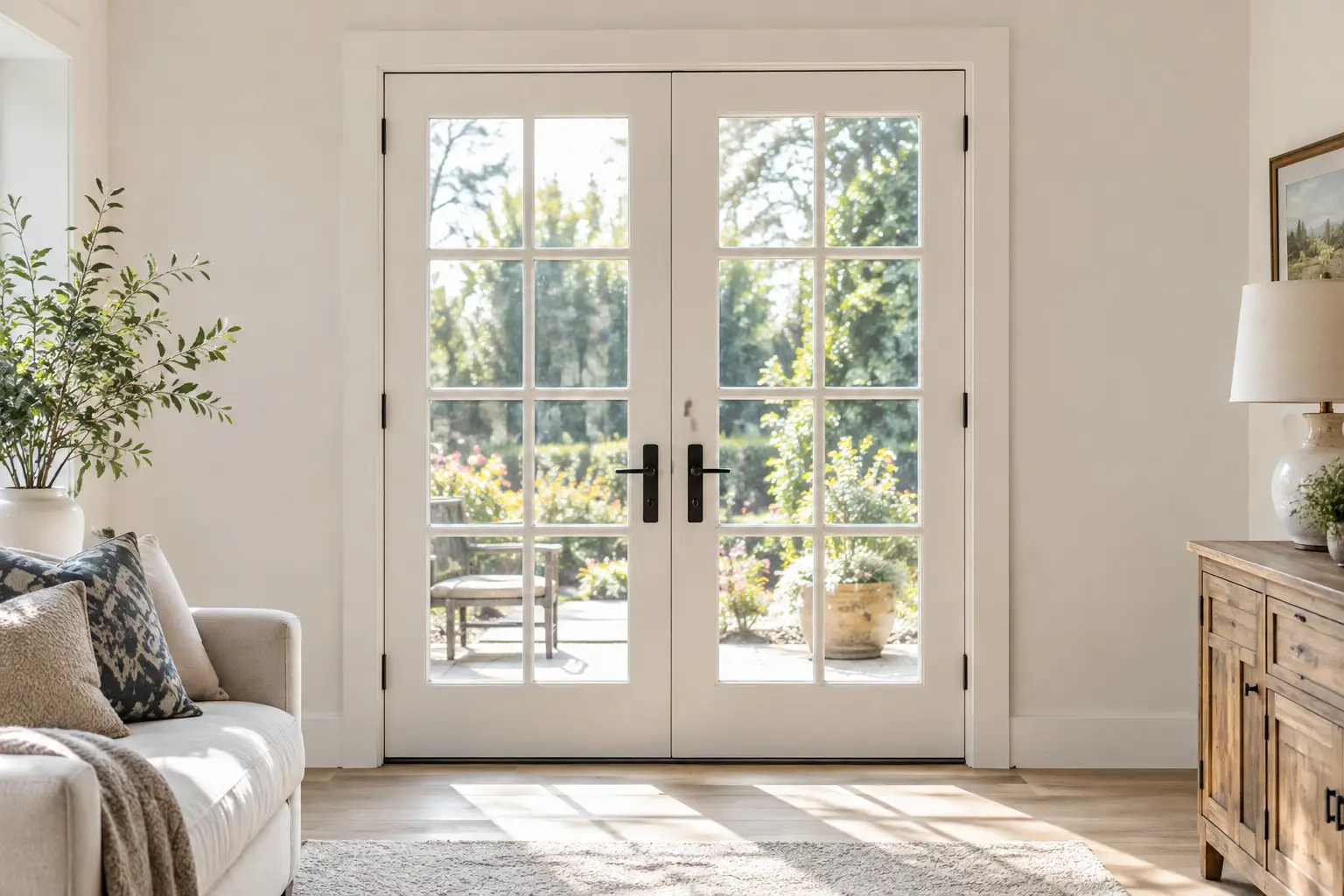
For double doors and French doors, alignment is more demanding because both leaves must meet cleanly at the center. A small hinge issue on one leaf can prevent the inactive door from bolting properly or create an uneven reveal. These doors benefit from precise adjustment rather than trial-and-error trimming.
Fixes to Avoid Before You Diagnose the Cause
It is tempting to shave the edge of a sticking door, especially when it only catches in one spot. Planing can be appropriate when a door has been carefully assessed, but it should be a final fitting adjustment, not the first response. Taking too much from a painted or stained door can expose raw timber, compromise the finish, and leave an obvious gap when conditions become dry again.
Avoid forcing a swollen door shut. Pressure can split a jamb, bend hinges, damage a latch, or chip decorative finishes. Do not add random packing behind hinges without understanding why the alignment changed. Small adjustments in hinge position affect several clearances at once, and an improvised repair can make the reveal look uneven.
For fire-rated, security, or apartment-entry doors, avoid unauthorized modifications. These doors may have specific clearance, sealing, and hardware requirements. The same caution applies to doors with concealed closers, electronic locks, or specialty pivot hardware.
When a Professional Door Adjustment Is Worth It
A professional adjustment is a practical choice when the door is heavy, newly installed, painted or stained to a high standard, or part of a broader renovation. It is also sensible when the issue keeps returning after basic hinge tightening, when multiple doors are affected, or when there are signs of moisture damage or movement in the surrounding structure.
An experienced door specialist looks beyond the visible rub point. They assess the door slab, hinge condition, jamb alignment, hardware, floor clearance, and finish protection together. If trimming is needed, it can be done accurately and the exposed edge sealed so the door remains durable and visually consistent.
For homeowners, builders, and property managers, this attention to detail prevents small operational issues from turning into premature repairs or replacement. At Meriton Doors, quality fitting is treated as part of the door itself, because a beautifully selected door only performs well when its frame, hardware, and clearances are set with precision.
A door should close with a controlled push, latch without force, and sit evenly within its frame. If yours does not, treat the change as useful information. A measured inspection and the right adjustment can restore the quiet, reliable operation that a well-crafted door is meant to provide.