A front door does more than close an opening. It frames the first view of your home, influences how an entry feels to use, and needs to stand up to years of daily traffic and changing weather. When weighing a pivot door vs hinged door, the right choice comes down to more than appearance. Door size, wall structure, clearance, hardware, security expectations, and installation quality all matter.
For many homeowners, a pivot door creates the dramatic entrance they have pictured for a renovation or new build. A hinged door remains the trusted, versatile choice for most standard openings. Both can deliver exceptional design and dependable performance when they are properly specified and professionally fitted.
Pivot Door vs Hinged Door: The Key Difference
A hinged door is supported by hinges fixed along one vertical edge of the door and its frame. It swings from the side, using a familiar setup found on most exterior and interior doors. The weight of the door is distributed through the hinges and jamb, making this a practical solution for a broad range of door sizes and styles.
A pivot door rotates on a pivot system fitted at the top and bottom of the door. Rather than swinging entirely from one side, it turns around a vertical pivot point that can sit near the edge or farther into the door panel. This changes the movement of the door and allows a larger, heavier panel to operate with a composed, architectural feel.
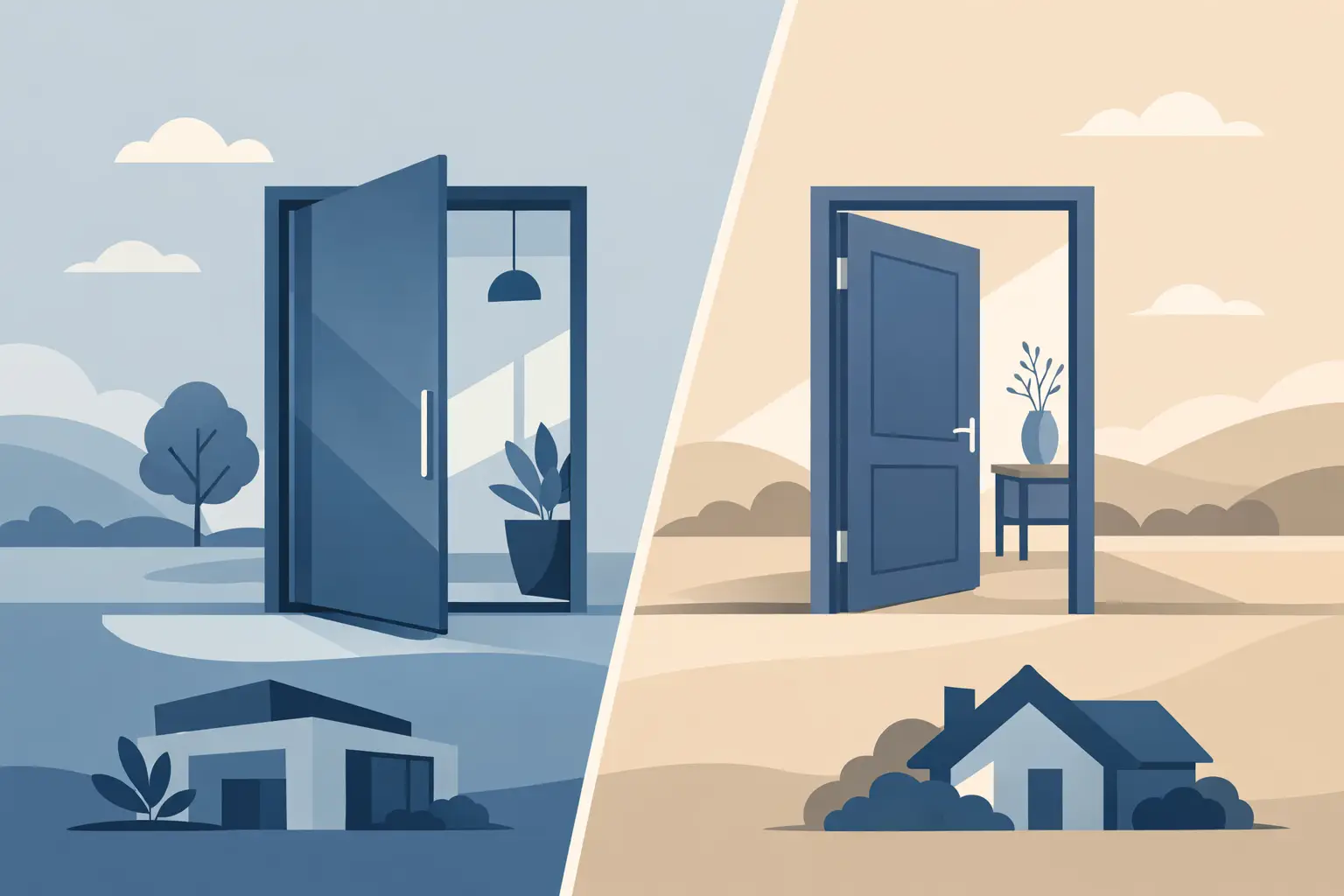
The distinction is easy to see in use. A hinged door swings from its edge and sits within a conventional frame. A pivot door creates a more expansive opening, with part of the panel moving inward while the other portion moves outward as it turns. It is a striking detail, but it also requires more planning.
When a Pivot Door Makes Sense
Pivot doors are often chosen for statement entryways, wide openings, contemporary facades, and homes where the door itself is intended to be a design feature. Their hardware is engineered to carry substantial weight, making them well suited to tall timber, glazed, or custom-designed door panels that may be impractical on standard hinges.
A stronger architectural statement
The clean lines of a pivot door work particularly well with modern homes, oversized entryways, and designs that favor wide timber panels, large glass sections, or bold finishes. With fewer visible side hinges, the door can appear more like a crafted wall element than a conventional entry door.
This does not mean pivot doors suit only contemporary properties. A carefully selected timber finish, panel detail, or sidelight arrangement can also bring a more refined, updated character to a traditional home. The key is proportion. An oversized pivot door needs an entryway with enough width and height to carry it confidently.
Better support for large and heavy panels
For a tall, wide, or solid door, pivot hardware can offer a practical advantage. The system transfers much of the load down to the floor rather than asking the jamb-side hinges to carry the full weight. This can make a substantial entrance panel feel smooth and controlled when opened.
However, heavy-duty hardware alone does not solve every structural issue. The floor, threshold, framing, and surrounding wall all need to be assessed. A beautiful pivot door can underperform if it is installed into an opening that has not been prepared accurately.
A generous sense of arrival
Because pivot doors are commonly wider than standard entry doors, they can improve access for moving furniture, welcoming guests, and creating a more open connection between inside and outside. The visual effect is equally valuable: a larger opening can make an entry hall feel brighter and more intentional.
That said, a pivot door needs clear space on both sides of its swing path. The location of furniture, steps, planters, walls, and nearby doors should be considered before selecting the pivot position.
Why Hinged Doors Remain a Reliable Choice
A hinged door is not a lesser option. It is a proven system with broad design flexibility, simpler installation requirements, and a familiar opening action that works in almost every type of home.
For standard-size exterior doors, hinged doors provide excellent security, weather sealing, and long-term usability. They are available in classic paneled styles, contemporary flush designs, French door configurations, glazed options, and solid timber looks. This makes them especially adaptable for renovations where the existing opening and frame are likely to remain.
Straightforward installation and replacement
In many projects, replacing an existing hinged door with another hinged door is the most efficient route. The opening may already have a suitable jamb, threshold, trim detail, and swing direction. This can reduce the amount of structural adjustment needed, provided the frame is square, sound, and appropriate for the new door.
Hinged doors also work well throughout the home. Bedrooms, bathrooms, laundry rooms, closets, studies, and secondary entries all benefit from their efficient operation. For these everyday spaces, a pivot system is rarely necessary.
Strong sealing and everyday practicality
Quality hinged doors can be fitted with reliable weather stripping and compression seals around the top and sides of the frame. When correctly installed, this helps manage drafts, rain, dust, and outdoor noise. A threshold and well-aligned latch complete the system.
Pivot doors can also be weather sealed effectively, but their sealing strategy is more specialized because the door rotates rather than closing against a conventional hinged edge. This is one reason precision installation matters so much for an exterior pivot door.
Space, Swing, and Layout Considerations
The available space around your opening should influence the decision early. A hinged door requires clearance on the side it swings toward, but its movement is predictable and contained. You can choose an inswing or outswing configuration where local requirements and site conditions allow.
A pivot door requires clearance on both sides of the pivot point. If the pivot is set several inches in from the edge, the smaller section of the door moves in the opposite direction from the larger section. This can be a benefit in a wide, open entry, but it can become awkward near narrow paths, steps, or tight interior halls.
Also consider how the door will be used day to day. Will children be coming in with school bags? Will groceries, strollers, or furniture need to pass through? Is there a security screen, storm door, or gate nearby? The best door is not simply the one that looks impressive in a showroom. It should make arriving home easier.
Cost and Long-Term Value
Pivot doors generally cost more than comparable hinged doors. The difference comes from heavier-duty pivot hardware, larger panels, custom fabrication, specialized seals, and the added installation work often needed to prepare the opening. If structural modifications are required, the investment can increase further.
A hinged door can offer excellent value because the hardware and installation process are more conventional. There is also a wide range of materials and finishes available at different price points, from practical internal doors to premium solid entry systems.
The right comparison is not simply initial cost. Consider the expected lifespan of the door, its impact on curb appeal, the level of daily use, and whether it supports the character and value of the property. A well-designed entry door is a visible investment, and poor fitting can undermine even premium materials.
Security, Durability, and Installation Quality
Both door types can be highly secure when they use quality locking hardware, strong frames, appropriate fixing methods, and correct alignment. A pivot door should have hardware rated for the panel’s size and weight, while a hinged door needs hinges, strike plates, and jamb reinforcement suited to the door construction.
Durability also depends on exposure. An unprotected entry facing harsh sun, wind-driven rain, or frequent moisture may need a finish and material selected specifically for those conditions. Timber requires thoughtful sealing and maintenance, while glazed sections need suitable safety glass and well-designed seals.
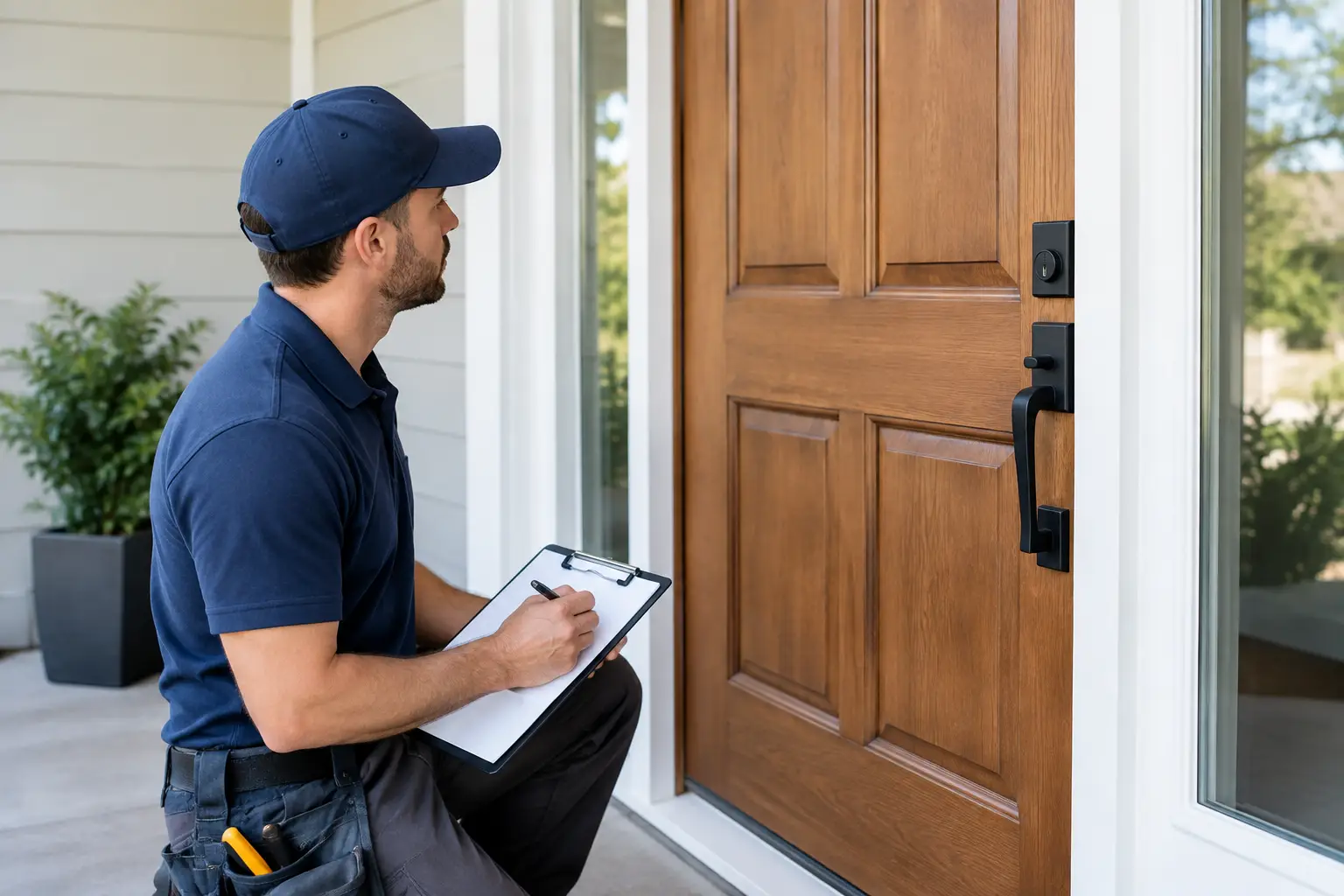
Professional measurement and fitting are essential. Small errors in an opening can lead to rubbing, poor latching, uneven gaps, water entry, or premature hardware wear. Meriton Doors approaches door selection and installation as one complete result: the panel, frame, hardware, trim, and final operation should all work together with precision.
Choosing the Right Door for Your Project
Choose a pivot door when you have a generous opening, want a memorable architectural feature, and are prepared to invest in the structural planning and specialist installation it requires. It is particularly effective for a custom front entry where scale, material, and movement are central to the design.
Choose a hinged door when you need a versatile, efficient, and enduring solution for a standard entry, renovation opening, or interior room. It offers enormous style range without demanding the same amount of space or construction adjustment.
Before making a final selection, stand at the opening and picture the door in daily use. Consider the swing, the light, the finish, the surrounding trim, and the way guests will approach the home. A door chosen with that level of care will feel right every time it opens.