
A bedroom door that allows every conversation, television show, and early-morning kitchen noise to travel through the house can quickly become a renovation regret. When comparing solid core vs hollow core doors, the difference is felt every day – in privacy, closing feel, durability, and the overall finish of a room.
For homeowners, renovators, and builders, the right choice is rarely about selecting one door type for every opening. It is about matching the door construction to the room, budget, hardware, and level of performance expected from the finished space.
Solid Core vs Hollow Core Doors: The Main Difference
The key distinction lies inside the door. A hollow core door has a lightweight internal structure, usually a honeycomb-style cardboard core or timber block framework, finished with a molded hardboard, plywood, or MDF skin. Despite the name, it is not completely empty, but it contains far less material than a solid core door.
A solid core door has a dense engineered timber, particleboard, or composite core beneath its outer face. It is not generally made from one solid piece of natural timber – that would be a solid timber door – but it has substantially more mass and strength than a hollow core option.
That extra density changes the way the door performs. Solid core doors feel heavier, reduce more sound, resist everyday knocks more effectively, and usually provide a more premium closing action. Hollow core doors are lighter, more affordable, and easier to handle during installation.
Sound Control: Where Solid Core Doors Stand Out
Sound transfer is one of the clearest reasons to choose solid core doors. Their dense internal construction helps limit airborne sound between rooms, making them a strong choice for bedrooms, home offices, media rooms, nurseries, and bathrooms.
A solid core door will not create complete soundproofing on its own. Sound can still pass through gaps at the jamb, beneath the door, and around poorly fitted hardware. However, paired with a well-fitted frame, quality seals where appropriate, and a proper door bottom detail, it can make a noticeable difference to day-to-day comfort.
Hollow core doors offer limited acoustic separation because the lightweight core does little to block sound. They can be perfectly suitable for linen closets, pantries, walk-in closets, and low-traffic areas where privacy is not a major concern. For a family home with busy routines, though, installing hollow core doors on every bedroom may be a false economy.
Durability and Daily Use
Internal doors take more wear than many homeowners expect. They are pushed open with elbows, bumped by vacuum cleaners, kicked shut by children, and exposed to humidity changes in bathrooms and laundries. Door construction matters.
Solid core doors are better equipped for high-use spaces. Their dense makeup gives them greater resistance to dents, punctures, and flexing. They also hold their shape well when correctly selected and installed in suitable conditions. This makes them a practical option for hallways, bedrooms, bathrooms, and light commercial interiors where doors receive constant use.
Hollow core doors are more vulnerable to impact damage. A sharp knock can crack or puncture the skin, and repairs are often less straightforward than they appear. They can still offer years of service in low-impact locations, particularly when quality hardware and careful installation are used, but they do not have the same substantial feel or long-term resilience.
The hardware choice deserves attention too. Solid core doors provide a stronger base for handles, locks, closers, and heavier hinges. Hollow core doors usually include reinforced blocking around standard handle locations, but their lighter construction can limit flexibility if you want to reposition hardware or install specialized fittings later.
Weight, Installation, and Door Hardware
The benefits of solid core construction come with added weight. A standard solid core internal door can be significantly heavier than a hollow core equivalent, so the jamb, hinges, screws, and fixing method all need to be appropriate for the load.
This is where professional measurement and fitting add real value. A door that is poorly sized, hung on insufficient hinges, or installed in an out-of-square opening will not operate as it should, regardless of how good the door looks in a showroom. Correct clearances, secure hinge fixing, straight reveals, and smooth latching make the difference between a door that feels refined and one that catches or rattles.
Hollow core doors are easier to carry, trim, and install. Their lighter weight can be helpful for simple replacements or projects where handling access is tight. However, care is still required when trimming. Cutting too much from the top, bottom, or sides can expose the internal core and compromise the door’s integrity.
For tall doors, wide openings, sliding systems, barn door applications, or statement designs, always consider the door manufacturer’s recommendations and the capability of the chosen track, hinges, or frame system. A beautiful door should also be engineered to operate reliably.
Cost: Upfront Price Versus Long-Term Value
Hollow core doors are typically the more economical option. Their lighter construction uses less material, which can reduce the purchase price and labor required for handling. On a large new-build project with many internal openings, this can create meaningful initial savings.
Solid core doors cost more because of their materials, weight, and performance. The total project cost may also increase if upgraded hinges, stronger frames, or additional installation time are required. Yet the higher initial investment can be justified in rooms where privacy, durability, and a quality feel matter most.
Rather than treating the decision as all-or-nothing, many projects benefit from a mixed approach. Use solid core doors for bedrooms, offices, bathrooms, and shared living areas, then select hollow core doors for closets, storage rooms, and other lower-priority spaces. This keeps the budget focused where occupants will notice the improvement.
When comparing quotes, look beyond the door leaf price. Confirm what is included for jambs, hinges, handles, architraves, painting or finishing, removal of old doors, and installation. A door package should be assessed as a complete result, not just a panel on a price list.
Appearance and Design Options
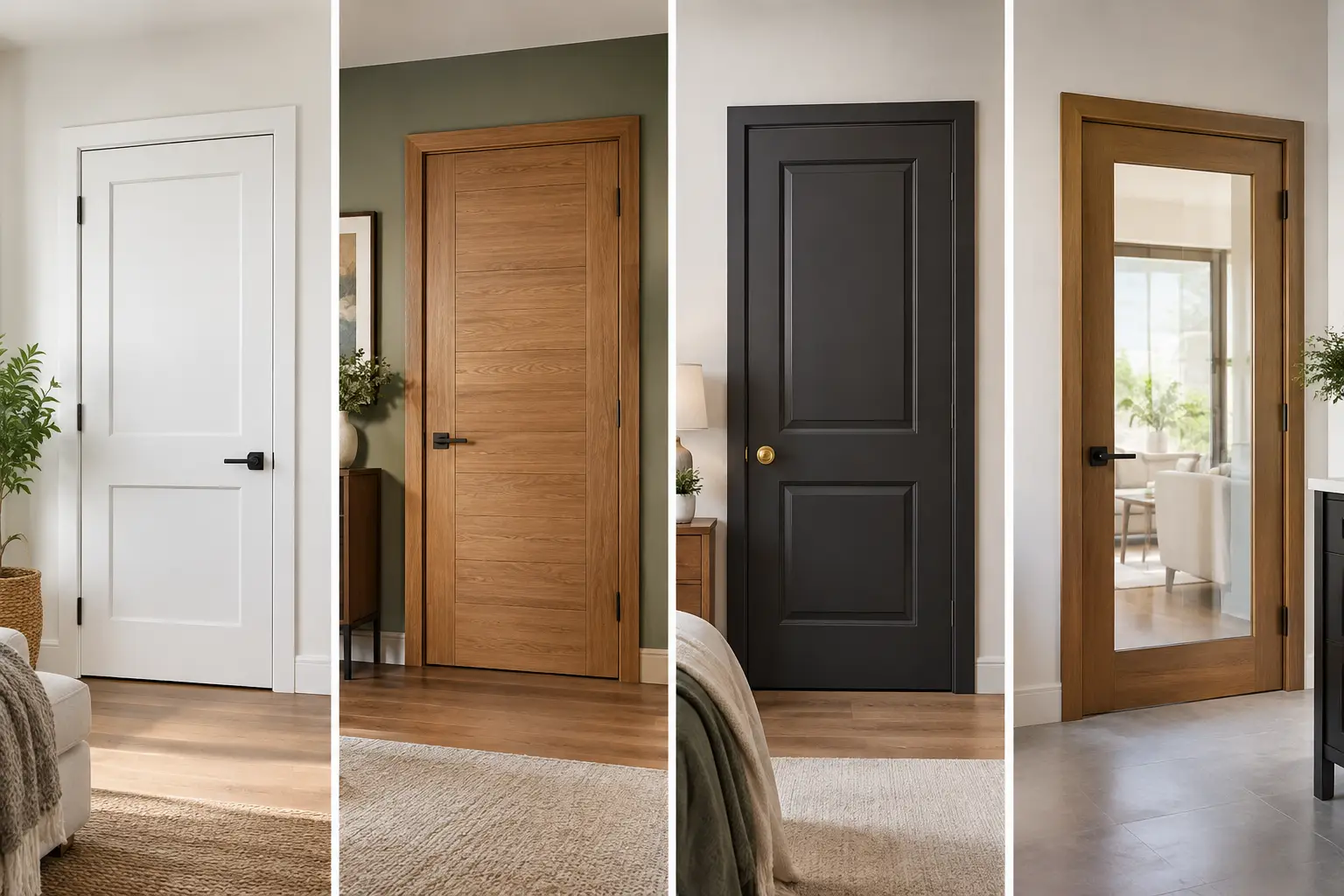
Both hollow core and solid core doors are available in a broad range of designs. Flush doors create a clean, contemporary finish, while shaker profiles, molded panel doors, glazed designs, and French door styles can suit more traditional or architectural interiors.
The visible face, paint finish, proportions, and installation quality have a major influence on appearance. From a distance, a well-finished hollow core door can look much like a solid core version. The difference becomes more apparent when the door is opened, closed, handled, and used over time.
Solid core doors are often favored for projects aiming for a higher-end interior feel. Their weight produces a quieter, firmer close, which complements quality levers, detailed architraves, and carefully finished jambs. They are also a sensible choice where a premium painted finish is expected to withstand regular use.
For a consistent result, coordinate the door style with surrounding elements. Door height, handle finish, architrave profile, skirting boards, and wall color should work together. Replacing doors without considering the trim can leave a renovation looking incomplete.
Which Door Is Right for Each Room?
Choose solid core doors where sound privacy, frequent use, and a more substantial finish are priorities. Bedrooms, studies, nurseries, bathrooms, media rooms, and rental properties with high turnover are all strong candidates. They are also worth considering when upgrading a home for resale, as buyers often notice the difference in quality.
Choose hollow core doors where budget is the leading consideration and the opening serves a low-impact purpose. Closets, utility rooms, storage areas, and secondary spaces can often perform well with hollow core construction. A quality hollow core door, accurately fitted and finished to match the home, is still far better than a damaged, poorly hung door.
There are exceptions. A quiet household may be satisfied with hollow core bedroom doors, while a busy household may want solid core construction throughout. If a bathroom has elevated moisture exposure, the material, sealing, ventilation, and finish are just as important as the core type. For exterior openings, internal hollow and solid core doors are generally not the answer – use a purpose-built exterior door system designed for weather exposure and security.
Make the Choice Before Ordering
Door selection should happen before finalizing jambs, hardware, and installation details. Measure each opening carefully, account for floor finishes, confirm the handing and swing direction, and decide whether privacy locks, passage sets, or specialty hardware are required. These decisions prevent costly changes once fitting is underway.
The best door is not simply the heaviest or least expensive option. It is the one that suits how each room is used and is installed with the precision needed to look right, close cleanly, and keep performing for years.