A door can occupy more visual space than a piece of furniture, yet it is often selected late in a renovation. That is changing. The strongest interior door trends treat doors as part of the architecture: a finish that carries through the home, a practical privacy solution, and a detail that makes rooms feel considered rather than merely completed.
For homeowners planning a renovation or new build, the best choice is rarely the most dramatic door in a showroom. It is the one that suits the home’s proportions, light, traffic flow, hardware, trim, and daily use. Here is what is shaping interior door selection and how to use those ideas without sacrificing durability or function.
Interior Door Trends Favor Warmth and Definition
For years, bright white, flat-profile doors were the default in many homes. They remain a clean and dependable option, particularly in compact or low-light spaces, but warmer and more detailed choices are now leading the conversation. Homeowners are looking for interiors with depth, texture, and a less uniform finish.
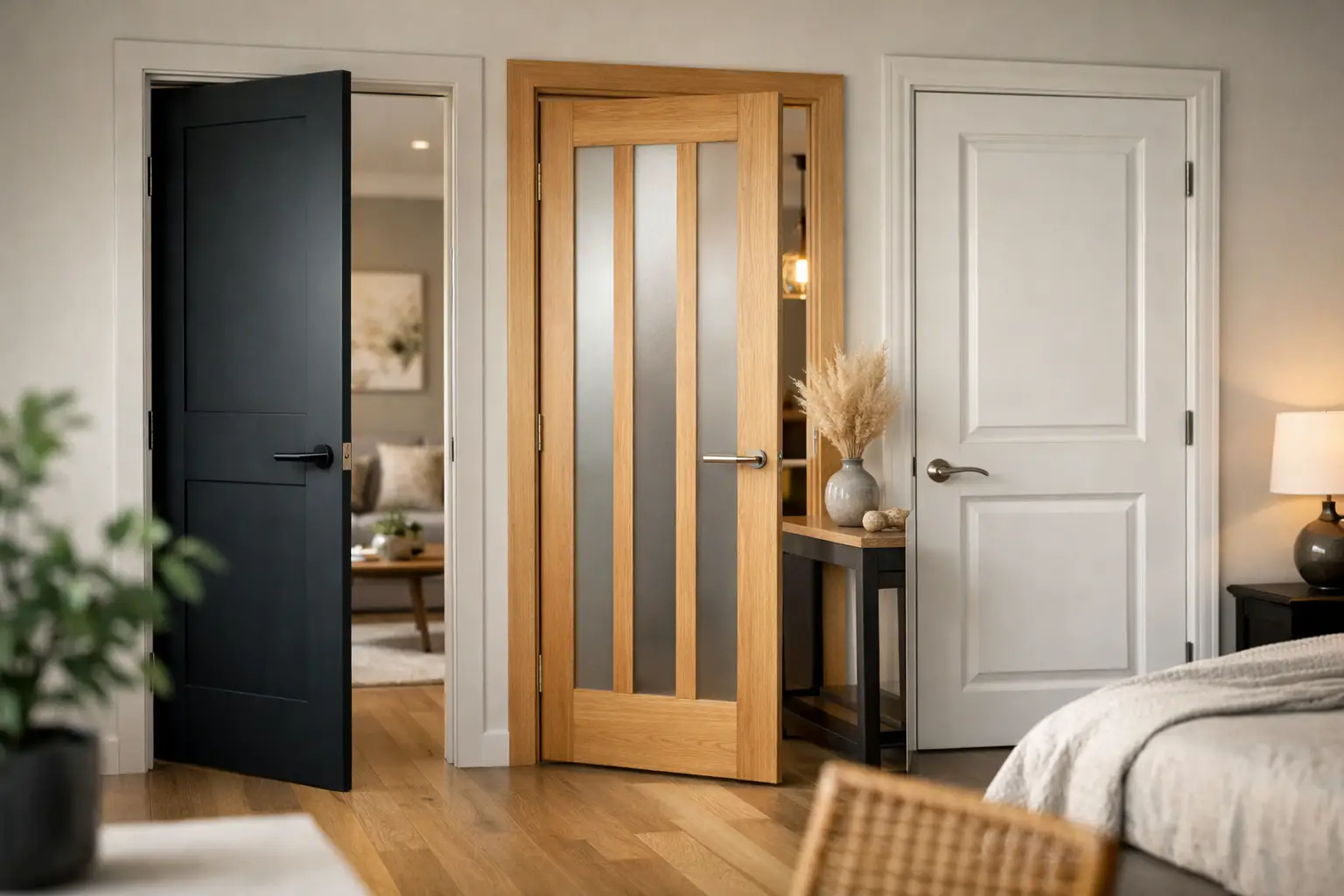
Natural timber tones, timber-look veneers, and painted doors in warm whites, soft greiges, mushroom shades, and muted earthy colors all create a more relaxed result than stark contrast. The goal is not to make every doorway a feature. It is to give the joinery enough presence that it supports the wider palette of flooring, cabinetry, and furnishings.
This trend works especially well when the architraves, jambs, and skirting are selected as part of the same system. A high-quality door can look incomplete beside undersized or mismatched trim. Coordinating these components produces a more intentional finish and allows the door design to read properly from room to room.
Shaker Profiles Remain a Reliable Choice
Shaker doors continue to earn their place because they are adaptable. Their recessed panels add shadow and structure without feeling overly decorative, making them suitable for contemporary, Hamptons-inspired, transitional, and heritage-influenced homes.
A slim-profile shaker door feels sharper and more modern, while wider rails and deeper panels create a more traditional look. The trade-off is visual weight. In a small hallway with several openings, an elaborate profile can make the area feel busy. A simpler panel layout may be the better decision, especially when strong flooring or wall finishes are already doing the visual work.
Flush Doors Are Being Used More Deliberately
Flush internal doors are no longer simply the budget option. In the right setting, a smooth flush door provides the quiet, uninterrupted plane that modern interiors need. It is particularly effective in minimalist homes, apartments, and spaces with detailed wall cladding, statement lighting, or heavily patterned stone.
The finish is what determines whether a flush door feels basic or refined. A premium paint finish, concealed-style hardware, quality edges, and precise installation make a significant difference. If the aim is a clean architectural look, flush doors paired with simple square-set or restrained trim can be exceptionally effective.
Glass Doors Bring Light Without Giving Up Separation
Open-plan living remains popular, but homeowners are also recognizing the value of rooms that can close. A study needs acoustic separation during a video call. A dining room may need to contain noise. A family area can benefit from being closed off without losing borrowed daylight.
French doors and glazed internal doors answer that need. Clear glass keeps sightlines open and lets light travel between rooms, while reeded, fluted, frosted, or obscure glass introduces privacy. Black-framed glazed doors have been widely used in industrial-style homes, but softer alternatives are becoming more common. White, bronze, warm gray, or timber-framed glass doors can feel less severe and integrate more easily with residential interiors.
When choosing glass, consider what the room actually requires. Clear glass is ideal for a formal lounge or hallway where visibility is welcome. For a home office, bathroom-adjacent area, or bedroom corridor, obscured glass can retain light while reducing visual distraction. Quality glass, secure fixing, and accurate alignment are essential, particularly for larger or paired door leaves.
Space-Saving Door Systems Are More Sophisticated
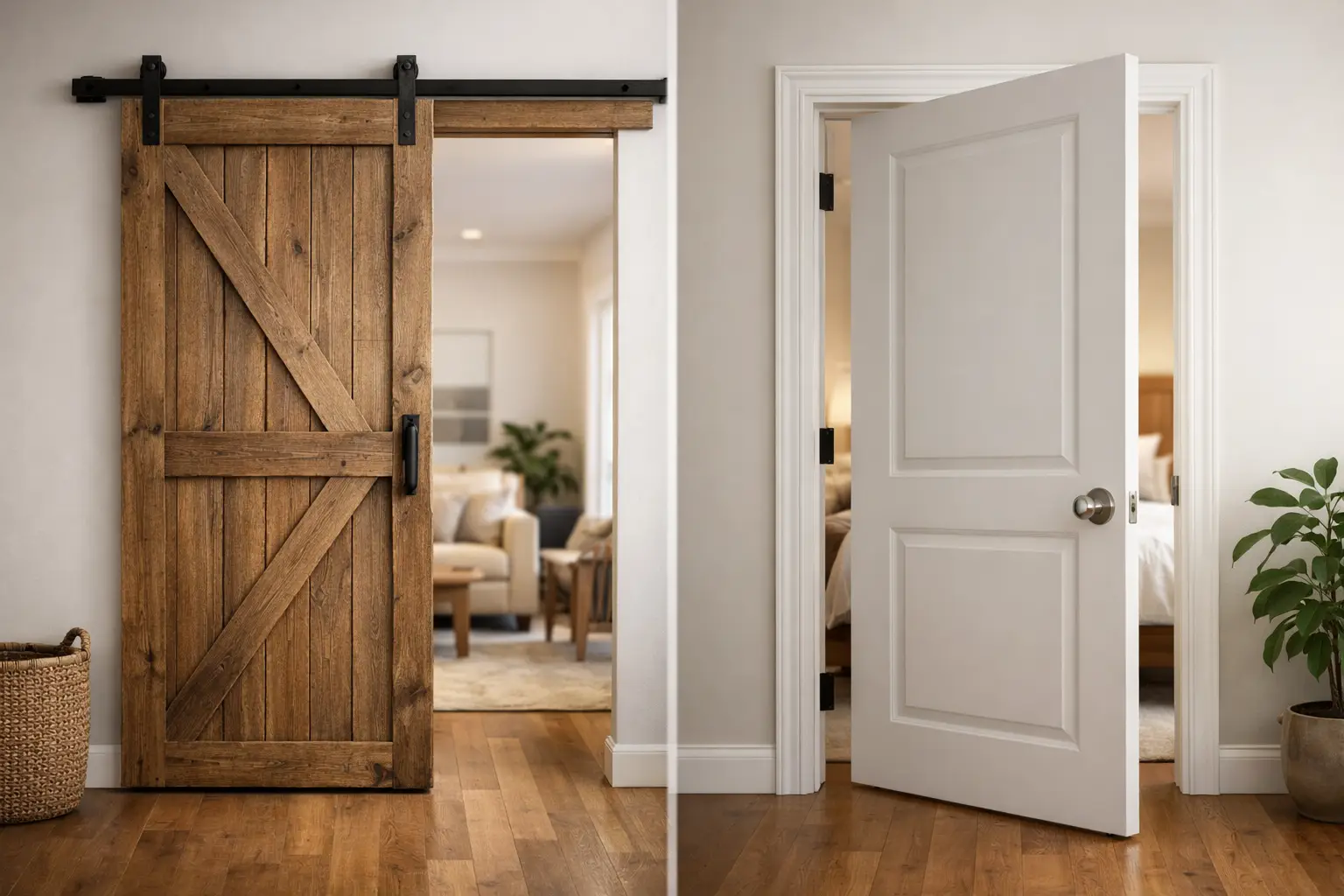
Not every room has the clearance for a conventional swing door. This is where current interior door trends are becoming more practical, not just more decorative. Barn doors, bifold doors, and other space-conscious systems can improve how a floor plan works when they are specified for the right application.
Barn doors are often chosen for their character and visible hardware. They can suit a pantry, laundry, study, or secondary living zone, especially in homes with modern farmhouse, industrial, or rustic influences. They do require clear wall space beside the opening, and they generally do not provide the same acoustic or privacy seal as a hinged door. For bedrooms and bathrooms, that limitation needs careful thought.
Bifold doors are useful where an opening is wide but a full swing door would block circulation. They can work well for laundries, wardrobes, storage areas, and flexible room dividers. The quality of the tracking system matters. A poorly fitted bifold can feel awkward from the first use, while a well-installed system opens smoothly and keeps the opening clear.
For areas that demand privacy, sound control, or a more substantial feel, a traditional hinged door remains difficult to beat. Trend-led design should improve everyday use, not create a compromise that becomes frustrating after the novelty wears off.
Taller Proportions and Stronger Trim Create Presence
One of the most effective ways to elevate an interior is to pay attention to proportion. Taller doors, where ceiling height and structure allow, can make a room feel more generous and established. Even without changing door height, a carefully selected architrave profile can add definition to a standard opening.
There are two distinct directions here. Minimal square trim creates crisp lines and is suited to contemporary homes. More substantial stepped or molded architraves bring character and work beautifully in homes with traditional detailing. Neither is automatically better. The right option should relate to the window trims, cabinetry profiles, ceiling details, and age of the property.
Color can also change the effect. Matching the door and trim to the wall creates a quiet, integrated look. Painting the door in a contrasting shade turns the opening into a feature. Darker tones can look striking in a light-filled room, but they show dust, fingerprints, and paint damage more readily than mid-tone or light colors. In high-traffic homes, finish durability should be part of the decision.
Hardware Is Now Part of the Door Design
Handles, hinges, privacy sets, and latches are small components with a major visual and practical role. A well-chosen lever can reinforce the style of the whole room, whether that means matte black for graphic contrast, satin nickel for a classic finish, brushed brass for warmth, or bronze for a richer, more tailored result.
Consistency matters more than matching every finish perfectly. Interior door hardware should relate to nearby cabinetry pulls, tapware, and lighting without forcing all metal finishes to be identical. For example, a brushed brass handle can sit comfortably with black lighting if the home repeats both finishes with intention.
Function deserves equal attention. Bedrooms and bathrooms need suitable privacy hardware. Frequently used doors benefit from solid handles and dependable latches. In homes with children, older residents, or accessibility needs, lever handles are generally easier to operate than knobs. Choosing quality hardware at the outset avoids the loose fittings and worn finishes that can undermine an otherwise polished renovation.
Choose a Trend That Fits How You Live
The most successful door selection begins with a few practical questions. Which rooms need privacy? Where does natural light need to travel? Is there enough clearance for a swing door? Will the door receive daily impacts from children, pets, or moving furniture? Does the home need a statement, or does it need visual calm?
For a cohesive result, limit the number of door styles. A home does not need a different design for every room. Often, one primary internal door style, one special glazed option for shared living areas, and a carefully chosen space-saving solution where needed will feel more refined than a collection of competing features.
Professional measurement and installation are just as important as the product itself. Walls are not always straight, floors can vary, and existing openings may need adjustment. Properly fitted doors should operate smoothly, sit evenly within their frames, and align with surrounding trim. That precision is where a door stops looking like a building component and starts looking like part of a finished home.
Meriton Doors helps homeowners and builders make these decisions with a focus on design, durability, and accurate installation. The best interior door trend is the one that still feels right when the paint colors change, furniture moves, and the home is being lived in every day.