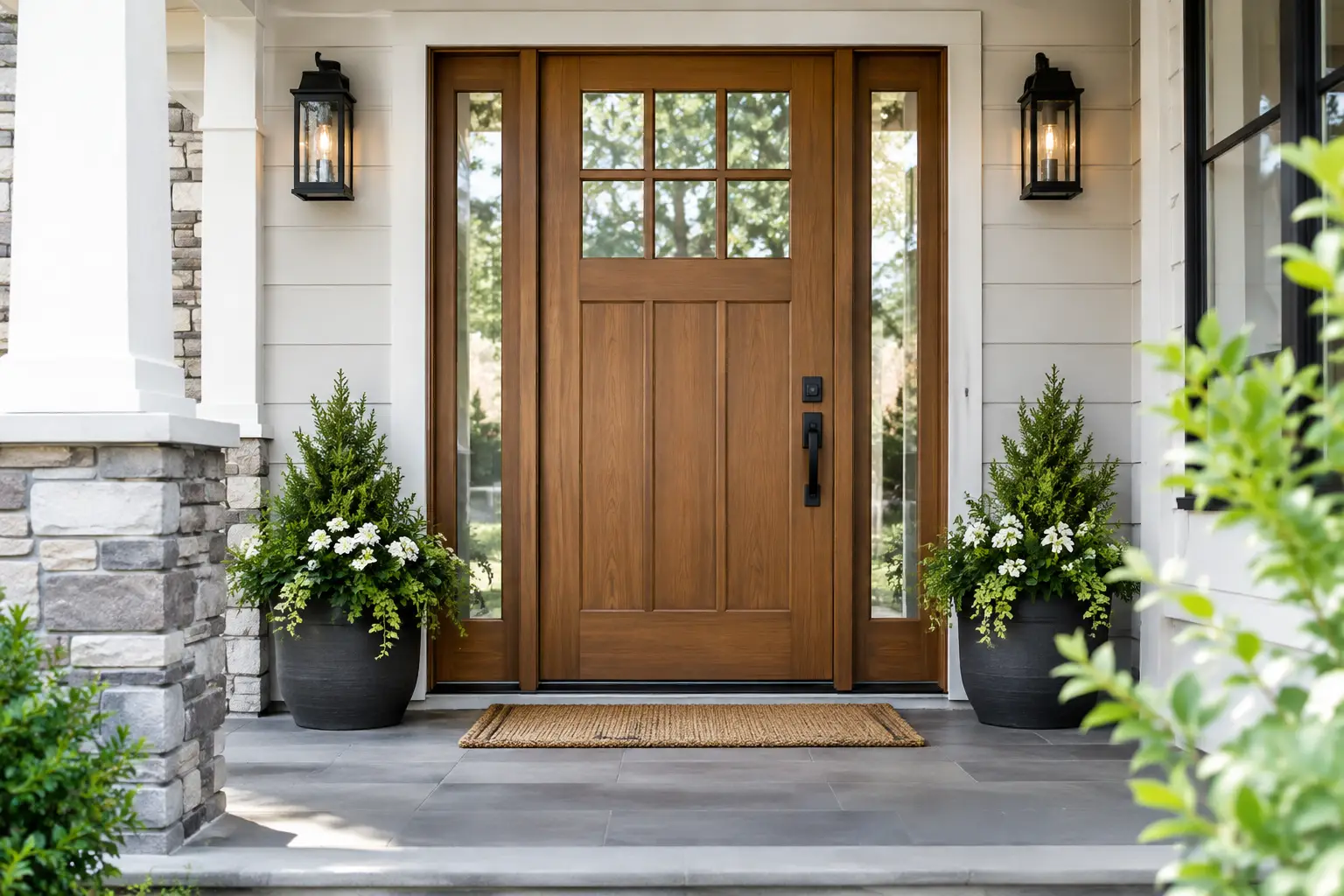
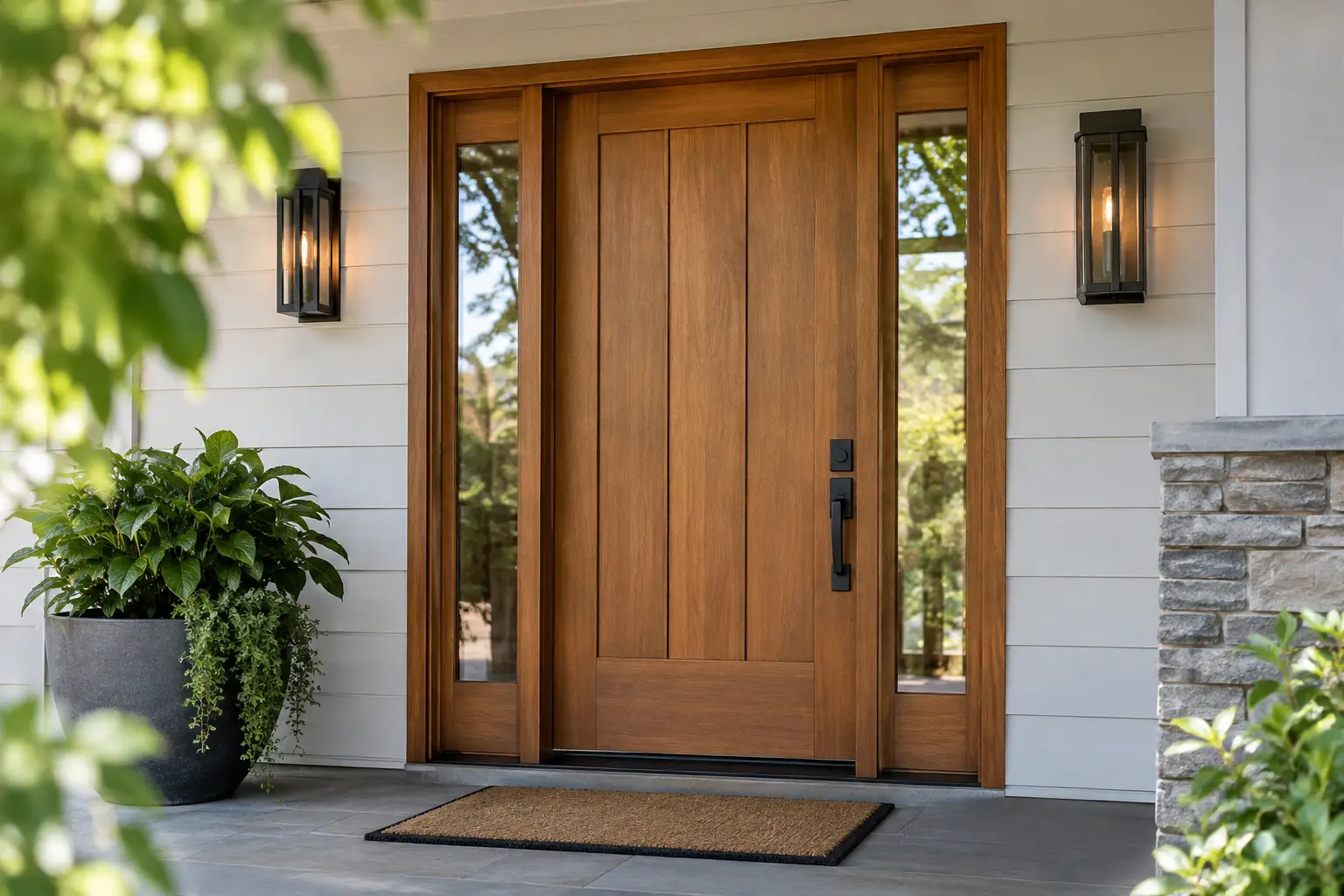
A front door is asked to do far more than look attractive. It must make a strong first impression, close securely, stand up to daily use, and cope with changing weather at the same time. This timber entry door review looks at where real wood performs beautifully, where it needs more care, and what separates a lasting entrance door from one that becomes a maintenance problem.
For homeowners planning a renovation or new build, timber remains one of the most character-rich choices available. Its grain, warmth, weight, and ability to be made to suit the home give it an advantage that many manufactured materials struggle to match. The right door, however, is not simply a matter of choosing a species and a stain. Construction, exposure, hardware, framing, and installation all affect the final result.
Why Timber Still Makes a Strong Entrance Choice
A quality timber door has visual depth that painted metal and molded composite doors cannot fully replicate. Even when painted, the subtle texture and substantial feel of timber create a more considered entrance. For period homes, timber can preserve architectural character. For contemporary homes, it can soften crisp lines and introduce natural material without making the facade feel busy.
Timber is also highly versatile. It can be built as a solid panel door, a glazed French-style entrance, a pivot door, or a design with sidelights that brings more daylight into the entry. Details such as routed panels, vertical battens, square shaker profiles, and custom glazing are easier to tailor in timber than in many off-the-shelf alternatives.
That flexibility matters when the opening is not standard. Older properties can have uneven walls or nonstandard jamb dimensions, while new homes may need a large statement door that fits a specific architectural plan. A properly specified timber door can be made to work with those conditions rather than forcing the design around limited sizes.
Timber Entry Door Review: The Real Trade-Offs
The main advantage of timber is also its central consideration: it is a natural material. Wood responds to moisture, heat, and sunlight. That does not make it unsuitable for an exterior door. It means the door must be built, finished, and installed with its environment in mind.
A door under a deep porch, facing away from harsh afternoon sun, generally has an easier life than one fully exposed to wind-driven rain and intense UV. In a protected entry, a high-quality painted or stained timber door can hold its appearance for years with sensible care. In an exposed opening, it may need more frequent inspection and refinishing. This is not a flaw to hide – it is part of owning a natural product.
Painted finishes are often more forgiving than clear stains in demanding locations because they provide stronger UV protection. A stained door shows the grain to full effect, but clear coatings can break down faster if neglected. Homeowners who want a richly stained timber entrance should be prepared to monitor the finish, especially around the bottom rail, edges, and areas that receive direct sun.
Movement is another factor. Seasonal expansion and contraction can occur in timber, particularly if the door is exposed to significant humidity swings or the home has strong heating and cooling cycles. Good construction reduces this risk. Engineered cores, stable timber selections, proper sealing on every edge, and accurate clearances around the door all help it operate reliably.
Construction Quality Matters More Than Appearance Alone
Two timber doors can look similar in a showroom and perform very differently after several seasons. The first question is not just what species is on the face of the door. It is how the door has been constructed.
A well-made exterior door should use materials and joinery suited to external conditions. Solid timber can be an excellent choice when it is carefully selected and properly finished. Engineered timber construction can also offer strong stability, particularly for larger doors or designs with wide panels. Neither approach automatically wins in every project. The better choice depends on the design, the exposure, and the quality of the manufacturing.
Pay close attention to the bottom edge and lower rails. These areas encounter splashback, wet shoes, cleaning water, and the occasional forgotten umbrella. A door that is not sealed thoroughly on all faces and edges can absorb moisture where it is least visible. Over time, that can lead to swelling, finish failure, or damage that is costly to correct.
Glazing should also be considered as part of the door system, not just a design feature. Decorative glass, obscure glass, and clear panels each affect privacy and light. For a front entry, safety-rated glass and secure glazing methods are essential. If the door includes sidelights, the frame and seals around those panels deserve the same attention as the door itself.
Security Depends on the Whole Assembly
A heavy timber door feels secure, but weight alone does not create a secure entrance. The lock, hinges, strike plate, jamb, and installation work together. A premium door fitted with weak hardware or installed into a poorly prepared frame will not provide the reassurance homeowners expect.
For most homes, a quality deadbolt or multipoint locking arrangement, strong hinges, and a reinforced strike area offer a sound foundation. The door should close cleanly without binding, and the latch should engage without having to lift, push, or force the leaf into position. If operation feels difficult from day one, it should be addressed before small alignment issues become wear on the lock and frame.
Large doors need particular care. Oversized timber entry doors can make a dramatic architectural statement, but they require hinges, pivots, and framing designed for their size and weight. This is where professional measuring and installation protect both the appearance of the project and the long-term operation of the door.
Weather Protection Starts at the Threshold
Many entry door issues are blamed on the door itself when the real cause is inadequate weather management around it. A correctly detailed threshold, sill, weatherstripping, and drip protection keep water from reaching vulnerable points. A canopy or covered porch can further reduce weather exposure without compromising the design.
The frame must be square, plumb, and securely fixed. Small inaccuracies can create uneven gaps that allow drafts, moisture, and noise through the opening. They can also affect the way the door swings and latches. Professional installation is not an optional finishing touch for a timber entrance door. It is a core part of how the product performs.
For homes in areas with strong sun, ask how the selected finish will handle UV exposure and whether the entry design provides adequate shelter. For exposed sites, a more protective paint system, a covered opening, or a different door material may be the more practical decision. Choosing timber should be based on the conditions of the property, not just a photograph that captures the right look.
Maintenance Is Simple When It Is Consistent
Timber doors reward regular attention. The good news is that maintenance is usually straightforward when handled early. Wipe off dirt and salt residue, check that drainage around the doorway is clear, and inspect the finish several times a year. Look closely at the bottom edge, around glass, and on the face that receives the most sun.
When the finish begins to look dull, dry, cracked, or thin, deal with it before bare timber is exposed. A light preparation and recoat is far easier than repairing water damage or stripping a badly failed finish. Hardware should also be checked periodically to make sure screws remain tight and hinges are operating smoothly.
Avoid harsh cleaners and do not allow sprinklers to repeatedly wet the door. Even an excellent finish cannot compensate for constant water exposure. A small adjustment to landscaping or irrigation can add years to the appearance of an entry door.
When Timber Is the Right Choice
Timber is an excellent choice for homeowners who want an entrance with authentic character, tailored design, and a substantial feel. It suits traditional homes, refined contemporary facades, and renovation projects where detail matters. It is especially rewarding when the doorway has some protection from the elements and the owner is willing to maintain the finish over time.
It may be less suitable for an unprotected opening with relentless sun and rain, or for owners who want the lowest possible maintenance commitment. In those cases, a fiberglass or metal alternative may better match the site and lifestyle. There is no single best material for every entrance. There is only the material that best suits the design, exposure, budget, and level of care the home will receive.
The strongest timber entry door projects begin with an honest assessment of those conditions, then pair a well-built door with precise installation and a finish designed for the setting. Done well, a timber entrance does not just frame the way into a home. It gives the entire facade a sense of permanence and care.
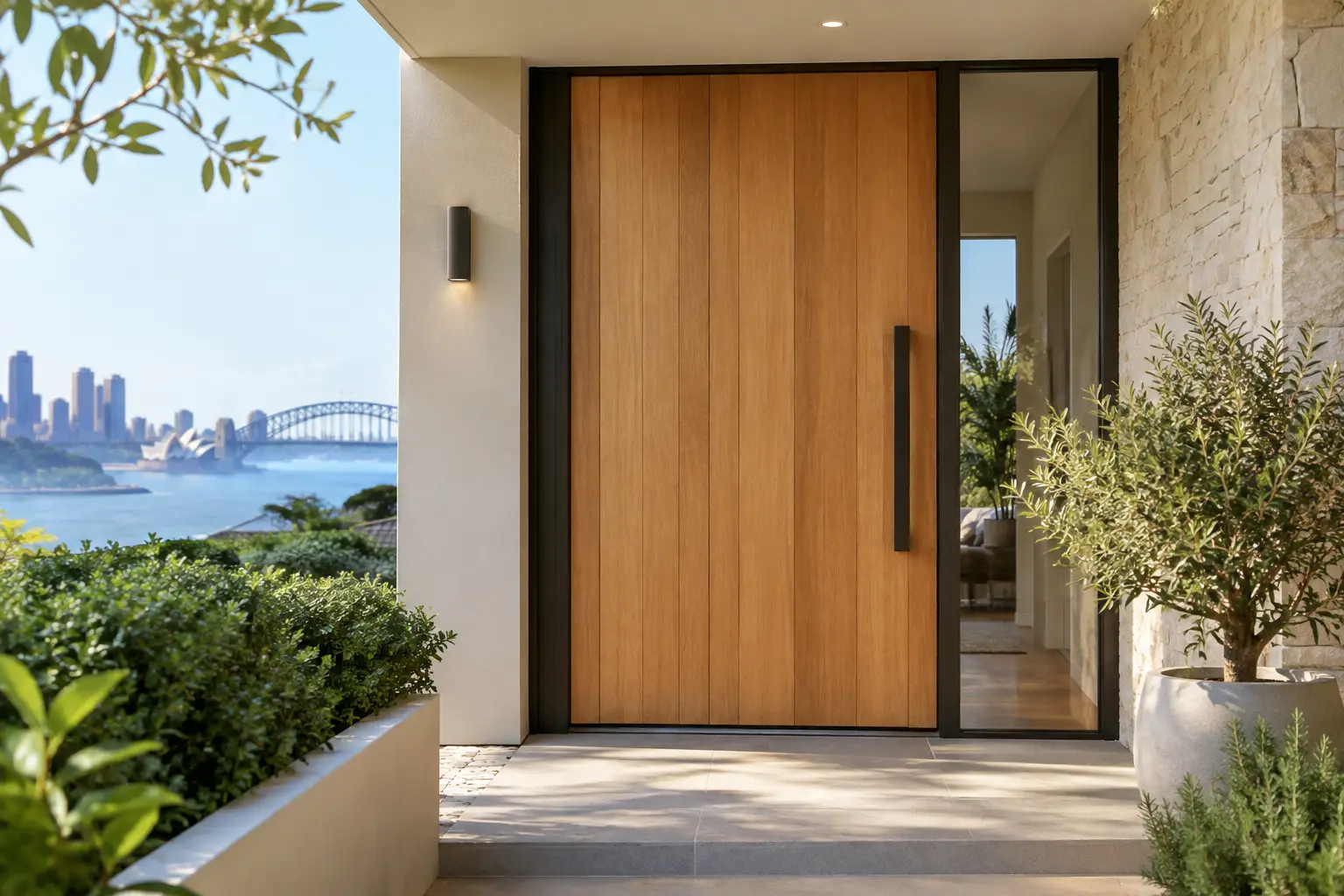
2026 Door Trends for Stylish Sydney Homes
Explore 2026 door trends, from warm timber and statement entries to refined interior profiles, with practical guidance for a lasting home upgrade today.