A door that slams after every use can make an otherwise well-finished home or commercial space feel unfinished. A door closer solves that problem by controlling the closing cycle, bringing the door back to its frame at a measured speed and helping it latch securely. When selected and fitted properly, it improves safety, protects the door and frame, and gives the entry a more considered, dependable feel.
For homeowners, renovators, builders, and property managers, the best choice is rarely just the closest-looking unit. Door weight, door location, traffic levels, hardware, and any fire or access requirements all affect which closer will perform well over time.
What a Door Closer Does
Most door closers use a spring and hydraulic mechanism. Opening the door compresses the spring and moves hydraulic fluid through internal valves. As the door is released, the spring returns it toward the frame while the hydraulic system slows and controls the movement.
This process usually has two adjustable stages. The main closing speed controls the movement from fully open to near the frame. The latch speed controls the final few inches, giving the latch enough momentum to engage without creating a bang. A correctly adjusted closer should make the door feel purposeful, not heavy, abrupt, or reluctant to close.
A closer can also help prevent a door from being left ajar, reduce the chance of wind catching an exterior door, and limit wear on hinges, locks, frames, and surrounding trim. It is a functional component, but one that has a visible effect on everyday comfort and the long-term finish of the opening.
Choosing the Right Door Closer for the Door
The first question is not which finish looks best. It is whether the closer has the right power for the door. A lightweight hollow-core internal door needs very different control from a solid timber entrance door, an oversized pivot-style door, or a glazed commercial door.
Door size, weight, and wind exposure
Heavier and wider doors require a closer with greater closing force. If the unit is underpowered, the door may fail to latch consistently, particularly when seals create resistance or outside air pressure is working against it. An overpowered closer can make the door difficult to open and may put unnecessary stress on the frame and hinges.
Exterior openings need particular attention. Wind, weather seals, and pressure differences between inside and outside can change how a door behaves throughout the day. A closer that works adequately in still conditions may struggle on a windy afternoon. For this reason, entrance doors often benefit from an adjustable unit selected specifically for the weight and conditions of the opening.
The door’s purpose and traffic level
A powder room door in a private home and a frequently used office entry have different demands. In busy settings, a closer must withstand repeated cycles while delivering consistent closing action. In homes, quieter operation and a discreet appearance may be the priority.
For light commercial premises, a closer can support controlled access and reduce the need for staff to check whether doors have been shut. Where a door forms part of a fire-rated system, the closer, hinges, latch, seals, and door construction need to work together as an approved assembly. This is not a place for mixing components based on appearance alone. Always confirm the applicable building and fire requirements before selecting or altering hardware.
Accessibility and opening force
A door closer should not create an unnecessary barrier for children, older residents, or people using mobility aids. High closing force may be necessary for a large exterior door, but it needs to be balanced against the effort required to open it. The ideal result is a door that closes and latches reliably while remaining comfortable for its intended users.
This balance is one reason professional assessment is valuable. A change to hinges, weather stripping, locks, or flooring can affect the way a door swings and latches. The closer should be specified as part of the complete door system, not as an afterthought.
Common Door Closer Styles
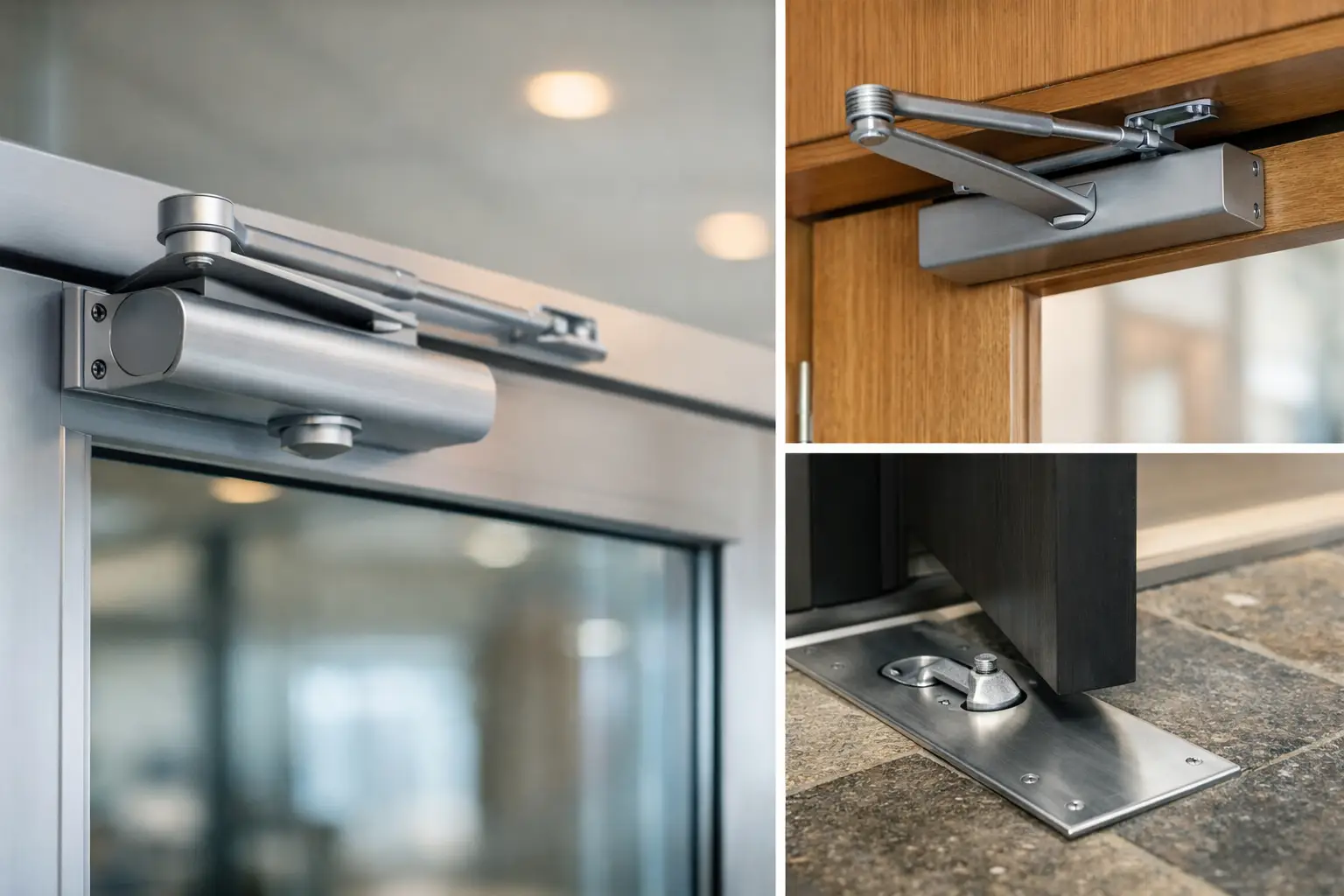
The visible overhead closer is the most familiar option. It is mounted to the door, frame, or adjacent wall with an arm that controls the swing. These units are practical, durable, and widely suited to entrance doors, utility areas, offices, and other high-use openings. Finishes can be selected to complement handles, hinges, and locks.
Concealed closers offer a cleaner visual result. They may be installed within the door or frame, hiding much of the mechanism when the door is closed. They are often chosen where architectural detail matters, such as refined internal doors, contemporary entryways, or spaces where exposed hardware would interrupt the design. Installation is more involved, and the door and frame must be suitable for the required preparation.
Floor springs are another concealed option, commonly used for heavy glass or aluminum doors in commercial applications. They are capable of managing substantial weight and traffic, but they require careful floor preparation and coordination during installation. They are generally not the simplest choice for a standard residential swing door.
There are also spring hinges and basic self-closing hinges. These can be appropriate for lightweight doors where precise speed control is not essential. However, they do not offer the same level of adjustment or controlled latching as a hydraulic door closer. For doors that need to close quietly, reliably, and consistently, a dedicated closer is usually the better investment.
Mounting Position Changes How the Door Feels
A door closer may be mounted on the pull side, push side, frame, or parallel to the frame, depending on the door swing and the required appearance. The arm geometry changes with each arrangement, affecting opening clearance, closing force, and the visual profile of the hardware.
Parallel-arm mounting is often preferred where a neat, low-projection finish is needed on one side of the opening. Standard arm arrangements can be more straightforward in other situations. The correct configuration depends on the frame depth, reveal, nearby walls, trim, and whether the door must open to a particular angle.
This is where a seemingly small fitting decision can have a large impact. Incorrect placement may cause the door to bind, prevent it from opening fully, interfere with architrave, or create a weak fixing point. Timber doors, metal frames, and glass systems each require suitable fixings and accurate preparation.
Adjustment Is Not a Substitute for Correct Selection
A closer with adjustment valves can fine-tune performance, but it cannot overcome the wrong closer size, poor hinge alignment, a warped door, or an incorrectly fitted latch. Turning the valves too far can cause oil leaks, erratic operation, or a door that either slams or stalls before latching.
Start by ensuring the door swings freely and the latch aligns with the strike plate. Once the basics are correct, adjust the main closing speed gradually, then set the latch action so the door engages securely. Make small changes and test the door several times, because a single swing does not always reveal how it will behave in normal conditions.
If a door begins closing differently after months or years of reliable use, inspect the hinges, weather seals, latch, and frame before assuming the closer has failed. Loose screws, seasonal movement in timber, and worn hinges are common causes of changed performance.
Details That Protect the Finished Look
The closer should complement, rather than compete with, the rest of the door hardware. Matching the finish to lever handles, hinges, locks, and other visible fittings creates a more intentional result. Satin chrome, black, brass tones, and stainless finishes can all work well, provided they suit the overall style and maintenance expectations of the space.
Door stops are equally important. A closer controls the return of the door, but it does not protect the wall or hardware when the door is opened with force. A properly positioned stop prevents damage to handles, adjacent walls, and the closer arm. On exterior doors, consideration should also be given to security hardware and whether a hold-open function is appropriate. A hold-open feature can be convenient, but it may be unsuitable for doors that must self-close for safety or fire performance.
For properties in Penrith and across greater Sydney, local conditions such as heat, dust, changing humidity, and exposed entryways can place extra demands on external hardware. Choosing quality components and having them accurately fitted helps avoid the cycle of repeated adjustments and early replacement.
A well-chosen door closer should disappear into the routine of the building: the door opens comfortably, closes quietly, and latches every time. That quiet reliability is often the detail that makes a completed door installation feel genuinely professional.