A new door can be the detail that makes a renovation feel complete – or the detail that exposes every uneven wall, tired jamb, and awkward gap around it. That is why doors supply & installation Kellyville homeowners choose should be considered as one connected project. The door itself matters, but so do the opening, the hardware, the surrounding trim, and the quality of the fit.
For a front entry, the decision affects curb appeal, security, light, and first impressions. Inside the home, doors influence privacy, noise control, room flow, and the finish of every hallway. A well-chosen, professionally installed door brings those practical and visual considerations together.
Start With the Purpose of the Door
The right door is not always the most decorative option in a catalog. It is the option that suits the room, the structure, and the way the property is used. Before selecting a profile, consider what the door needs to do each day.
An entrance door should feel substantial, complement the facade, and suit the level of privacy and natural light desired. Solid designs offer a more private, grounded appearance, while glazed panels or sidelights can brighten a darker entry. The trade-off is simple: more glass can bring in more daylight, but it also requires careful consideration of privacy, orientation, and security.
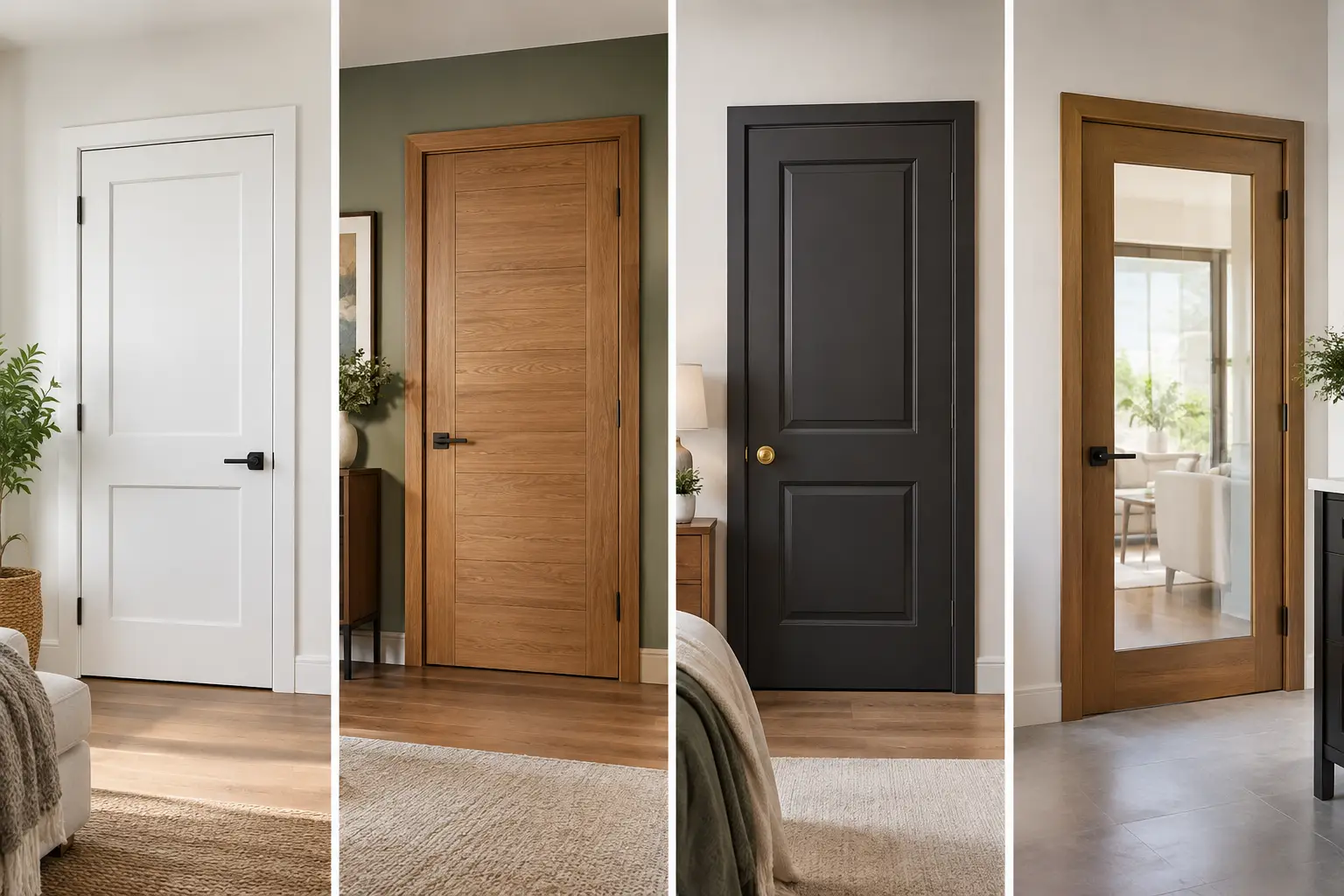
Internal doors have a different job. Bedrooms, bathrooms, studies, and media rooms generally benefit from solid-core construction where sound reduction and a more premium feel matter. Hollow-core doors can be a practical choice for wardrobes, linen closets, or low-traffic areas where budget is the priority. Neither option is automatically better. The important point is matching the construction to the room rather than using one door type everywhere.
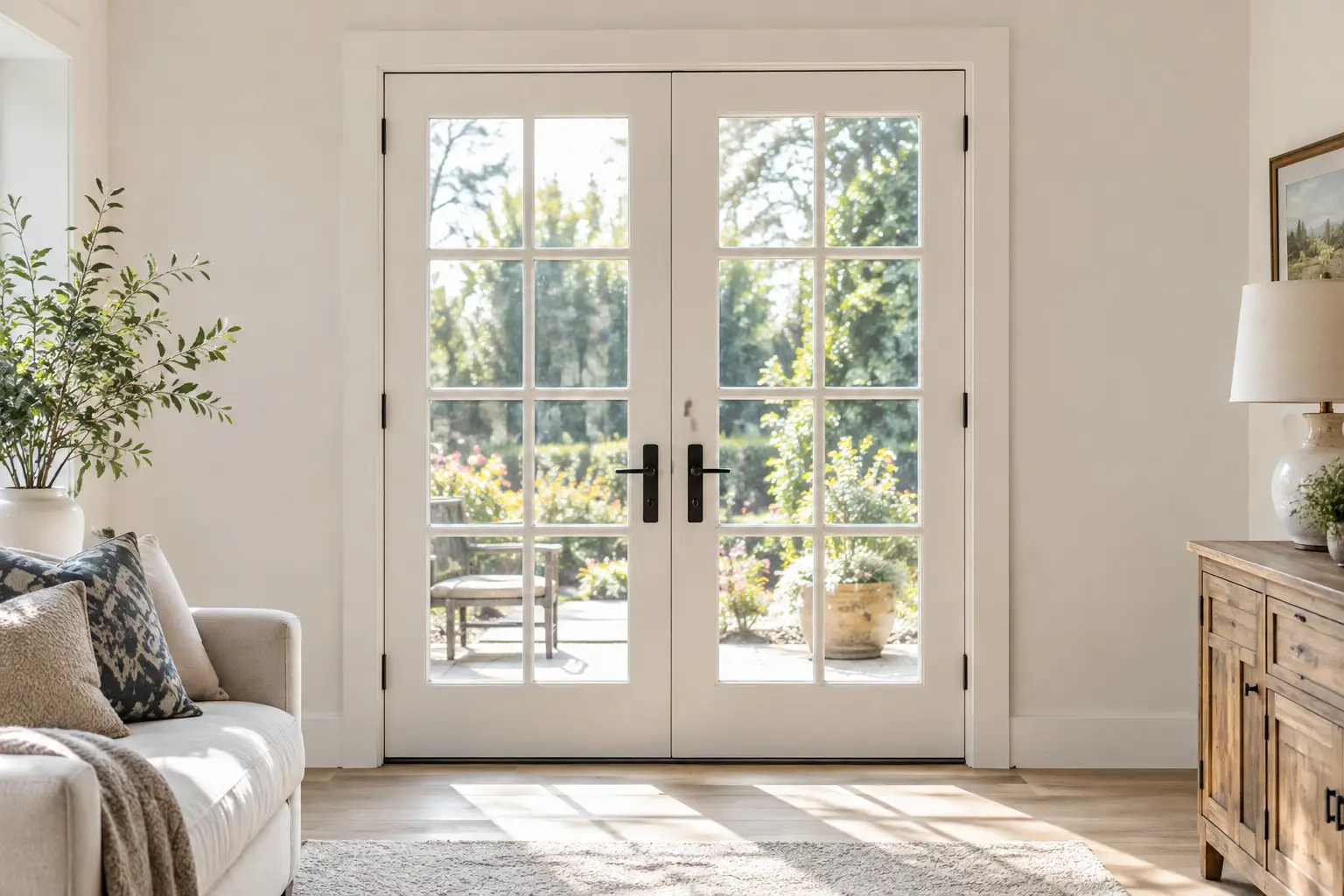
For homes that need flexibility, French doors and bi-fold doors can create a more open feel between living zones, studies, patios, or entertaining areas. Barn doors can save swing space and add a strong design feature, although they do not seal as tightly as a conventional hinged door. That makes them less suitable where acoustic privacy is essential.
Door Styles That Work With the Home
A door should look intentional within its setting. In a newer home, a clean flush profile, a simple shaker design, or a restrained glazed door can support a contemporary interior without competing with other finishes. In more traditional homes, panel doors, French doors, and considered moldings can add depth and character.
Shaker doors remain popular because their simple recessed-panel detail sits comfortably across many styles. They can look crisp and modern when paired with minimal hardware, yet still work in homes with more classic trim. Flush doors offer a quieter, more streamlined appearance and are often a strong choice where cabinetry, wall colors, or feature lighting already carry the design.
The surrounding components deserve equal attention. New architraves, skirting, door jambs, and side panels can turn a door replacement into a finished upgrade rather than a patchwork repair. If existing trim is retained, the new door profile and thickness should be selected carefully so the result does not look mismatched.
Entry Doors Need a Bigger Picture
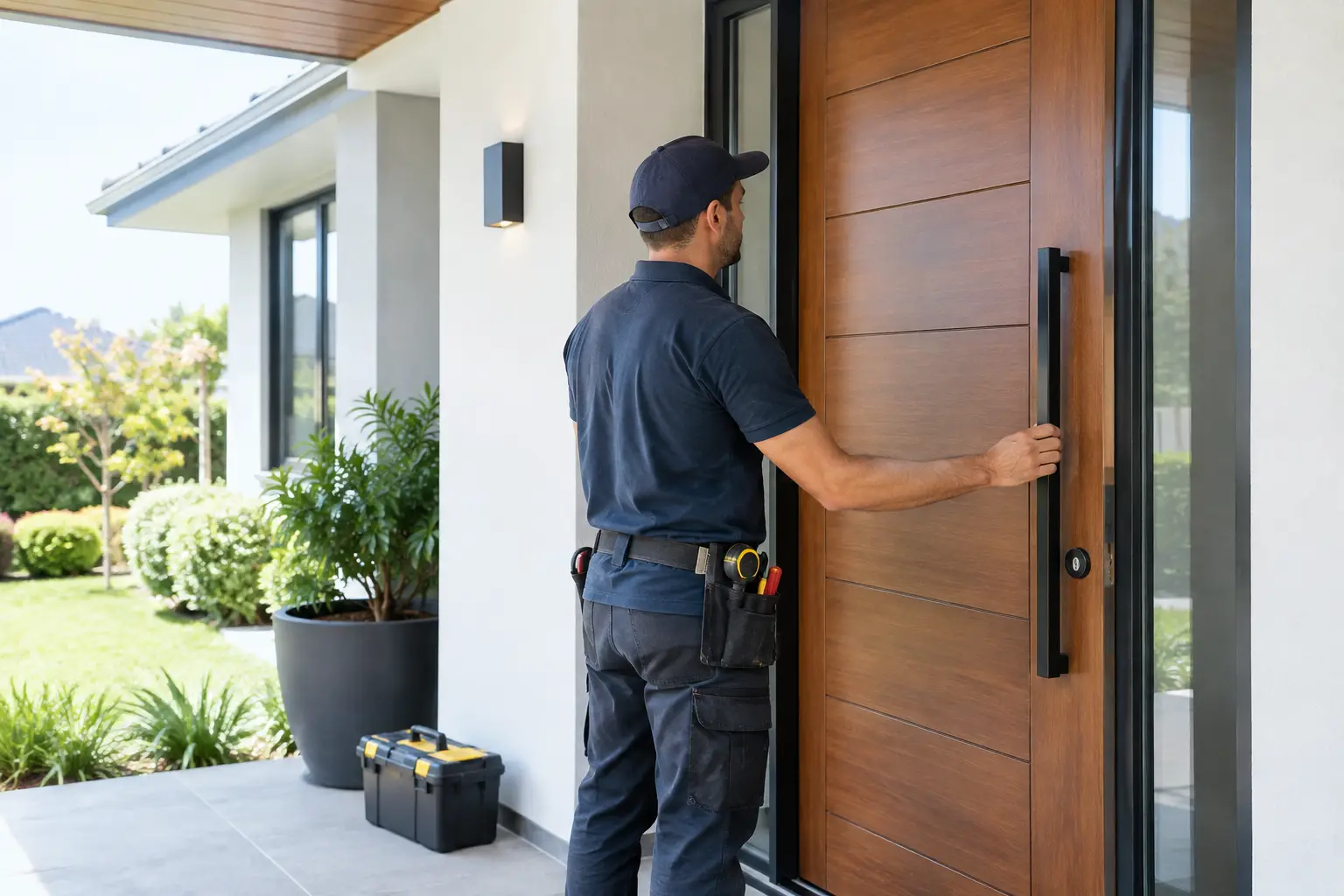
For an entryway, look beyond the door leaf. The frame, threshold, handleset, lock preparation, weather sealing, sidelights, and exterior proportions all shape the final result. A wide entrance may suit a statement door with a side panel, while a more compact facade may benefit from a carefully proportioned single door that does not overwhelm the elevation.
Material selection also depends on exposure. A protected porch places different demands on a door than an entry exposed to strong sun, rain, or changing temperatures. Premium products and appropriate finishing help, but no material is maintenance-free. Timber features warmth and character, while engineered and alternative material options may offer different benefits around stability and upkeep. A knowledgeable supplier can explain the practical trade-offs before an order is placed.
Why Accurate Measuring Comes Before Ordering
Many door projects become difficult when measurements are treated as an afterthought. Older properties may have openings that are not square, walls that have shifted slightly, or frames that were altered during a previous renovation. Even newer builds can present issues when floor finishes, wall linings, or hardware clearances have not been fully considered.
Professional measuring confirms more than height and width. It checks jamb depth, hinge side, swing direction, floor level, head clearance, reveal sizes, and whether the opening is suitable for the preferred door system. For sliding, bi-fold, and barn door applications, the available wall space and structural support are equally important.
This process helps prevent common frustrations: a door that catches on a new rug, a handle that strikes an adjacent wall, a bathroom door that does not provide enough privacy, or a French door arrangement that cannot open as intended. It also allows the installer to plan for a clean visual alignment with nearby doors and trim.
Professional Installation Is Where the Finish Is Won
A quality door can only perform as well as it is installed. The difference is visible in the details: consistent reveals around the door, smooth operation, secure hinges, correctly positioned hardware, cleanly finished jambs, and trim that sits neatly against the wall.
During installation, the frame must be set plumb, level, and square before the door is hung. This is especially important for heavier solid-core, entry, and glazed doors. If the frame is not aligned correctly, the door may swing open on its own, bind against the jamb, leave uneven gaps, or place unnecessary stress on hinges and locks.
Installation also needs to account for the finished floor. If flooring is being replaced as part of a renovation, door clearances should be coordinated early. Installing a door before final flooring levels are known can create a gap that looks unfinished or a clearance that is too tight for everyday use.
For homeowners, renovators, builders, and property managers, a supply-and-fit service simplifies this coordination. One experienced team can help select the suitable product, confirm the site details, and carry the project through to fitting. It reduces the risk of a beautiful door arriving on site only to find that the opening or hardware plan is wrong.
Planning a Door Project Around Renovation Work
Door replacement often sits among other trades, which makes timing important. Plaster repairs, painting, flooring, cabinetry, electrical work, and trim installation can all affect the sequence. Internal doors are commonly fitted once major dusty work is complete and the jambs are ready, while final hardware may be installed after painting depending on the project scope.
For an entry door, security should be considered throughout the scheduling process. If an existing door is being removed, the replacement and installation timing need to be planned so the property is not left exposed. For occupied homes, tidy work practices and clear communication matter just as much as the final fit.
It is also worth deciding early whether you want consistency across the house. Matching internal doors, architraves, and hardware creates a composed result, particularly in open-plan homes where several doors are visible at once. That does not mean every door must be identical. A feature entry door or glazed living-room doors can provide contrast while the overall palette remains cohesive.
Choosing a Supplier and Installer With Care
When comparing options for doors supply and installation in Kellyville, assess the complete service rather than the initial product price alone. A lower-priced door may not represent better value if it requires extra site alterations, lacks suitable components, or is installed without the care needed for a long service life.
Ask whether the proposed door is appropriate for the opening and application, what is included in the quote, and how frames, jambs, architraves, hardware preparation, and finishing details will be handled. Clear answers protect both the appearance of the project and the budget.
Meriton Doors approaches door projects with that wider view: quality products, considered selection, and precise installation working together. For a single entry upgrade or a full renovation, the goal is not simply to fill an opening. It is to create a door solution that looks right, works properly, and continues to feel substantial long after the work is complete.
The best time to make door decisions is before surrounding finishes lock the project into place. Bring together your priorities for style, privacy, light, durability, and budget, then have the opening assessed with those priorities in mind. A carefully planned door will reward the home every time it opens and closes.