A bedroom door can look beautifully finished and still let through every conversation, television scene, and early-morning kitchen sound. The most effective door soundproofing options for bedrooms do not rely on one thick material alone. They address the complete opening: the door leaf, the frame, the gaps around it, and the way each component is fitted.
For homeowners planning a renovation, the goal is usually not a recording-studio bedroom. It is a quieter room with better privacy, less disruption from shared living areas, and a finish that suits the rest of the home. Choosing the right approach starts with understanding where sound is getting through.
Why Bedroom Doors Let So Much Sound Through
Sound follows the easiest path. With a typical internal door, that path is often the air gap beneath the door, followed by small clearances along the sides and top. Even a well-made door cannot perform at its best if light, air, and sound can pass around its edges.
Many homes also have hollow-core internal doors. These doors are practical and lightweight, but their hollow construction offers limited resistance to airborne sound. Voices, music, and television noise can pass through the thin outer skins far more readily than they would through a denser solid-core door.
The frame matters as well. A door that is warped, loosely hung, or unevenly fitted may not close consistently against the stop. In that situation, adding a seal may help, but it will not correct the underlying fit. Good acoustic results begin with a square, stable opening and a door that closes properly.
Door Soundproofing Options for Bedrooms
The right solution depends on whether you are improving an existing room or selecting doors for a new build. Budget, design preferences, ventilation needs, and the source of the noise all affect the best choice.
Upgrade to a solid-core door
For many bedrooms, a solid-core hinged door is the most worthwhile upgrade. Its denser internal construction creates a more substantial barrier than a standard hollow-core model, helping reduce the amount of airborne sound that transfers between rooms.
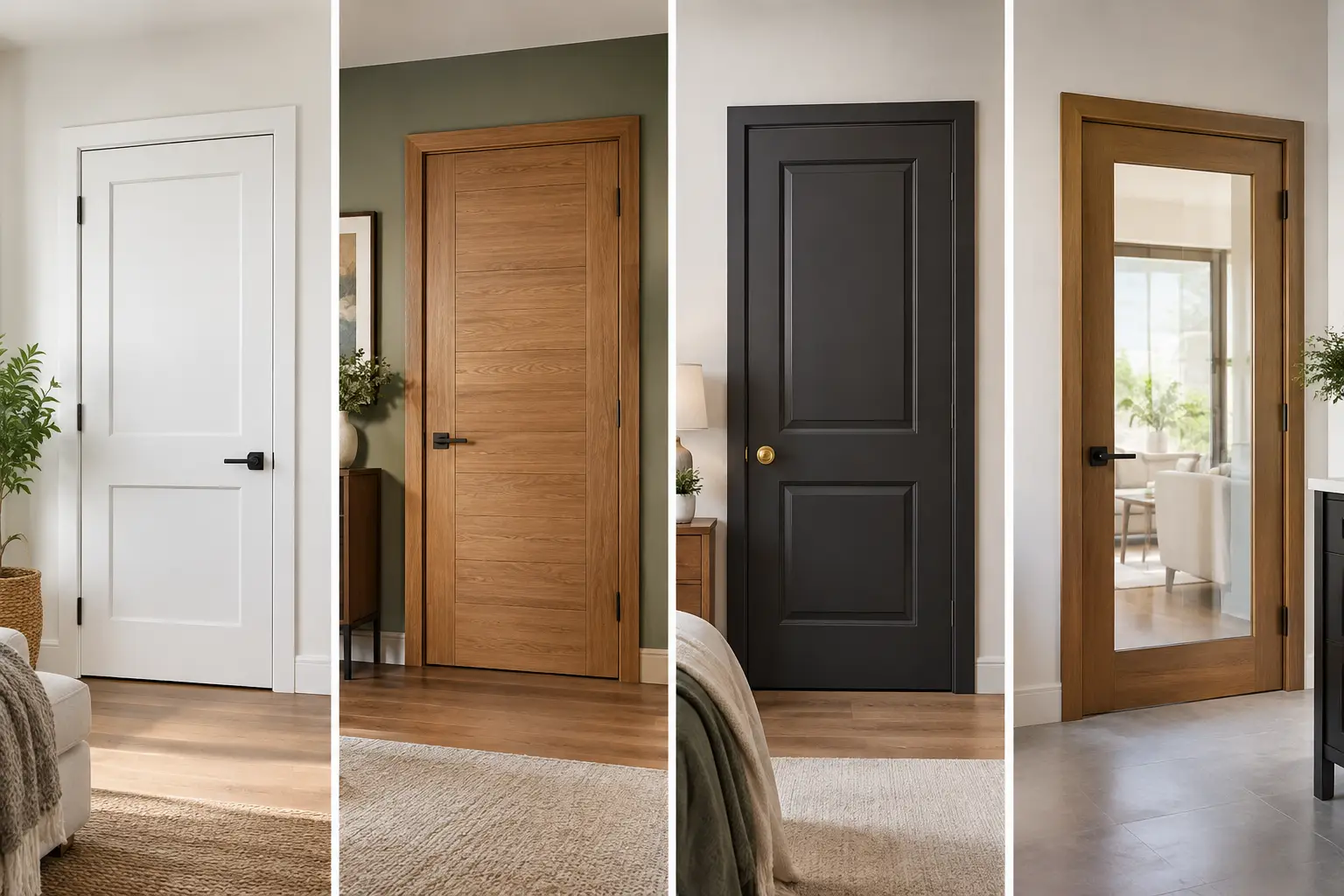
Solid-core doors also feel more refined in daily use. They have a reassuring weight, close with greater stability, and offer the durability expected in high-use family homes. They are available in a wide range of styles, including flush, shaker, and molded panel designs, so improving privacy does not mean compromising the interior look.
A solid-core door will not make a bedroom silent on its own. If the perimeter gaps remain open, sound will still travel through them. It is best viewed as the foundation of a better-performing door assembly rather than a complete fix by itself.
Seal the gaps around the frame
Perimeter seals are one of the most cost-effective improvements for an existing bedroom door. Weatherstripping or purpose-made acoustic seals are fitted along the top and sides of the frame, creating a closer contact point when the door is shut.
The key is selecting a seal that is compatible with the door and frame. A seal that is too thin may do little; one that is too thick can make the door difficult to latch or cause it to spring back open. Clean installation and careful adjustment are what turn a simple accessory into a practical sound-control measure.
Seals are particularly useful when the main problem is voices from a hallway, a nearby living room, or another bedroom. They also help reduce drafts and unwanted light around the frame, which can make the room feel more settled at night.
Close the bottom gap with a door sweep or drop seal
The gap beneath a bedroom door is often the largest unprotected opening in the room. A basic door sweep can reduce this gap, but it needs to be selected carefully. Some brush-style sweeps are better for dust control than sound control, while a flexible rubber or silicone sweep generally creates a more complete barrier against air movement.
An automatic drop seal is a more refined option. When the door closes, a mechanism lowers a sealing strip onto the floor; when the door opens, the strip retracts so it does not drag across the surface. This can be an excellent choice for bedrooms with hard flooring, particularly where maintaining a clean visual finish is as important as improving privacy.
Floor conditions matter. An uneven threshold, thick carpet, or changing floor levels can affect how well a sweep or drop seal performs. Measuring the gap and considering the floor finish before installation prevents rubbing, premature wear, and poor sealing.
Improve the frame and door stop
In some homes, the door itself is suitable but the jamb or stop is worn, damaged, or poorly aligned. Replacing or adjusting these components can help the door close more evenly and provide a reliable surface for perimeter seals.
This is also the time to check hinges and latch alignment. A heavier solid-core door needs hinges rated for its weight and a frame that can support it without sagging. If the latch does not pull the door snugly into the stop, the seal will not compress consistently, and sound performance will suffer.
Professional installation is especially valuable here. Precise clearances may seem like a minor detail, but they determine whether the door operates smoothly, looks polished, and performs as intended over time.
Add mass only when it suits the room
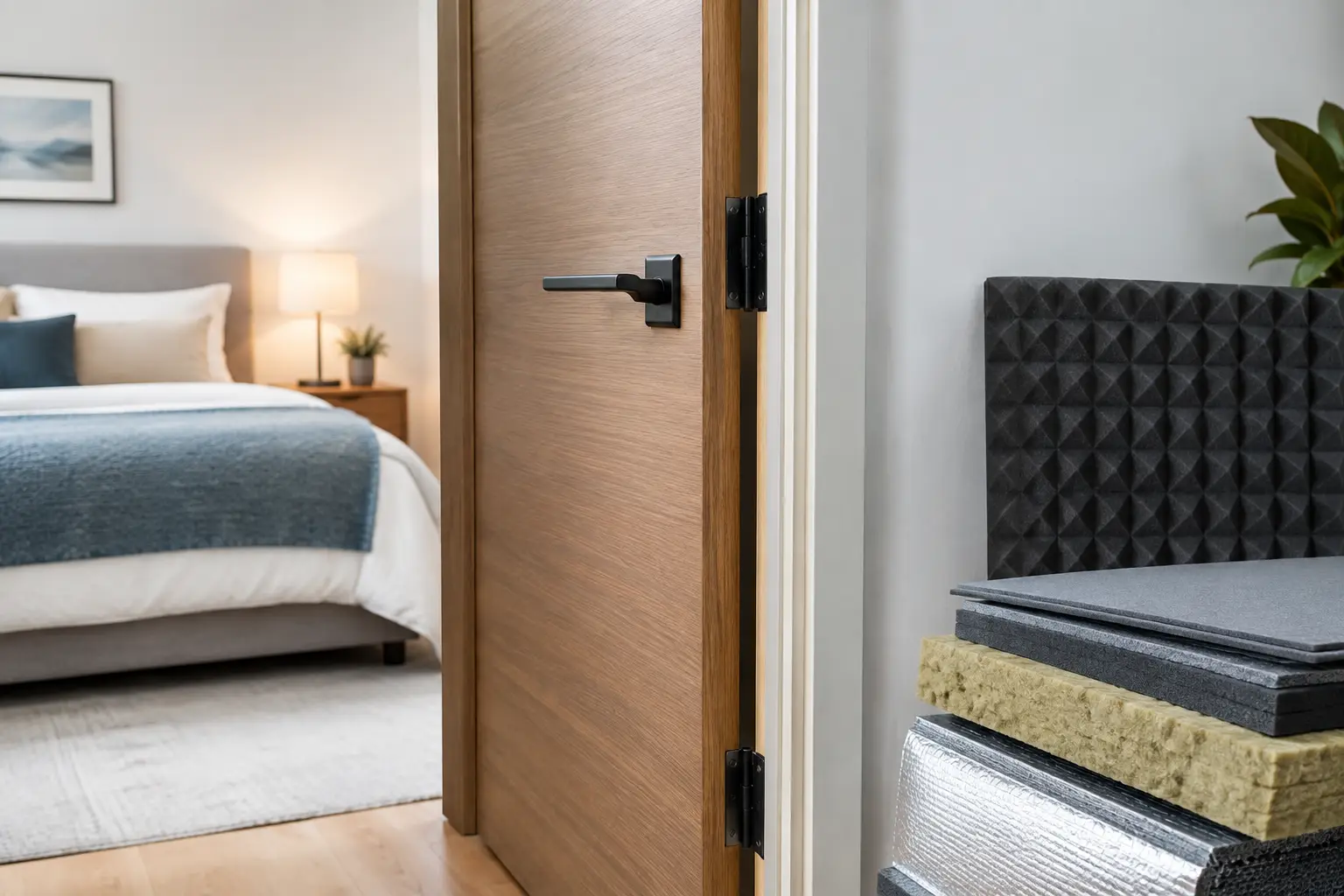
Homeowners sometimes consider adhesive soundproofing panels, mass-loaded barriers, or thick decorative coverings applied directly to an existing door. These products can add density, but they bring trade-offs. Extra weight can strain standard hinges, alter door clearances, and create an appearance that does not suit a finished interior.
For a temporary noise issue, a removable acoustic curtain placed across the doorway may soften some sound transfer. However, it is not a substitute for a properly sealed solid-core door. It can also be inconvenient for everyday bedroom access and may interfere with ventilation or egress requirements.
When the door is hollow-core and the room is undergoing renovation, replacement is usually the cleaner long-term investment. A well-selected solid-core door, fitted correctly and paired with discreet seals, generally provides a more durable and attractive result than layering add-on materials onto a lightweight door.
Match the Solution to the Noise Problem
A bedroom beside a busy family room has different needs from a nursery near a laundry or a home office next to a media room. If voices and television noise are the concern, door mass and perimeter sealing should be the priority. If the issue is light hallway noise combined with a draft, seals and a threshold solution may be enough.
For more demanding situations, such as a bedroom adjoining a home theater, sound can also travel through walls, ceiling cavities, air ducts, and connected flooring. Upgrading the door will still help, but it should be part of a broader assessment. There is little value in specifying an exceptionally heavy door if the wall beside it has large unsealed service penetrations.
Ventilation deserves attention too. A tightly sealed bedroom door can affect airflow in homes that rely on a return-air path beneath internal doors. Before closing every gap, consider how the room is heated and cooled. A contractor can help balance privacy, door performance, and the home’s mechanical needs.
Choosing a Style Without Losing Performance
A quiet bedroom should still feel connected to the home’s design. Flush solid-core doors offer a clean, contemporary look, while shaker styles provide definition and character. Traditional panel doors can suit established homes, and paint-grade or stain-grade finishes allow the door to work with surrounding trim, flooring, and hardware.
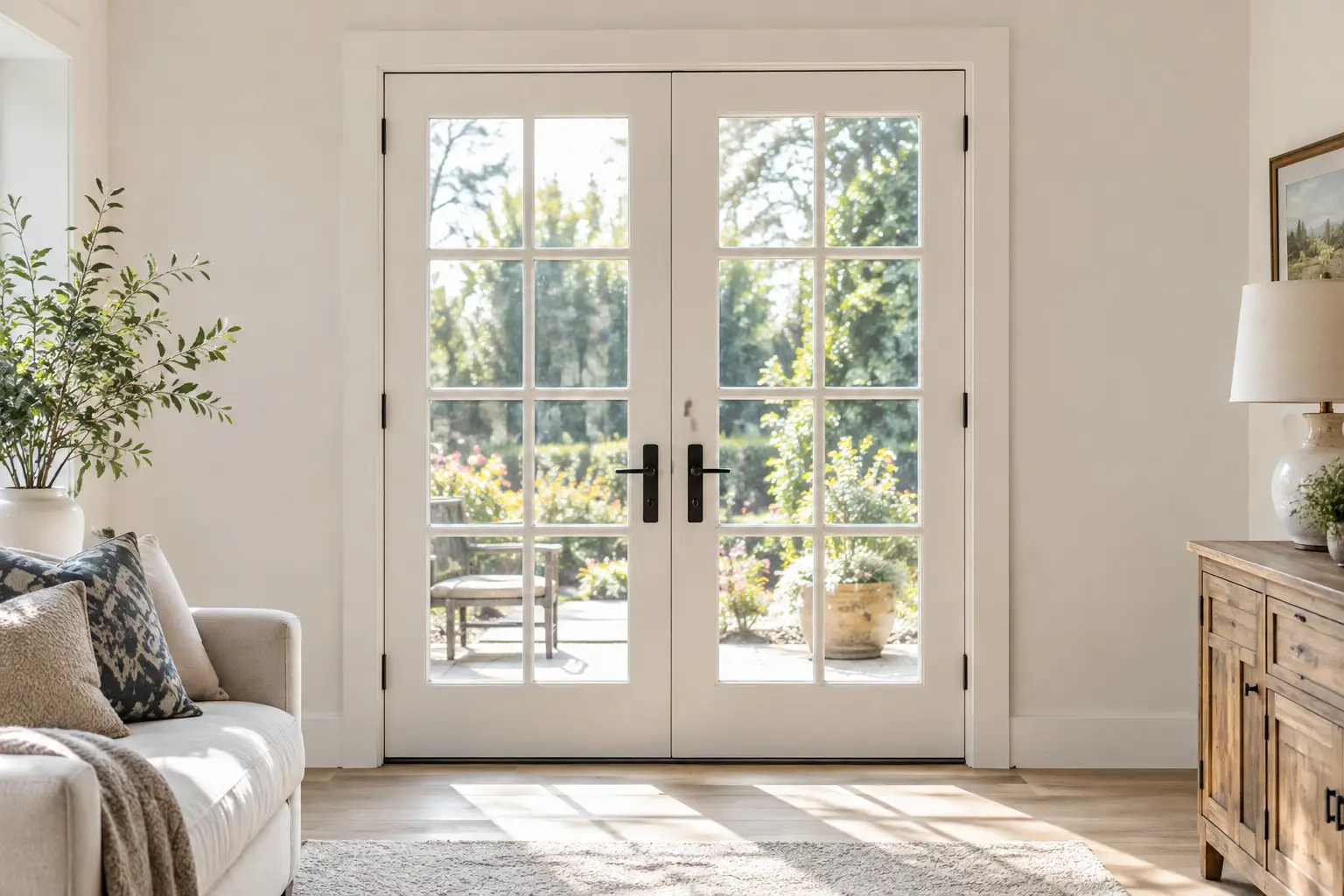
Glazed internal doors are less suitable where privacy and sound control are the main priorities, unless they use specialized acoustic glass and a fully considered frame system. Barn doors also deserve a realistic assessment. Their sliding design leaves inherent perimeter gaps, so they are rarely the strongest choice for a bedroom where quiet is essential. A hinged door with seals will usually perform better.
The best result is a door that looks intentional, closes quietly, and feels substantial every time it is used. That combination adds everyday comfort as well as value to a renovation.
A Practical Order of Improvements
If you are working with an existing bedroom door, start by inspecting the fit. Check whether it latches firmly, whether there are visible gaps around the frame, and whether the bottom clearance is excessive. Address alignment and seals first when the door is already solid-core and in good condition.
If the current door is hollow-core, a replacement solid-core door is often the more meaningful upgrade. Combine it with perimeter seals and an appropriate bottom seal rather than relying on one measure alone. For new builds and full renovations, selecting the door, jamb, hinges, and hardware as one coordinated system is the most reliable path to a polished result.
Meriton Doors can help homeowners choose a door solution that supports both the room’s design and its practical need for privacy, with professional fitting that gives every component the precision it requires.
A quieter bedroom is rarely created by a single product. It comes from closing the gaps, choosing the right door construction, and treating installation as part of the finish, not an afterthought.