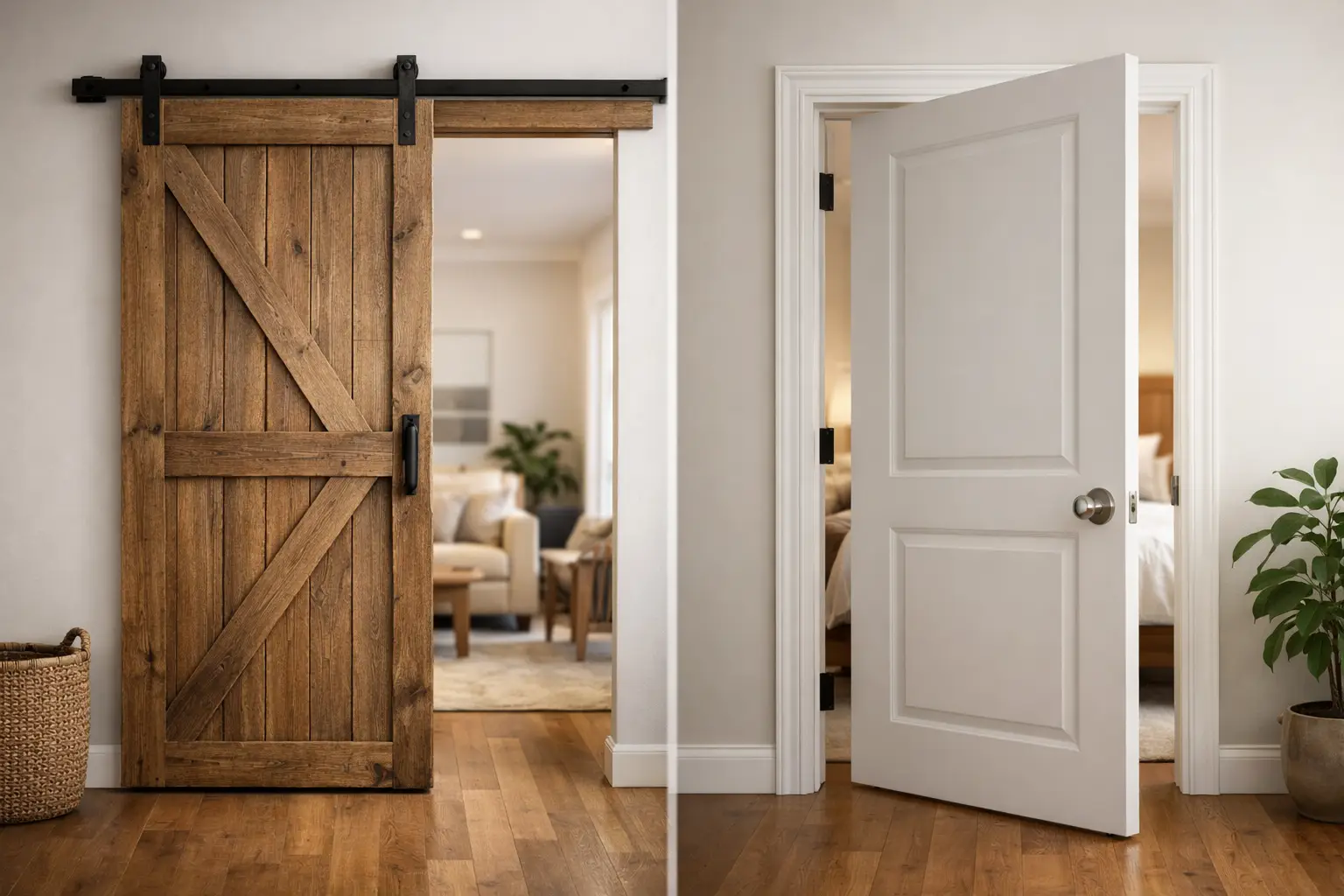
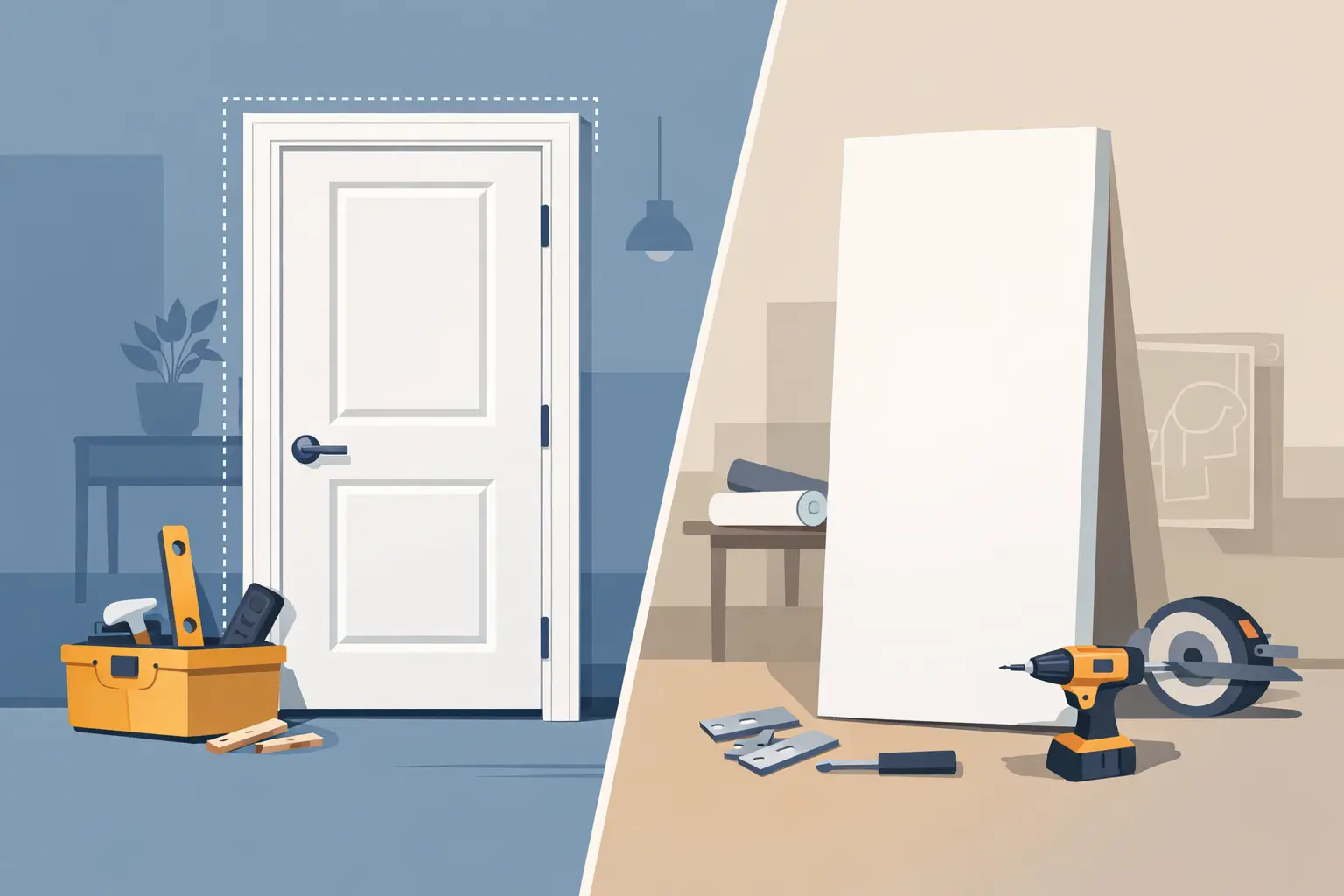
A door replacement can look like a simple finishing job until the new door refuses to sit square, drags across the floor, or leaves an uneven gap around the frame. The choice between pre hung vs slab doors determines how much of the existing opening you keep, how much installation work is required, and how polished the final result will look.
For homeowners, renovators, builders, and property managers, there is no single right answer. A slab door can be an efficient, cost-conscious solution when an existing frame is in excellent condition. A pre-hung door can save time and avoid alignment problems when the frame is damaged, outdated, or part of a larger renovation. The best choice comes down to the opening, the door location, and the standard of finish you expect.
What Is a Pre-Hung Door?
A pre-hung door is supplied as a complete unit. The door slab is already fitted to a new jamb with hinges attached, and it is usually supplied with the hinge and latch preparation completed. Depending on the product and project, the unit may also include stops, weatherstripping, a threshold, or other components needed for an exterior opening.
Rather than fitting a new door into an old frame, the installer removes the existing door and jamb, positions the complete unit in the rough opening, levels it carefully, secures it, and finishes the surrounding architrave or trim. This gives the installer control over the whole assembly, not only the door itself.
Pre-hung units are particularly valuable where reliable operation matters. An entrance door, a door exposed to weather, or a frequently used internal door benefits from accurate hinge alignment and consistent clearances. When installed with care, the door should swing smoothly, latch cleanly, and sit evenly within the frame.
What Is a Slab Door?
A slab door is the door panel only. It does not include the frame, hinges, handle, latch, or trim. It is installed into an existing jamb, which means the existing frame must be sound, square, and suitable for the new door.
This approach is often called a door replacement rather than a complete door-and-frame replacement. The installer measures the existing opening, trims the slab if necessary, cuts or prepares hinge positions, installs the latch bore and strike alignment, then fits the hardware. It can be an excellent option when the original jamb is in good condition and its dimensions match the new door.
Slab doors are common for interior upgrades. If you are replacing plain hollow-core doors with shaker doors, solid-core doors, or other design-led internal doors, retaining well-fitted jambs can preserve surrounding walls, trim, and paintwork. The result can be a meaningful visual upgrade without the added scope of replacing every frame.
Pre Hung vs Slab Doors: The Main Differences
The practical difference is simple: a pre-hung door replaces the door and its frame, while a slab door replaces only the panel. That difference affects installation time, cost, finish work, and the risk of discovering hidden problems after the project begins.
A pre-hung door generally requires more work around the opening. Existing trim may need to be removed, the jamb must be installed plumb and level, and new architraves or touch-up work may be required. However, it avoids trying to make a new door work within a frame that may have shifted over time.
A slab door usually creates less disturbance around the opening. It can be faster to install when the old door serves as a precise template and the hinges, lockset location, thickness, and swing direction are compatible. But a slab is less forgiving. Even a slight variation in the old jamb can create rubbing, uneven gaps, latch issues, or a door that will not stay open or closed as intended.
The product cost can also be misleading if considered on its own. A slab door may cost less than a complete pre-hung unit, but custom cutting, machining, new hardware, repairs to old jambs, and additional installation labor can narrow the difference. Conversely, a pre-hung unit may have a higher upfront price while offering more predictable installation results.
When a Pre-Hung Door Is the Better Choice
Choose a pre-hung door when the existing frame is damaged, warped, out of square, or showing signs of moisture deterioration. This is especially relevant for exterior doors, where a poor frame can compromise weather protection, security, and energy efficiency.
It is also the stronger choice during a new build, major remodel, room addition, or wall reconfiguration. With the rough opening exposed, installing a complete door system is usually the most efficient way to establish clean reveals, accurate swing clearance, and a consistent finish throughout the project.
For front entry doors, French doors, and other feature openings, a pre-hung system offers another advantage: it supports a more controlled visual result. The relationship between the door, sidelights, weather seals, threshold, and hardware can be set up as one coordinated assembly. That matters when the opening is expected to improve curb appeal as well as day-to-day performance.
A pre-hung door is also a wise investment where the existing frame has been painted many times, patched repeatedly, or fitted with mismatched hardware over the years. Starting with a clean jamb can prevent a new premium door from looking like an afterthought.
When a Slab Door Makes More Sense
A slab door is a practical choice when the current jamb is level, square, solid, and free from damage. This is often the case in newer homes or in rooms where the existing door frames are already well made and consistent.
Interior door refreshes are where slab doors often deliver the best value. Replacing several bedroom, bathroom, closet, or hallway doors with matching slabs can transform the feel of a home while retaining existing trim and minimizing plaster, drywall, and paint repairs. For a renovation with a fixed budget, that can leave more room for upgraded handles, quality hinges, architraves, or a higher-grade door material.
A slab may also be the right fit when you want to preserve original architectural details. In an older home with distinctive casing or custom jamb profiles, removing the full frame can create unnecessary restoration work. A carefully fitted slab allows the door style to change while the surrounding character remains intact.
The key word is carefully. A slab door should not be selected solely because it looks less expensive on paper. Accurate measurement and professional fitting are what make the savings worthwhile.
Check These Details Before You Order
The condition of the opening should be assessed before selecting either option. Measure the width, height, and thickness of the existing door, but do not stop there. Check the hinge locations, swing direction, floor clearance, latch position, jamb depth, and the condition of the frame itself.
For exterior doors, confirm whether the opening has signs of water intrusion, soft timber, drafts, or movement. A new slab installed into a compromised jamb will not solve those problems. The frame, threshold, flashing, sealing, and hardware all need to work together.
For interior doors, consider the finished floor height. New flooring, thick carpet, tile, or rugs can reduce clearance under a door and affect how it swings. A slab can often be trimmed to suit, but the amount that can be removed depends on the construction of the door. Hollow-core, solid-core, engineered timber, and specialty designs all have different limitations.
Also consider door weight. A solid-core or oversized feature door needs hinges and a jamb capable of carrying the load. Reusing lightweight or worn hardware can lead to sagging and poor alignment, even when the door itself is high quality.
Installation Quality Shapes the Result
Both door types can perform beautifully, but only when the installation matches the product. A pre-hung unit must be shimmed and secured without twisting the frame. A slab must be accurately machined and hung so the reveal is consistent on all sides. Small errors are immediately visible on a door because it is opened and closed every day.
Professional installation is particularly worthwhile for entrance doors, paired doors, barn doors, French doors, and doors with upgraded hardware. These products involve more than placing a panel in an opening. They need proper structural support, precise clearances, smooth operation, and finishing details that complement the room.
A quality installer can also identify whether an apparently straightforward slab replacement is hiding a damaged jamb or uneven opening. Addressing that issue before the door is ordered prevents delays and helps protect the investment in a premium finish.
Choosing the Right Door for the Space
If your existing frame is sound and you are updating interior style, a slab door can be an efficient, refined solution. If the frame is worn, the opening is unreliable, or the door needs to provide security and weather protection, a pre-hung door is usually the more dependable path.
The right choice should make the finished space feel intentional, not merely repaired. Start with the condition of the opening, then select the door system that gives your home the durability, function, and design standard the project deserves.