A front door can make a strong architectural statement, but the space around it matters just as much. This guide to choosing side lights for entry doors will help you assess the details that determine whether an entry feels bright and welcoming, private and secure, or perfectly balanced between all three.
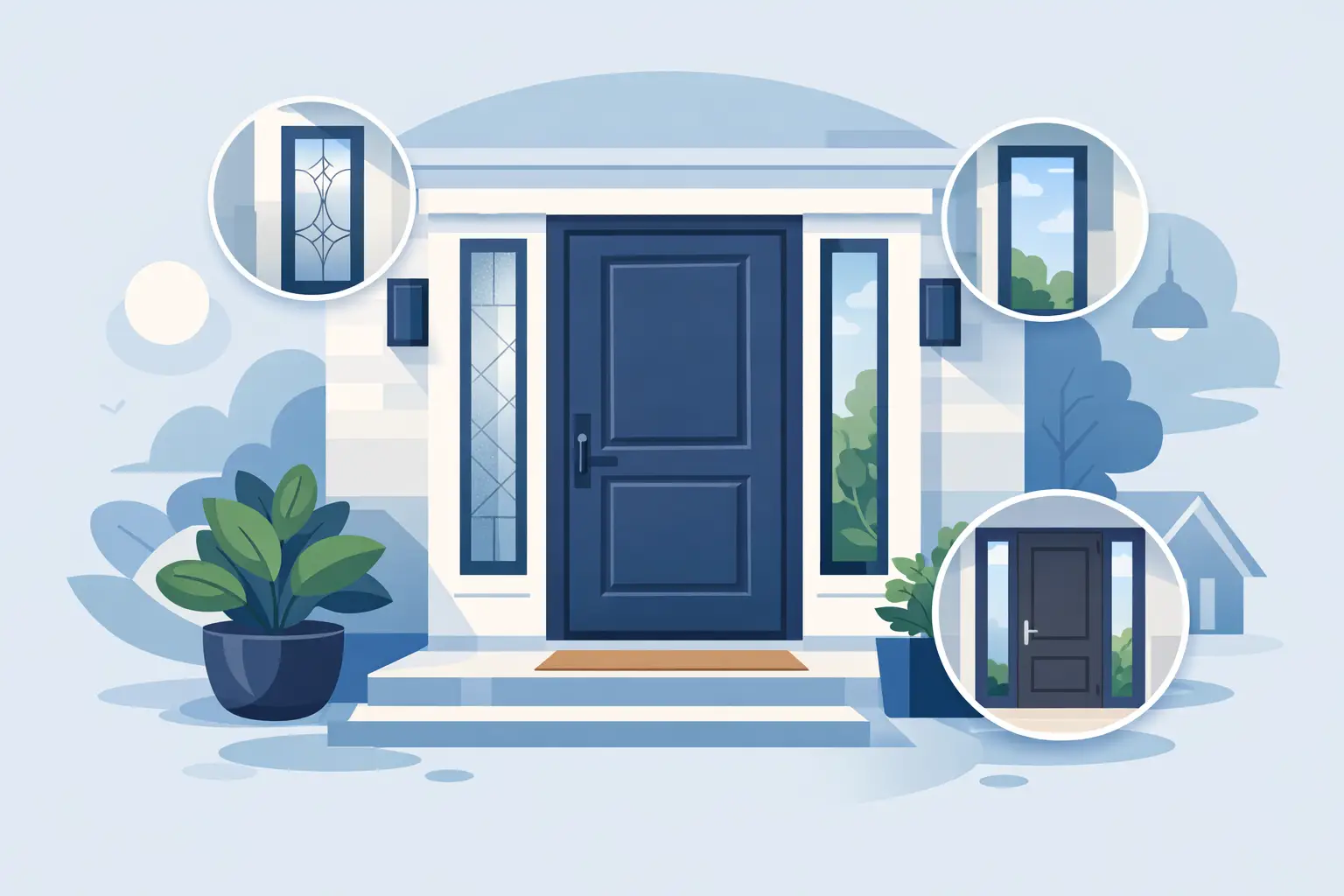
Side lights are the narrow glazed panels installed beside an entry door. They can make a modest doorway feel more generous, bring natural light into a dark hall, and create a tailored look that suits the style of the home. The right selection is not simply about choosing attractive glass. It needs to work with the door design, the orientation of the house, daily privacy needs, and the condition of the existing opening.
Start With the Entry’s Purpose and Proportions
Before choosing a glass pattern or frame finish, look at the entrance as a complete composition. A wide façade, a tall portico, or a substantial timber door can usually support full-height side lights. On a narrower home, a single side light may be the better choice, providing daylight without making the doorway appear crowded.
The door itself should remain the focal point. A bold paneled, shaker, or statement timber entrance door often looks best with simple side lights that repeat a detail from the door without competing with it. Conversely, a clean contemporary door can be paired with larger glazed panels for a crisp, architectural finish.
Proportion also affects practical use. Very narrow panels may add character but provide limited light, while wider panels can transform the feel of an entry hall. Measure the full opening, including the jamb, trim, and available wall space. This is especially important in renovations, where adjusting an existing opening may involve structural work rather than a straightforward door replacement.
Choose Side Lights for Entry Doors With Privacy in Mind
Natural light is one of the strongest reasons to add side lights, yet clear glass is not right for every property. If the front door faces a busy street, a neighboring driveway, or a frequently used path, think about what can be seen from outside after dark when interior lights are on.
Obscure, frosted, reeded, and patterned glass all soften views while allowing daylight through. Reeded glass is particularly effective for homeowners who want a refined, modern finish with more visual interest than standard frosted glass. Textured glass can suit traditional homes beautifully, particularly when paired with classic molding or decorative glazing details.
Privacy does not have to mean blocking all visibility. A panel with a clear upper section and obscured lower portion can preserve a sense of openness while shielding the areas that matter most. The best option depends on sightlines from both outside and inside the home. Stand in the entry hall and consider what visitors can see, not just what the side lights look like from the curb.
Match the Glass to Security Requirements
Any glazing beside an entry door should be selected with security in mind. Side lights sit close to locks and handles, so ordinary glass is not an appropriate choice for this application. Safety glass, such as toughened or laminated glass, offers better protection and is generally required in areas where glazing could be impacted.
Laminated glass has an added advantage for security-conscious homeowners. Its interlayer helps hold the pane together if it is broken, making forced entry more difficult than with standard glass. Toughened glass is highly resistant to impact, but it breaks into small pieces if it fails. Your final choice may depend on local code requirements, the location of the panel, and the level of security you want for the property.
The frame, jamb, hinges, lock hardware, and installation quality all matter too. A premium door and side light arrangement should be fitted as one integrated system, with accurate alignment, secure fixing, and weatherproof seals. A weak point in the frame can undermine the benefit of high-quality glazing.
Consider Light, Heat, and the Direction of Your Home
Side lights can brighten an enclosed hallway without relying on artificial lighting during the day. However, more glass also means more exposure to heat and glare. A west-facing entry may receive intense afternoon sun, while a north-facing entrance can create a very different light pattern throughout the year.
For sunny locations, consider energy-efficient glazing that helps reduce heat transfer and UV exposure. Low-E glass, tinted glass, and suitable double-glazed options can improve comfort while protecting nearby flooring, artwork, and furnishings from fading. The right specification depends on the climate, the amount of direct sun, and how exposed the doorway is.
Frame materials also affect performance. Timber offers warmth and character, particularly for period homes and premium entryways, but it needs a durable finish and regular care. Aluminum can provide slim sightlines and a contemporary appearance. Composite and engineered systems may offer lower maintenance and strong thermal performance. The key is choosing materials that suit the door, the home’s architecture, and the level of maintenance you are prepared to undertake.
Select a Style That Belongs With the House
The most successful entryways look considered rather than assembled from unrelated parts. Side lights should echo the era and character of the home. For a heritage-inspired façade, divided-light glazing, traditional profiles, or textured glass can add detail without looking overly ornate. For a modern home, full-height panels, clean lines, and minimal framing often create the strongest result.
Color and finish deserve the same attention. A dark door with matching side light frames can give the entrance a defined, formal presence. Lighter finishes may feel softer and more relaxed, while natural timber brings texture and warmth. If the home already has black window frames, bronze fixtures, or a particular exterior trim color, repeating those elements around the entrance creates a more deliberate visual connection.
Do not overlook the relationship between the side lights and door hardware. A long pull handle, statement knocker, or contemporary smart lock may influence the style of glazing and frame profile that works best. These small decisions are what give an entryway its polished final result.
Decide Between Fixed, Opening, and Decorative Options
Most side lights are fixed panels, which is often the simplest and most secure option. Fixed glazing offers excellent light, clean lines, and fewer moving parts to maintain. It is ideal when ventilation is already available through other windows or when security is the primary concern.
In some homes, operable side panels may be considered for airflow, although this needs careful planning. Opening panels require suitable screens, reliable hardware, and thoughtful placement to avoid creating a security or weather issue. They are more commonly used in protected entry areas than in highly exposed front doors.
Decorative glazing can add character, but restraint usually produces the best long-term result. Leadlight-inspired patterns, custom grids, and colored glass can be beautiful when they suit the architecture. They may feel dated quickly when selected purely as a trend. Choose a design you would still appreciate after future changes to paint colors, landscaping, or interior finishes.
Plan Installation Early, Especially for Renovations
Adding side lights to an existing door opening can be more involved than replacing a door slab. The wall may need to be widened, supporting structure assessed, electrical points relocated, and exterior cladding or interior trim repaired. These details should be reviewed before ordering, not after the new door arrives.
Professional measurement is essential. A few millimeters can affect reveals, weather seals, threshold performance, and the way the door operates. An experienced installer will also check whether the existing opening is square, identify moisture concerns, and ensure the new assembly is properly flashed and sealed against the elements.
For new builds, coordinate the side light design early with the builder, architect, or designer. This allows the opening size, flooring transition, exterior lighting, and trim details to be resolved as part of one complete entry design. Meriton Doors can assist homeowners and builders with a tailored selection and professional installation approach that keeps these details aligned.
A well-chosen side light should do more than fill space beside the door. It should bring the right amount of light into the home, protect privacy where needed, and make every arrival feel considered from the first step to the threshold.