
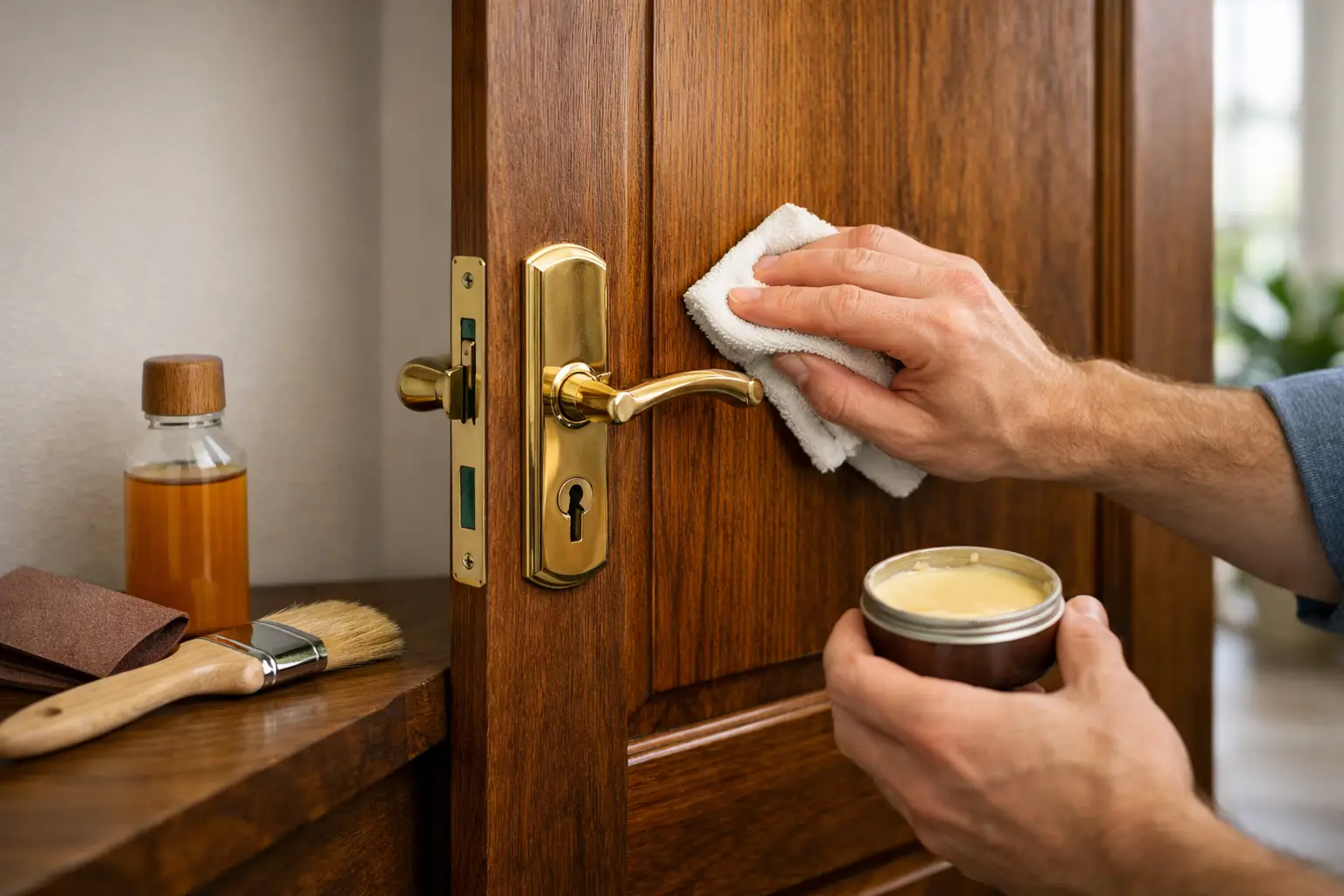
A solid timber door should feel substantial, close cleanly, and show off the grain that made you choose it in the first place. This guide to solid timber door maintenance focuses on the practical care that protects that investment: managing moisture, preserving the finish, and addressing small changes before they become costly repairs.
Timber is durable, but it is also a natural material. It responds to heat, humidity, direct sun, rain, and everyday use. A little movement through the seasons is normal. Sticking, fading, splitting finishes, or water staining are signals that the door needs attention, not necessarily replacement.
Start With the Door’s Location and Finish
Maintenance begins with knowing what your door is exposed to. An internal solid timber door in a climate-controlled room needs modest, routine care. An entrance door, French door, or external side door faces far more demanding conditions, especially where it receives afternoon sun, wind-driven rain, or moisture from an exposed porch.
The finish matters just as much. Painted doors need a sound paint film to keep moisture out. Clear-coated doors rely on varnish, polyurethane, or a similar coating to protect the timber while allowing the grain to show. Oiled timber finishes look warm and natural, but they generally need more regular renewal. Use the product originally specified for the door where possible. Mixing finish systems without proper preparation can cause peeling, uneven sheen, or poor adhesion.
If the door was newly installed, ask the supplier or installer what finish was applied and when it should first be reviewed. Keeping this information on hand makes future touch-ups much more straightforward.
Clean Timber Gently and Regularly
Dust and airborne grime may seem harmless, but they can dull a finish and trap moisture around joints and decorative profiles. For most doors, a soft microfiber cloth lightly dampened with clean water is enough. Dry the surface afterward, particularly around panel edges, glazing beads, and the bottom rail.
For fingerprints or more persistent marks, use a small amount of mild dish soap diluted in water. Test it first in an unobtrusive area, then wipe with a clean damp cloth and dry immediately. Avoid abrasive pads, scouring powders, strong degreasers, bleach, and solvent-heavy cleaners. These can scratch, soften, or discolor the protective coating.
External doors deserve attention after periods of heavy weather. Wipe off mud splashes and check the lower sections of the door, frame, and threshold. The bottom edge is often overlooked, yet it is one of the first places moisture damage can begin.
Keep Water Away From the Timber
Most preventable timber-door problems start with prolonged moisture exposure. A quality exterior finish helps, but it cannot compensate for failed seals, a leaking gutter, poor drainage, or a door that is regularly left exposed to rain.
Check that weatherstripping sits evenly against the door and that exterior caulking around the frame is intact. Look for cracked sealant, gaps at joints, and water marks on adjacent trim. Make sure the sill or threshold drains away from the opening rather than holding water against the bottom of the door.
A covered entry provides worthwhile protection for a timber entrance door. The amount of shelter required depends on the door design, orientation, local weather, and finish system. A deeply recessed doorway is far more forgiving than a fully exposed facade. Where sun and rain are unavoidable, plan for more frequent finish inspections and maintenance.
Never wash a timber door with a hose or pressure washer. Water can be forced into joints, panel seams, and the gap between the door and frame. A controlled wipe-down is safer and more effective.
Inspect the Finish Before It Fails
A protective finish is easier to maintain than to restore. Rather than waiting until bare timber is visible, inspect exterior doors every few months and at the change of seasons. Internal doors can usually be checked during regular home maintenance.
Pay particular attention to the top and bottom edges, lock area, lower rails, panel joints, and any surface receiving direct sunlight. Warning signs include a chalky appearance, loss of sheen, hairline cracks, peeling paint, darkened grain, or rough patches that catch on a cloth.
Small finish issues should be repaired promptly. Lightly sand only the affected area if the coating manufacturer allows it, remove dust thoroughly, and apply a compatible touch-up or maintenance coat. If paint is flaking across broad sections or clear coating has failed extensively, the better result usually comes from preparing and refinishing the whole face rather than applying a patch over deteriorated material.
For clear-finished timber, color changes from sunlight are natural. A fresh coat can restore protection, but it will not always make aged timber look identical to newly finished areas. This is one reason planned maintenance produces a more refined result than reactive spot repairs.
Maintain Hinges, Handles, and Locks
A beautifully finished door still needs to operate properly. Loose hardware can cause rubbing, uneven gaps, and strain on the jamb. Twice a year, check that hinge screws are tight and that the door opens and closes without scraping the floor, frame, or weatherstripping.
If the door squeaks, use a lubricant suitable for hinges and apply it sparingly. Wipe away excess so it does not run onto the timber finish. For locks and latches, use a product designed for door hardware rather than oil that may attract dust and gum up the mechanism.
A latch that does not line up with the strike plate is often a sign of seasonal movement, loose hinges, or a frame issue. Do not force the door or shave down the edge immediately. First check the screws, hinge condition, and visible clearances around the door. A precise adjustment may solve the problem without removing timber unnecessarily.
Know What Seasonal Movement Looks Like
Solid timber expands as humidity rises and contracts when conditions become drier. In many homes, this may appear as a door that becomes slightly tighter in humid weather or small gaps that are more visible during dry periods. This is normal within reasonable limits.
Problems arise when movement is severe or persistent. A door that sticks badly, bows, twists, develops open joints, or shows cracking may be affected by excess moisture, inadequate sealing, direct weather exposure, or an underlying installation issue. Heating and cooling systems can also create very dry indoor conditions that affect timber over time.
Before sanding a sticking door, identify the cause. Sanding may provide temporary clearance, but it can leave exposed timber that quickly absorbs moisture unless it is resealed. It may also fail to address an out-of-square frame or hardware problem. Where a door has changed shape noticeably, professional assessment is the sensible next step.
A Practical Maintenance Rhythm
The right schedule depends on whether the door is internal or external, its exposure, and its finish. As a working guide, organize care around these checks:
- Monthly: wipe away dust and marks, and confirm the door closes smoothly.
- Every six months: tighten hardware, inspect hinges, clean weatherstripping, and check exterior seals.
- Seasonally for exposed exterior doors: examine the finish for fading, cracking, peeling, or water damage.
- As needed: touch up damaged coating, replace worn weatherstripping, and correct drainage or leak issues near the opening.
Homes near busy roads, coastal conditions, or areas with strong sun may require more frequent cleaning and finish care. A protected internal shaker door and a west-facing timber entrance door should not be maintained on the same timetable.
When Professional Help Protects the Result
Some tasks are suitable for careful homeowners, including cleaning, tightening visible screws, and minor finish touch-ups. Others call for an experienced door professional. Persistent binding, a warped slab, recurring water entry, damaged jambs, failed glazing seals, and major refinishing work can affect both the performance and appearance of the opening.
This is particularly true for entrance doors, French doors, and doors with sidelights, where alignment, weather protection, security hardware, and visual finish all need to work together. An incorrect adjustment can compromise closing action or create new gaps around the perimeter.
Meriton Doors recommends treating a quality timber door as a long-term architectural feature, not a disposable fitting. Well-selected materials, precise installation, and consistent care give the door the best chance to remain stable, secure, and visually impressive for years.
A few minutes spent inspecting the finish after a wet season or tightening a hinge before it works loose can preserve the quiet confidence of a door that looks as good closed as it does when it welcomes someone in.