A front door has to do more than look impressive from the street. It needs to close cleanly, feel secure, stand up to changing weather, and suit the architecture of the home. For homeowners considering solid cladding doors Kellyville projects require careful material selection, accurate measuring, and installation that respects the details around the opening.
The phrase can describe different door constructions, so it is worth looking beyond the name. A quality door with a solid feel and a cladded or paneled face can deliver a refined, substantial appearance, but its long-term performance depends on where it will be installed and how the full door system is specified. The door, frame, seals, hardware, threshold, and finish all need to work together.
What Makes a Solid Cladding Door Different?
A solid cladding door is generally chosen for the presence it brings to an entryway or feature opening. Depending on the design and supplier, it may have a solid timber construction, a solid-core base, or a stable engineered core with decorative cladding or timber-look panels applied to the face. That construction can create a weightier feel than a hollow internal door and allows for stronger visual detailing.
The distinction matters because a solid timber door, a solid-core door, and a decorative cladded door do not behave in exactly the same way. Solid timber offers natural grain and character, but it responds to moisture and temperature changes. A well-made engineered construction can offer greater dimensional stability, particularly where broad panels or a painted finish are preferred. Decorative cladding can introduce texture, linear detail, or a modern architectural look without requiring every part of the leaf to be solid timber.
For an exterior entrance, ask what the door is designed to handle. A door that performs beautifully in a protected foyer may not be suitable for a west-facing opening with limited cover. For an internal feature door, weather resistance is less of a concern, while acoustic performance, style, and the way the door operates become more important.
Choosing Solid Cladding Doors in Kellyville
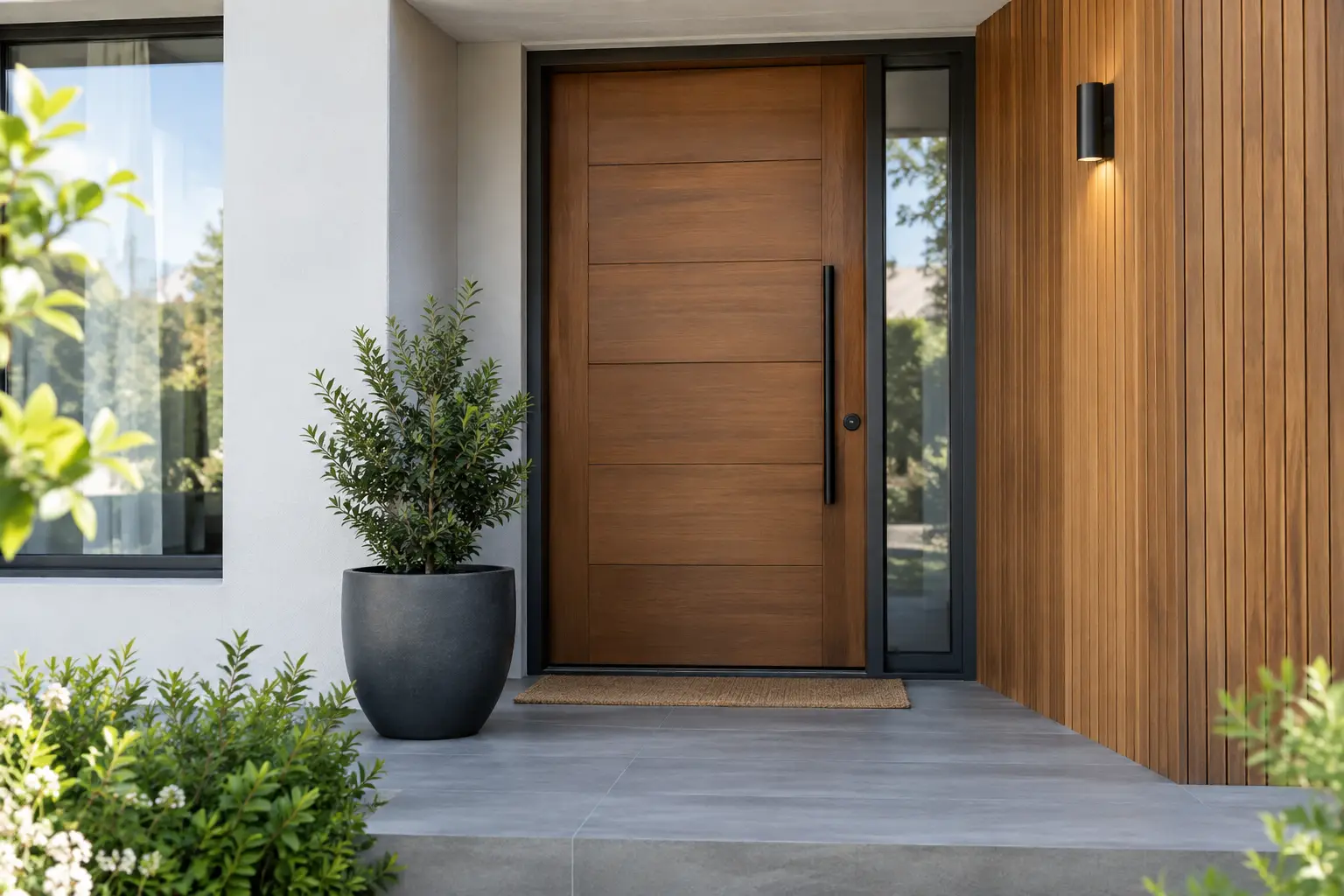
Kellyville homes range from established family properties to contemporary new builds, and the right door should feel intentional rather than simply oversized or ornate. Clean vertical cladding can complement modern facades and streamlined interiors. Wider horizontal boards may suit a more relaxed architectural style. Shaker-inspired paneling can add depth without competing with stone, brick, or detailed exterior finishes.
Start by considering the surrounding elements. The door should relate to the width of the entry, the height of the ceiling, the position of nearby windows, and the finish of garage doors, cladding, or trim. A dark door can create a confident focal point, though darker finishes on exposed elevations may absorb more heat. Lighter finishes can feel crisp and reduce visual heaviness, but they may show marks more readily in busy households.
Glazing and sidelights can also change the result dramatically. A solid cladded leaf paired with narrow glazed sidelights brings natural light into an entry while retaining privacy and a strong sense of security. Conversely, a fully solid door can be the better choice where privacy, acoustic separation, or a more enclosed entry is the priority.
Entrance Doors Need More Than a Good Face
An entrance door is a working part of the building envelope. Its appearance matters, but the construction behind the face matters just as much. If the door is installed externally, consider the amount of overhead protection, rain exposure, prevailing weather, and direct afternoon sun before selecting the material and finish.
A deep porch or covered entry gives more freedom with natural timber and detailed cladding. In a highly exposed opening, a more stable construction and a finish designed for exterior conditions may be the sensible choice. This is not a compromise in appearance. It is how a well-planned door retains its appearance and function over time.
Security should be planned early as well. The thickness and construction of the door influence how locks, pull handles, viewers, and smart-entry hardware can be fitted. Reinforced strike points, quality hinges, and a correctly prepared jamb are all part of a secure result. Hardware should suit the door’s weight and daily use, not just its finish.
Internal Applications Can Add Character and Privacy
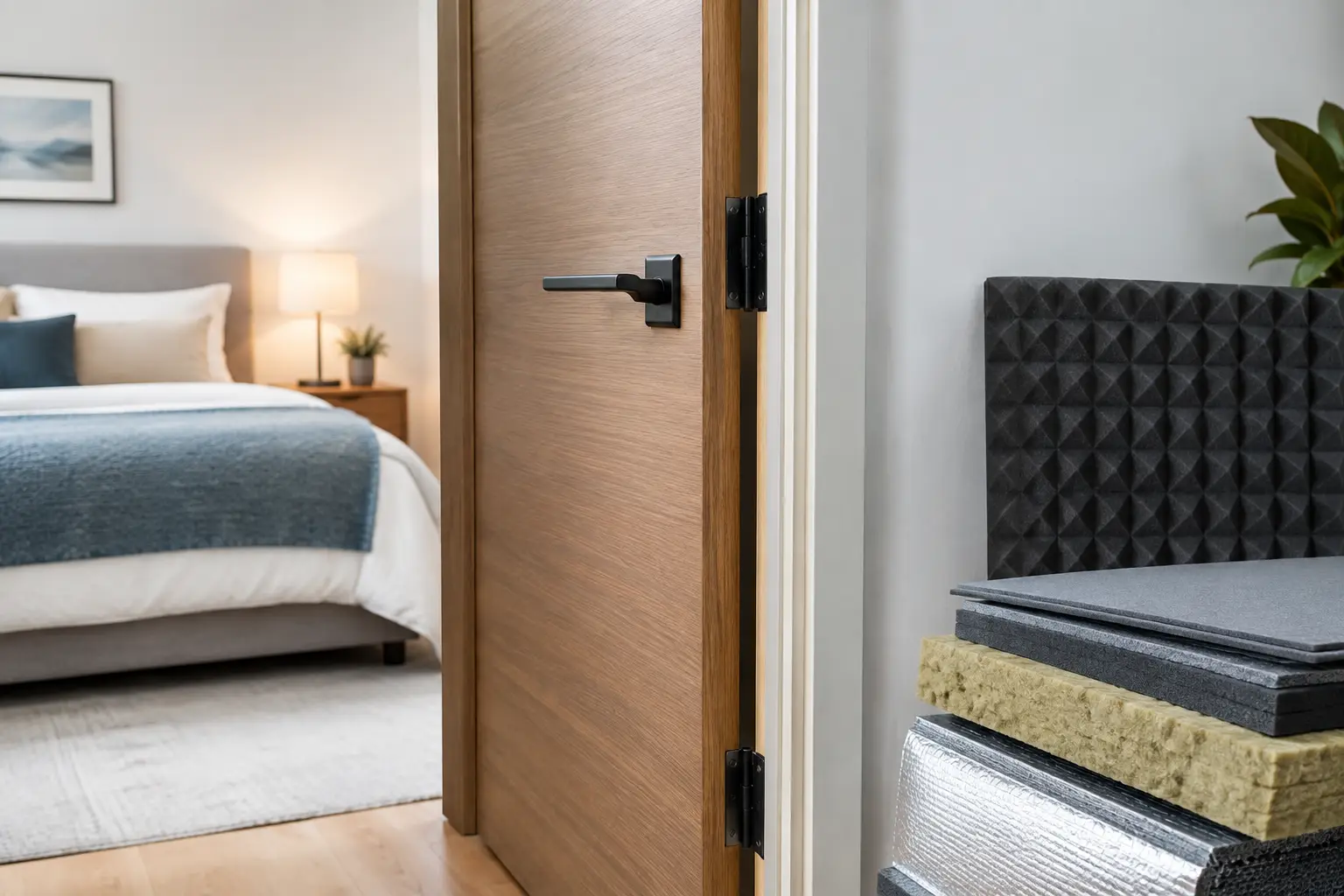
Solid cladding doors are not limited to front entries. They can make a study, media room, pantry, walk-in closet, or living area feel more considered. A solid-core construction is especially useful where sound transfer is a concern, such as between a home office and a busy family area.
For internal doors, the key decision is often whether the cladding detail should be visible on one side or both. A feature door may face the main living space, while its reverse side remains simpler to suit an adjacent hallway. Double doors, French door configurations, or a barn-door format can also work, but each needs enough wall space, clearance, and appropriate hardware to operate properly.
The Details That Protect the Finished Result
Even a premium door can look ordinary if the installation is rushed. Gaps that are inconsistent, a frame that is out of square, poorly positioned hardware, or trim that does not meet cleanly all detract from the finished space. Precision is particularly visible on doors with vertical or horizontal cladding because every line draws the eye.
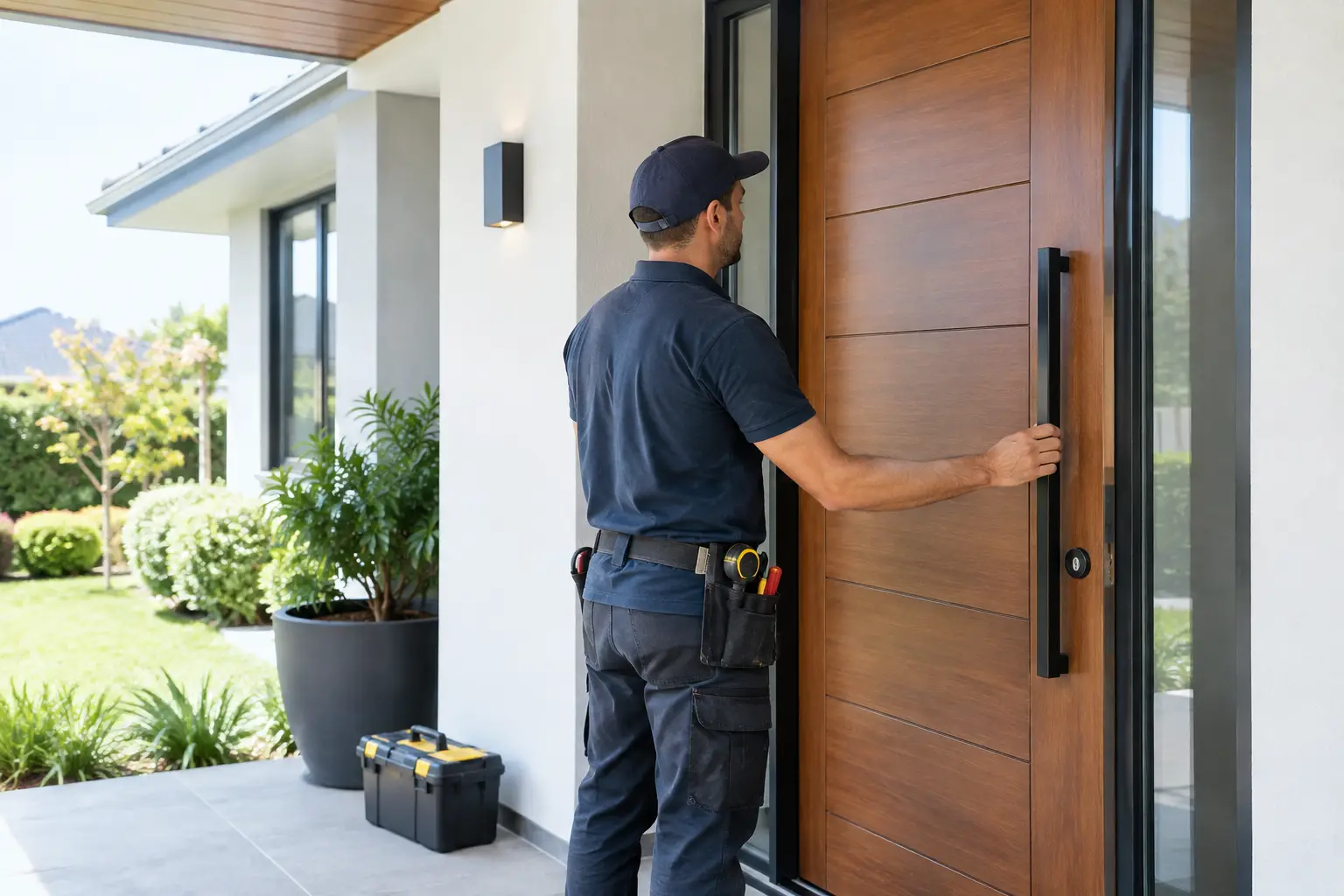
Before ordering, the opening should be measured carefully and assessed for level, plumb, and structural condition. Renovation projects often reveal walls that are not perfectly straight or openings altered by previous work. An experienced installer accounts for these conditions before the door arrives, rather than trying to force a finished product into an unsuitable opening.
The jamb and architrave deserve the same attention as the door leaf. A coordinated timber profile can make the installation feel complete, while a poorly matched frame can undermine an otherwise impressive entry. For external doors, weather seals, a correctly fitted threshold, and appropriate drainage details help prevent drafts and water ingress.
Finishing is another practical consideration. Factory-applied coatings can provide consistency, while site finishing may be useful when matching existing timberwork or a specific paint color. Natural timber finishes usually need ongoing care, especially when exposed to sun and rain. Painted finishes can be easier to coordinate with a facade, though chips and wear should be repaired promptly to protect the surface beneath.
Questions to Ask Before You Commit
A good door selection conversation should cover more than dimensions and color. Ask whether the product is rated for the intended location, what maintenance the finish requires, and whether the proposed hardware suits the door’s construction. Confirm the handing and swing direction, particularly around stairways, narrow halls, furniture, and screen doors.
It is also wise to discuss lead times early. Custom sizes, special cladding patterns, sidelights, and particular finishes can take longer than standard door options. Planning ahead keeps the door choice aligned with construction schedules and avoids settling for a less suitable alternative late in the project.
For homeowners, builders, and property managers, a supply-and-install service reduces the risk of disconnects between product selection and on-site fitting. Meriton Doors can help assess the opening, select a door system suited to the application, and ensure the final installation reflects the level of craftsmanship the home deserves.
A solid cladding door is most successful when it suits the building, the exposure, and the people using it every day. Choose the design that gives your entry or interior the right presence, then give equal attention to the frame, hardware, and installation that will keep it performing beautifully for years.