A contemporary front door has a demanding job. It must set the tone before anyone enters, stand up to weather and daily use, and provide the security a family expects. The strongest front door design trends for contemporary homes balance that visual impact with materials, proportions, and hardware chosen to perform for years.
For homeowners planning a renovation or new build, the aim is not to follow every passing look. It is to create an entry that belongs to the architecture, complements the facade, and still feels considered long after the project is complete.
Front Door Design Trends for Contemporary Homes
Warm timber is replacing flat, featureless finishes
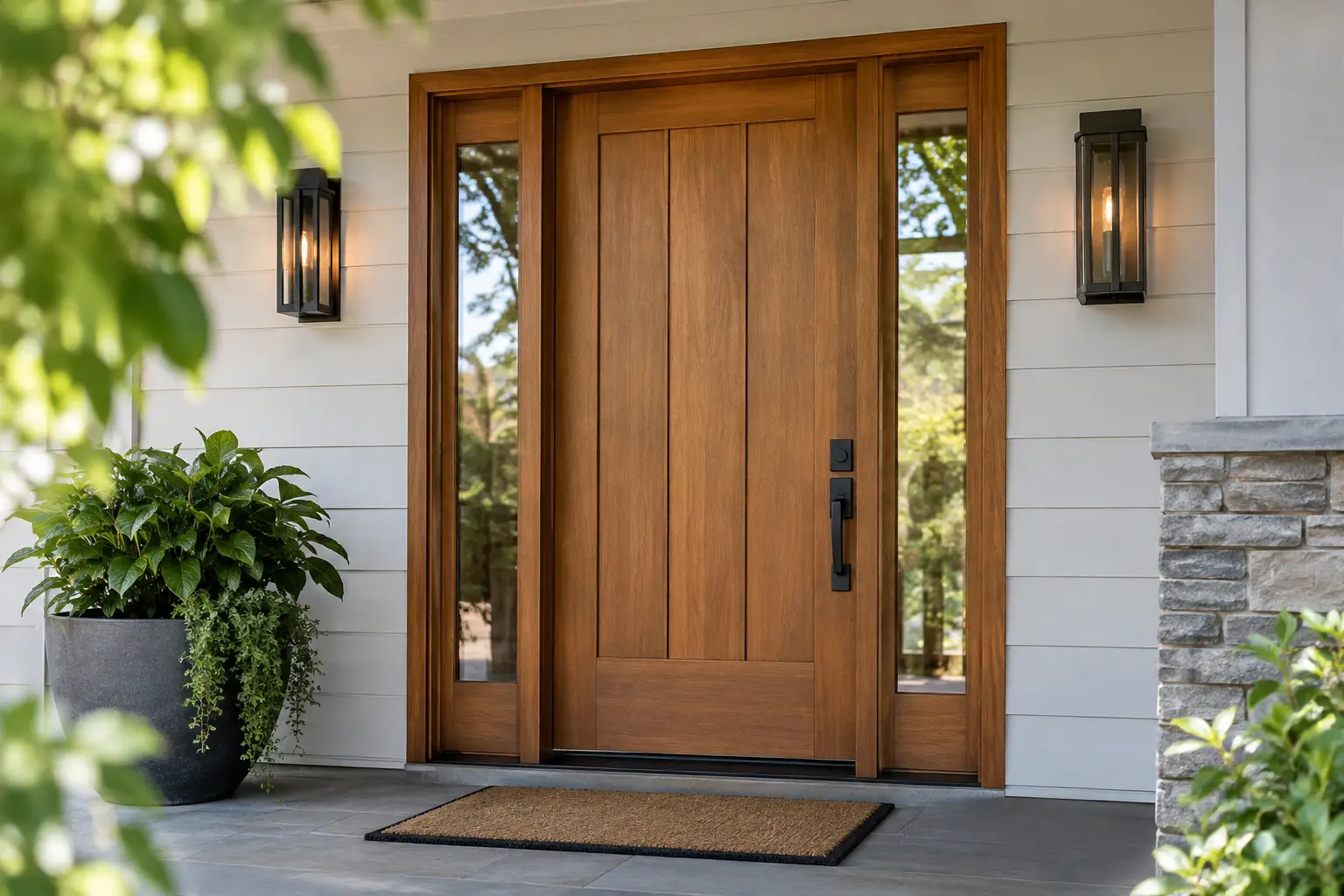
Contemporary design is moving away from front doors that feel cold or overly stark. Natural timber, timber veneer, and timber-look finishes are increasingly used to introduce warmth against concrete, pale masonry, dark cladding, and crisp rendered walls.
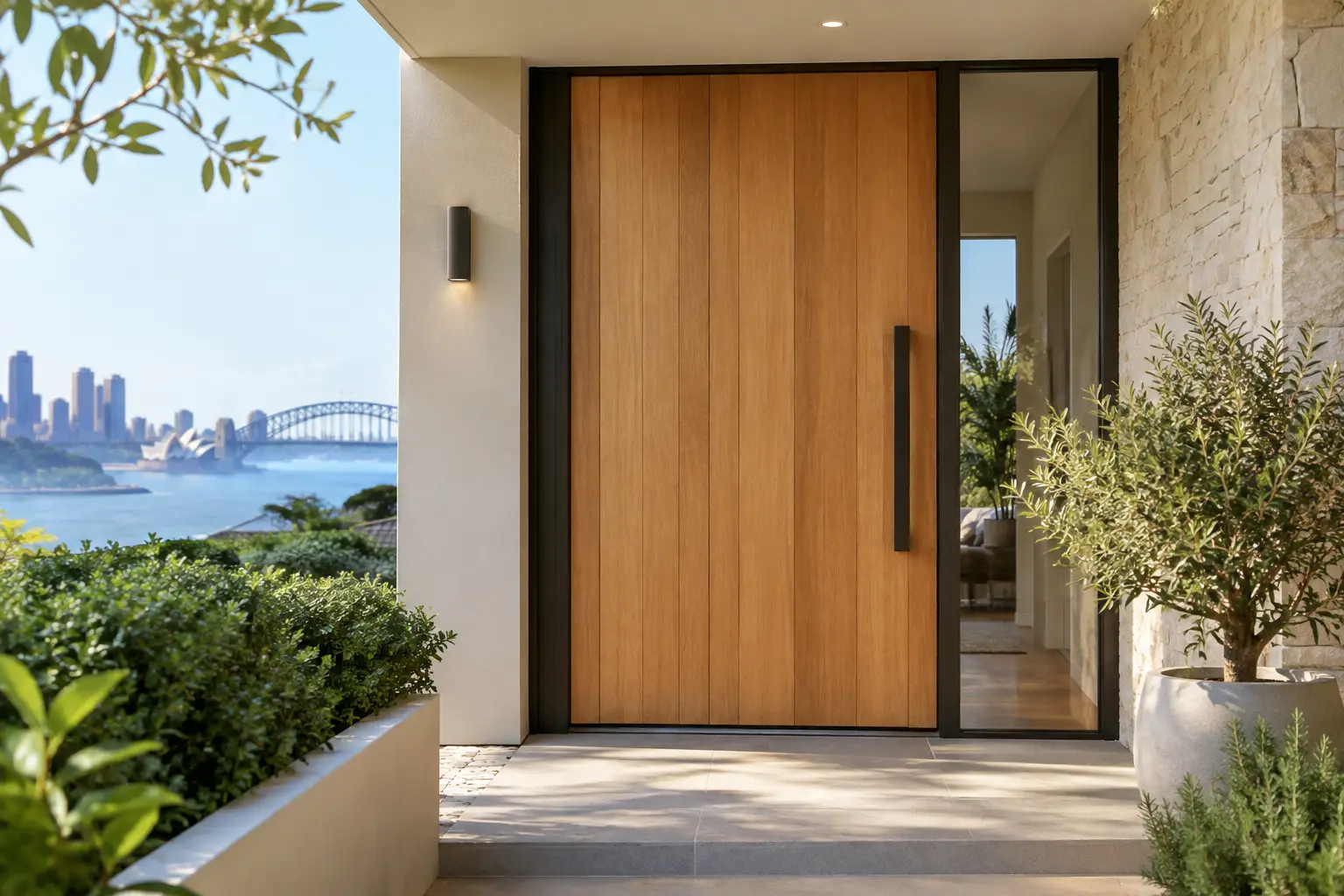
The appeal lies in contrast. A richly grained door can soften a minimal facade without making it traditional. Vertical grain patterns are especially effective on taller pivot or oversized hinged doors because they draw the eye upward and reinforce the height of the entry.
Real timber brings character that cannot be precisely repeated, but it also needs an appropriate finish and ongoing maintenance where exposed to intense sun or rain. For a lower-maintenance alternative, engineered materials or durable timber-look finishes can provide a similar effect. The right choice depends on the level of exposure and how much natural variation suits the rest of the home.
Oversized doors make proportion the feature
A wider or taller entry door remains one of the clearest contemporary statements. It gives an entrance presence without relying on elaborate detailing, and it can make a standard facade feel more architecturally resolved.
However, bigger is not automatically better. An oversized door needs a correctly engineered frame, quality hinges or pivot hardware, and sufficient clearance to operate comfortably. It also needs to relate to the scale of the porch, roofline, windows, and hallway beyond. A door that is too large for a narrow covered entry can look imposing rather than refined.
For many homes, a tall single door paired with a fixed side panel achieves the same sense of scale while bringing more daylight into the foyer. It can also be more practical than an extra-wide leaf in a tight entry space.
Pivot doors offer a clean architectural look
Pivot doors continue to suit modern homes with broad entrances and simple, confident lines. Instead of swinging from side hinges, the door rotates on a pivot point set in from the edge. This allows for substantial, visually striking door panels and creates a distinctive opening experience.
The clean look is a major advantage, particularly when the door face is uninterrupted by decorative rails or panels. A pivot door can work beautifully in timber, painted finishes, or combinations of solid material and glazing.
The trade-off is that pivot systems require careful planning. Weather protection, threshold detailing, hardware quality, and precise installation all matter. They are best treated as part of the overall entry design, not as a late-stage replacement for a conventional door.
Slim glazing brings in light without losing privacy
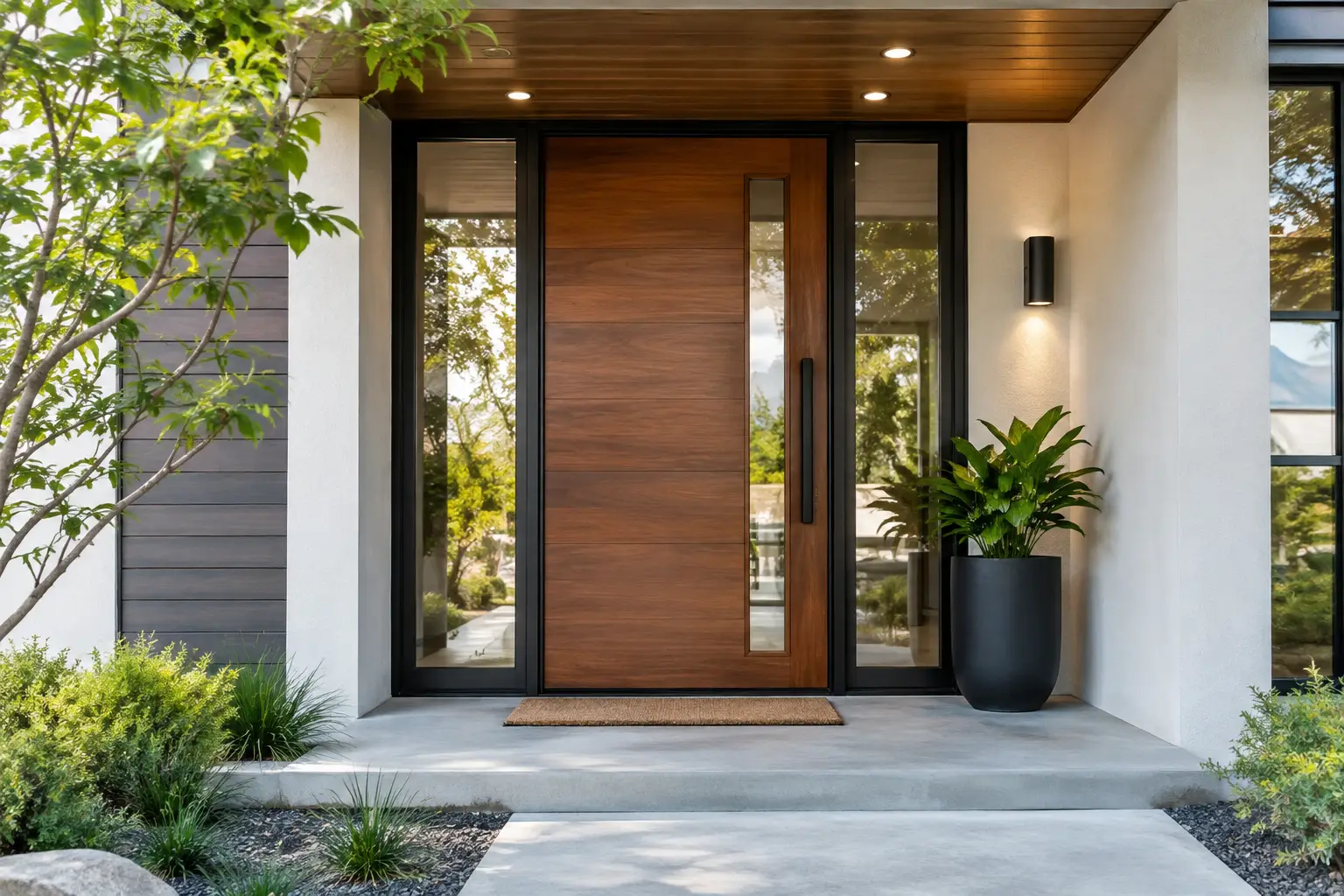
Glass is being used with greater restraint. Rather than full clear-glass doors, contemporary entries often use narrow vertical inserts, frosted panels, reeded glass, or sidelights placed beside a solid door. These details bring daylight into what is often a dark hall while preserving privacy and a sense of security.
Vertical glazing can make a standard-height door feel taller, while a horizontal insert may echo the lines of nearby windows. Reeded or obscure glass is useful when the entry faces a street or neighboring property. It gives the space a brighter, more open feeling without putting the interior on display.
Consider where the afternoon sun falls and what visitors can see from the front path. Glass selection should respond to both. A beautiful transparent panel may not be the best choice where privacy, heat, or glare is a concern.
Dark finishes now share the stage with softer neutrals
Black and charcoal entrance doors still deliver a sharp contemporary contrast, particularly against white render or light brick. Yet the palette is broadening. Deep olive, muted blue-gray, warm taupe, mushroom, and off-black finishes offer a more layered look while remaining timeless enough for a major exterior investment.
A softer neutral can also connect the front door to stone, timber screening, paving, or landscaping. The goal is not necessarily to match every surrounding surface. A door often looks more intentional when it picks up one undertone from the facade and provides a controlled point of contrast.
Painted finishes make color changes possible later, but dark colors can show dust, fingerprints, and fading more readily in exposed locations. Discuss the door material and coating system before selecting a dramatic shade. Durability is part of good design.
Statement hardware is deliberate, not decorative
Hardware has become a focal point in contemporary entrance design. Long vertical pull handles, square backplates, matte black finishes, brushed nickel, and satin brass are all popular because they add a clear tactile detail to a simple door face.
The best hardware feels proportional. A very long pull handle can suit a tall pivot door, while a modest lever or compact pull may be better on a standard hinged door. Matching the finish to exterior lighting, house numbers, and gate hardware can create a calm, coordinated result, but it does not need to be identical throughout.
Smart locks are another practical direction. They can offer keyless access, visitor codes, and simpler day-to-day entry, especially for busy households. Choose a system that is compatible with the door construction and installed correctly. Convenience should not compromise reliable locking, weather resistance, or the clean appearance of the entry.
Design the whole entry, not only the door
A front door is most successful when the surrounding details are planned at the same time. The frame profile, side panels, architraves, threshold, exterior lighting, house numbers, planting, and path all affect how the finished entrance reads.
For example, a simple flush door may look ordinary with a bulky frame and busy trim, but highly contemporary with slim reveals, a recessed handle, and a carefully selected sidelight. Conversely, a beautiful timber door can lose impact if it sits under inadequate lighting or beside mismatched metal finishes.
This is where professional measurement and installation make a visible difference. Correct gaps, straight lines, secure fixing, smooth operation, and properly finished junctions are not minor details. They are what allow premium materials to look premium.
How to choose a trend that will last
Start with the fixed elements that will remain after the door is installed: the facade material, roof color, window frames, driveway, and porch. Then decide what the entrance needs to do. A shaded, wide porch may suit timber and a large pull handle, while an exposed street-facing entry may benefit from a durable finish, obscure glazing, and a protected threshold.
It also helps to separate architectural choices from short-lived styling choices. Door proportions, material quality, frame design, and security hardware are long-term decisions. Handle finish, paint color, and exterior accessories can evolve more easily. Invest first in the structure and installation, then use the adaptable details to express personality.
For homes across western Sydney, heat, sun exposure, and everyday family use deserve as much attention as appearance. A door should open smoothly, seal properly, feel solid in hand, and complement the home from the street and from inside the foyer.
The most enduring contemporary entry is not the loudest one. It is the one where every detail – from the grain direction to the lockset and final fit – feels purposeful. A well-chosen door gives the home a confident welcome every time it is opened.