A front entrance has a demanding job. It needs to make the right first impression, protect the home, stand up to sun and rain, and operate smoothly every day. The best entry doors do all of that without feeling like a compromise between style and performance.
For homeowners planning a renovation or new build, the decision is bigger than choosing a color or a panel design. The door itself, its frame, glazing, hardware, weather seals, and installation all affect how the finished entrance looks and performs. Getting those details right creates an entryway that feels considered from the street and dependable from the inside.
Start With How the Entrance Needs to Work
A beautiful door is only successful if it suits the way the property is used. Consider the width of the opening, the amount of natural light needed in the hall, the level of privacy required, and whether the entrance is protected by a porch or exposed to the weather.
A standard single door suits many homes, particularly where the façade is more traditional or space at the entrance is limited. Wider openings create an opportunity for double doors, fixed side panels, or a combination of both. These configurations can make a hallway feel brighter and more generous, but they need careful proportioning. A large glazed panel may bring in welcome daylight, for example, yet it can also affect privacy and add cleaning requirements.
The architecture of the home should guide the selection rather than dictate it rigidly. A shaker-style door can complement a classic, Hamptons-inspired, or contemporary home depending on its finish and hardware. Clean-lined flush designs tend to suit modern façades, while French doors or detailed glazed designs can add character to more traditional properties.
Choose an Entry Door Material for the Conditions
Material has a major influence on appearance, maintenance, insulation, and longevity. There is no single best choice for every home. The right answer depends on exposure, design goals, budget, and the level of upkeep the owner is comfortable with.
Timber brings warmth and character
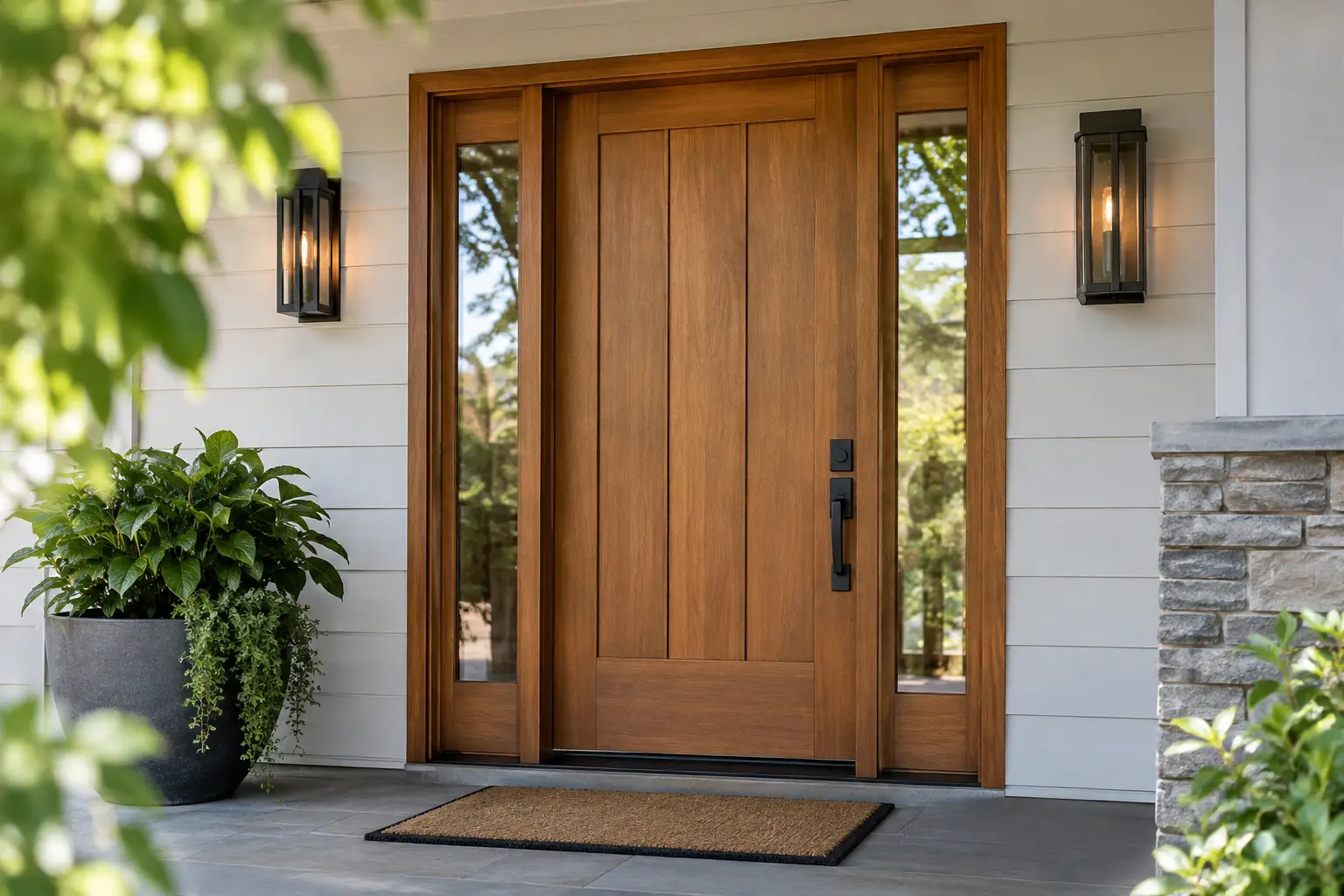
Timber entry doors offer natural grain, visual depth, and a substantial feel that is hard to replicate. They can be stained, painted, or specified in designs ranging from simple vertical boards to refined panel details. For homes where the entrance is intended to be a defining feature, timber is often a strong choice.
It does require an appropriate finish and ongoing maintenance, especially on entrances that receive strong sun or driving rain. A quality coating system and well-designed weather protection help preserve the door, but periodic inspection is still sensible. Timber rewards care with a finish that develops character rather than looking generic.
Fiberglass and composite options reduce maintenance
Fiberglass and composite doors can provide a practical alternative where weather resistance and low maintenance are priorities. Many designs replicate the texture of timber while offering stable performance through seasonal temperature changes. They can be a good fit for busy households and exposed locations.
The trade-off is that not every product has the same depth of detail or repairability as a premium timber door. Product quality matters. The finish, core construction, edge detailing, and frame system should be assessed together rather than judged from a showroom sample alone.
Steel favors strength and security
Steel entry doors are valued for strength, security, and clean contemporary lines. They may suit modern homes, light commercial settings, and entrances that need a more architectural look. Insulated steel options can also offer good thermal performance when properly specified.
However, the appearance can feel less warm than timber, and any coating damage should be addressed promptly to avoid corrosion. Steel also demands accurate installation. Even a well-made door will not perform at its best if the frame is out of square or seals are poorly fitted.
Security Is Built Into the Whole Door System
Security is not determined by a lock alone. A strong entry system relies on the door leaf, frame, hinges, strike plate, deadbolt, glazing, and installation working together.
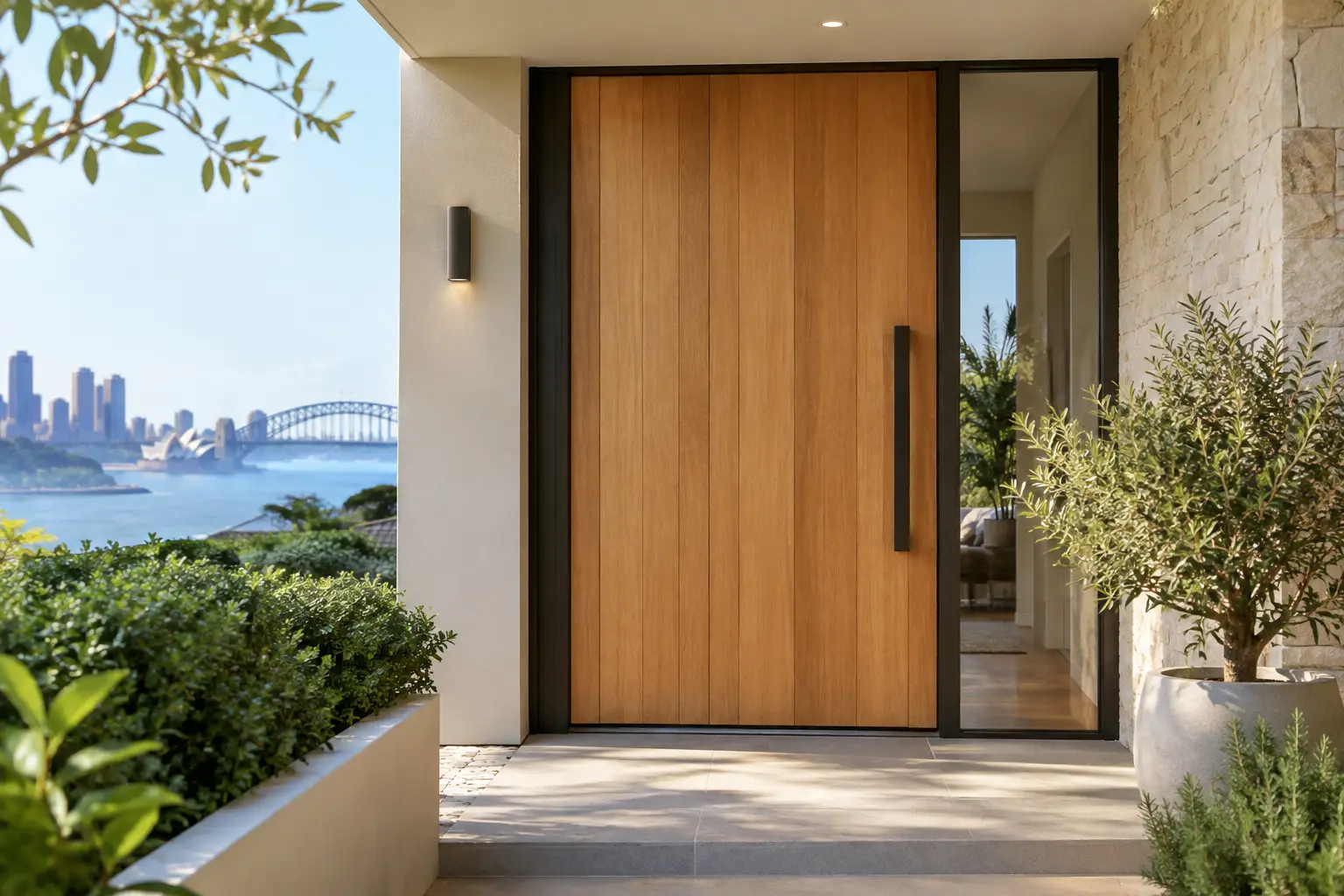
Look for a solid, well-constructed door paired with a properly secured frame. The deadbolt should engage into a reinforced strike area rather than only thin trim. Hinges need to suit the weight of the door, particularly with heavier timber designs or large pivot-style configurations. If glass is included near the lock, consider the glazing type and the placement of hardware so the design does not unintentionally create a weak point.
Modern hardware can add useful convenience, including keypad and smart-lock options. These are most effective when selected for the door thickness, handing, and intended use. A smart lock may be convenient for a family entrance or rental property, but it should never distract from the fundamentals of a solid frame, secure fixings, and precise alignment.
Weather Performance Makes a Noticeable Difference
A drafty front door can make an otherwise well-finished home feel incomplete. Gaps around the jamb, an uneven threshold, or poorly compressed seals may allow air, dust, moisture, and outside noise into the house.
Good weather performance begins with correct measuring and installation. The opening must be assessed for plumb, level, and square, not simply assumed to be accurate. From there, the door jamb, threshold, flashing, seals, and clearances can be set to support reliable operation.
This is particularly relevant for homes in Western Sydney, where hot summers can place real pressure on exterior finishes and materials. A door that receives afternoon sun may benefit from a lighter paint color, a protective awning, or a material chosen for greater stability. In wet weather, drainage at the threshold and adequate protection around the opening are equally important.
Design the Details as One Composition
An entrance looks more polished when its components are selected as a complete composition. The door design is the focal point, but the surrounding elements give it presence.
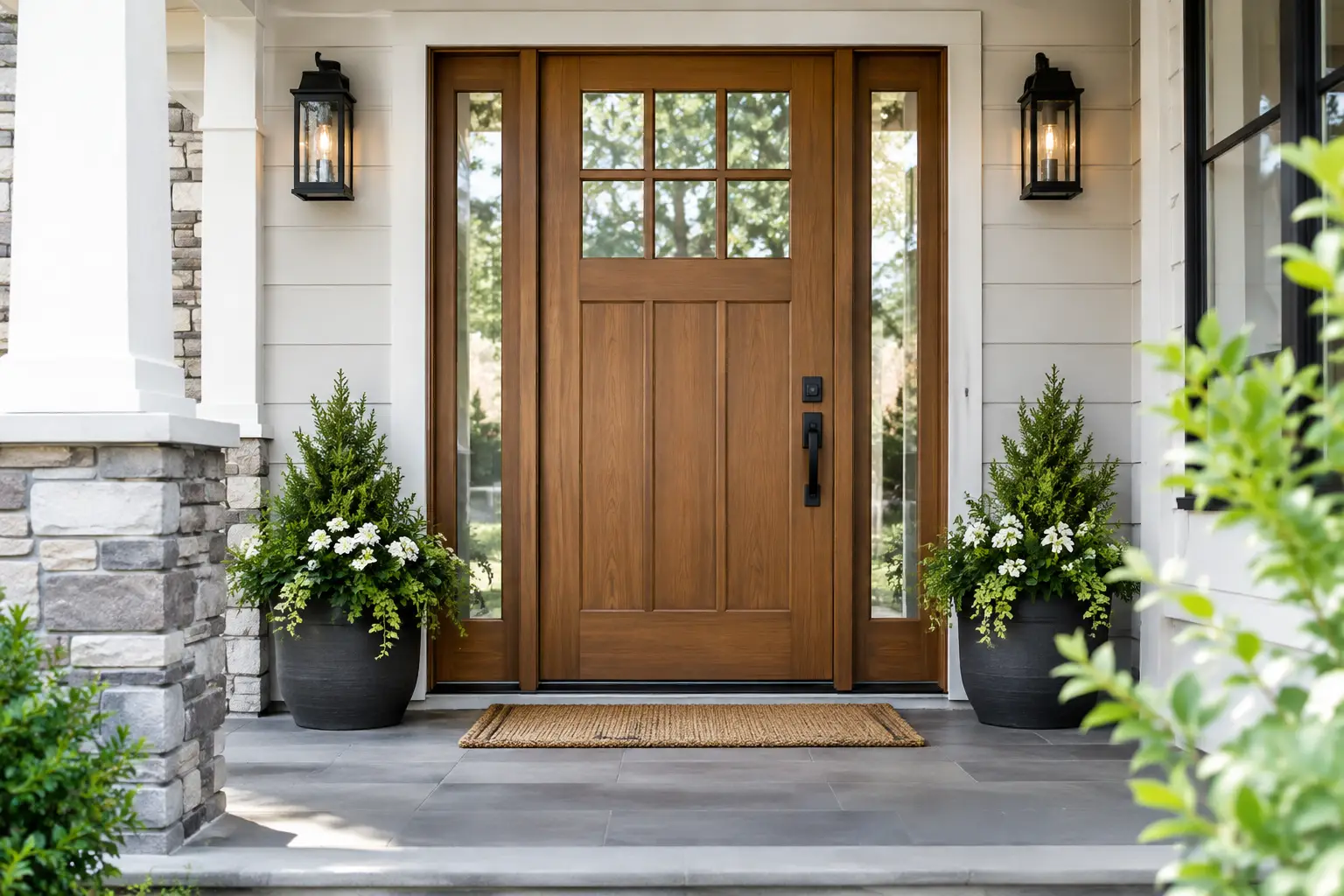
Side panels can add symmetry and daylight, while a transom window can lift the visual height of the entrance. Architraves and exterior trim create a cleaner transition between the door frame and wall finish. Hardware provides the final layer of personality: a long pull handle can suit a tall contemporary door, while a round knob or lever may better match a classic paneled design.
Color should relate to the wider façade. A deep charcoal, warm timber stain, muted green, or crisp white can all work well when they connect with the roof, brick, cladding, window frames, or landscaping. The aim is not necessarily to match every element. A front door can be a statement, but it should still look intentional.
Glass deserves the same level of thought. Clear glass maximizes light and visual connection, while obscure, reeded, frosted, or textured glass improves privacy. Divided-light glazing can introduce traditional charm, whereas a single large pane creates a more contemporary effect. Consider the view in both directions: what visitors see on approach and what residents see from the hall.
Why Professional Installation Protects the Investment
Even exceptional entry doors can disappoint when installation is rushed. Common problems such as sticking, rattling, uneven margins, water ingress, and premature wear are often related to the frame or fitting rather than the door design itself.
Professional installation focuses on the details that are easy to overlook. The opening is checked, the jamb is set accurately, the door is hung and adjusted, hardware is fitted cleanly, and seals are tested for consistent contact. The result should feel solid and effortless: the door closes cleanly, the lock engages without force, and the reveals around the edge look even.
For renovation projects, professional guidance can also prevent selection issues before they become costly. Existing openings may have unusual dimensions, damaged framing, floor-level changes, or adjacent sidelights that need to be considered. Addressing these conditions early supports a neater finish and a more dependable result.
Meriton Doors approaches entrance projects with this full-system mindset, helping homeowners and builders select quality door solutions and fitting them with the precision the final result deserves.
A Practical Way to Make the Final Choice
Before making a decision, stand back from the catalog and consider the entrance from everyday perspectives. Will it feel welcoming after dark? Does it provide enough privacy? Can it handle the weather exposure? Does the hardware feel comfortable in hand? Will the material still suit the household’s maintenance expectations five years from now?
A well-chosen front door does more than improve curb appeal. It sets the tone for the home, provides reassurance each time it closes, and turns an ordinary threshold into a detail worth coming home to.