
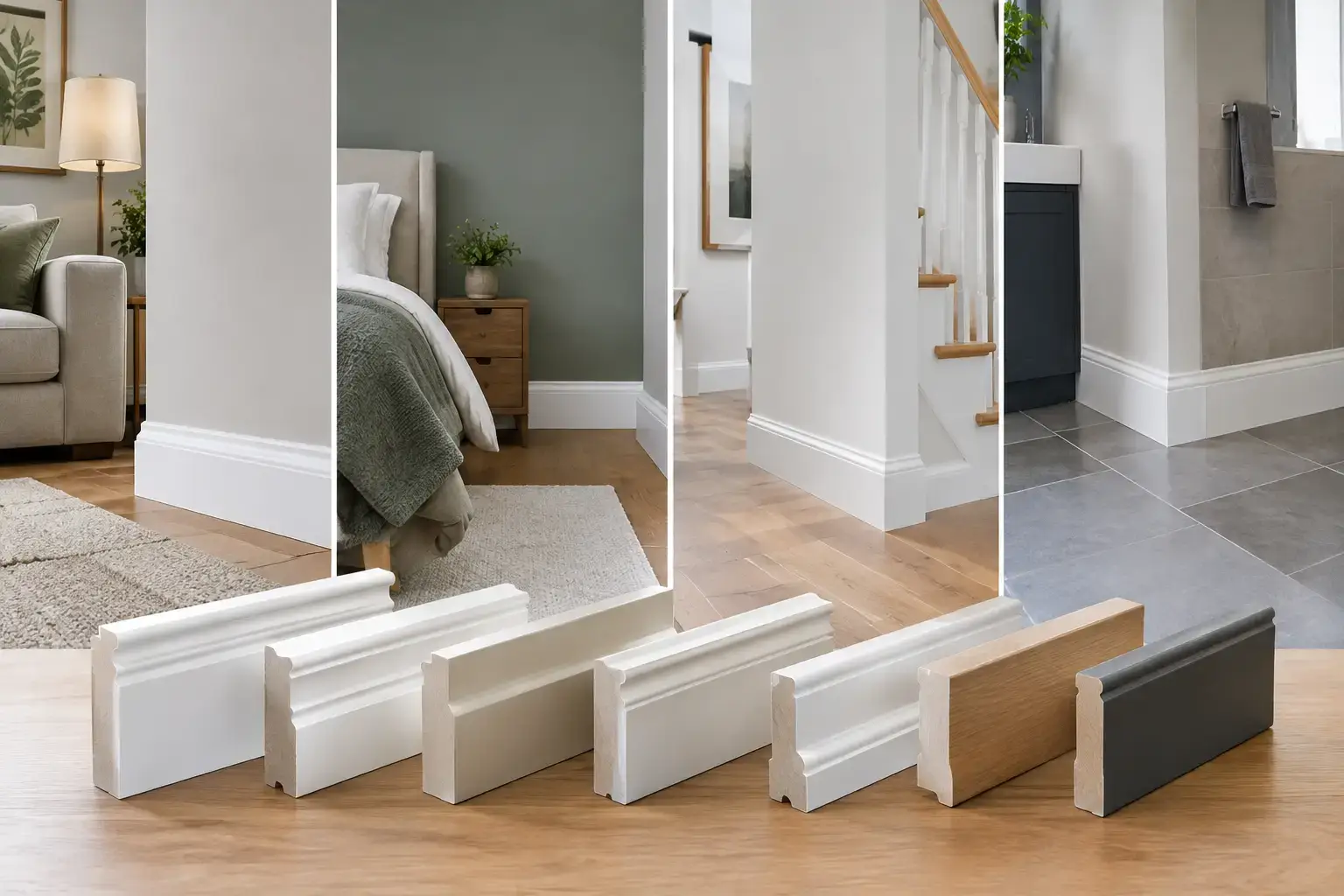
A room can have quality flooring, carefully chosen doors, and freshly painted walls yet still look unfinished at the perimeter. Skirting board profiles provide the visual transition between wall and floor, while also protecting the lower wall from everyday knocks, vacuum marks, and furniture movement. In American terminology, they are often called baseboards, but the purpose is the same: a clean, durable detail that brings the entire interior together.
For homeowners renovating in Sydney, the best profile is rarely chosen in isolation. Its height, shape, material, finish, door architraves, and the character of the home all influence the final result. Getting these details right creates a considered interior rather than a collection of separate products.
Why skirting board profiles matter
Skirting is a functional component, but its design impact is significant. A narrow, plain profile can make a modern room feel crisp and restrained. A taller board with a shaped top edge introduces depth and formality, giving more traditional homes or heritage-inspired interiors a stronger architectural finish.
It also solves practical problems. Floors naturally expand and contract, particularly timber and hybrid products, so a skirting board covers the essential expansion gap around the room perimeter. It protects the wall where shoes, toys, cleaning equipment, and moving furniture are most likely to leave marks. When professionally fitted, it conceals minor irregularities where walls and floors meet.
The key is proportion. A profile that is too small can disappear against high ceilings and generous doorways. One that is overly decorative or tall can crowd a compact room. The right choice should look intentional from the moment someone enters the space.
Popular skirting board profile styles
There is no single best profile for every property. The strongest choice is the one that supports the architecture, interior palette, and door design.
Square edge and pencil round
Square-edge skirting has a flat face with a sharp, contemporary line. It suits modern homes, new builds, minimalist interiors, and rooms where flush or shaker-style doors are the focus. It is simple to paint, straightforward to maintain, and provides a polished look without competing with other finishes.
Pencil-round skirting is similarly clean but softens the top edge with a small radius. That subtle curve makes it a practical family-home option because it avoids a sharp corner while preserving a modern appearance. It works well with simple square architraves and contemporary internal doors.
Colonial and stepped profiles
Colonial profiles use curves, steps, or molded detailing to create a more decorative finish. They complement traditional homes, Hamptons-inspired interiors, formal living spaces, and properties where panel doors or French doors are part of the design. The additional contour catches light and shadow, bringing more visual depth to the wall line.
A stepped profile offers a useful middle ground. It has more definition than a flat board but remains less ornate than a classic colonial shape. This makes it a strong option for transitional interiors that combine traditional details with clean, current finishes.
Scotia and decorative moldings
Scotia is a smaller concave molding traditionally used at the floor junction. It can be installed on its own in some applications, but it is more often paired with another board or used for a specific period look. Decorative moldings offer character, but they need careful coordination. If the skirting is highly detailed, overly elaborate architraves, cornices, and door panels can make the room feel busy.
For homes with heritage influences, matching the existing profile can preserve character and support consistency across old and newly renovated spaces. In a contemporary extension, however, a simpler profile may create a deliberate and attractive contrast.
Choosing the right height and proportion
Height affects a room as much as the profile itself. Standard-height skirting is often sufficient for bedrooms, hallways, and modern apartments, particularly where ceiling heights are modest. Taller boards create a more substantial finish and can make larger rooms feel grounded.
As a practical guide, rooms with higher ceilings usually carry taller skirting more comfortably. Wider hallways, open-plan living areas, and entry spaces also benefit from additional scale. In a smaller room, a slimmer profile may keep the walls looking open, especially when painted in the same color as the wall.
Door architraves should be considered at the same time. A tall skirting board paired with a very narrow architrave can look unbalanced. Coordinating their thickness and level of detail produces a cleaner visual hierarchy around every doorway. This is particularly worthwhile when upgrading internal doors, jambs, and trim as part of one project.
Material choices: MDF, pine, and hardwood
Material selection comes down to budget, location, paint finish, and the level of durability required. Each option has advantages, and the right one depends on the installation.
Primed MDF is a popular choice for painted interiors because it has a smooth, consistent surface and accepts factory-applied or on-site paint finishes well. It is stable and available in a broad range of profiles. Quality MDF must be protected from excessive moisture, making proper installation and sealing especially important near wet areas.
Pine offers a natural timber option that can be painted or stained. It has warmth and character, although natural grain, knots, and movement can be more noticeable than with MDF. It is well suited to projects where timber features are part of the overall design.
Hardwood is the premium choice where a stained finish, exceptional impact resistance, or a more substantial timber appearance is required. It costs more and requires skilled preparation, but it can be the right investment for statement interiors, high-traffic spaces, and homes with exposed timber doors or flooring.
Match skirting to doors, floors, and paint
A successful interior does not need every timber component to be identical, but they should feel related. If your home has modern flush doors, square-edge skirting and simple architraves will usually look more cohesive than heavily molded trim. Shaker doors can work with either simple or stepped profiles, depending on whether the intended style is contemporary or more classic.
Paint provides another design decision. White skirting against white walls is timeless and emphasizes the profile through light and shadow. Painting skirting the wall color creates a quieter, more contemporary result and can make smaller rooms feel less segmented. A darker trim can be striking, but it works best where there is enough natural light and a clear connection to other dark elements, such as door hardware or cabinetry.
Flooring also matters. Pale timber, polished concrete, carpet, tile, and darker engineered boards all change how a profile reads. Before committing, place physical samples together in the room where possible. Light levels in a showroom and at home can be very different.
Installation details that protect the finish
Even premium skirting will look ordinary if joints are poorly finished or walls are not prepared properly. Straight lengths need accurate fixing, internal corners should be neatly scribed or finished, and external corners need careful cutting to resist chipping. Caulking the top edge and filling nail holes before painting creates the continuous, refined line most homeowners expect.
Existing walls can add complexity. Older homes may have uneven plaster, floors that are not perfectly level, or previous trim that leaves paint lines behind after removal. These issues are manageable, but they reinforce the value of measuring carefully and allowing for proper preparation rather than treating skirting as an afterthought.
Professional installation is also helpful when several finishing components are being replaced together. Coordinating skirting, architraves, door jambs, and doors allows proportions, reveals, and paint finishes to be resolved as one complete system. Meriton Doors can help homeowners select and install these details with the same attention given to the doors themselves.
Make the final choice with the whole room in view
Before selecting a profile, stand back and consider the room as a complete composition: ceiling height, wall color, flooring, door style, architraves, furniture, and how the space will be used. A clean pencil round may be exactly right for a busy family hallway, while a taller stepped or colonial profile may give a formal living room the finish it has been missing.
The best skirting board is not necessarily the most decorative or the most expensive. It is the one that fits the home, stands up to daily life, and makes every wall-to-floor transition look deliberately finished.
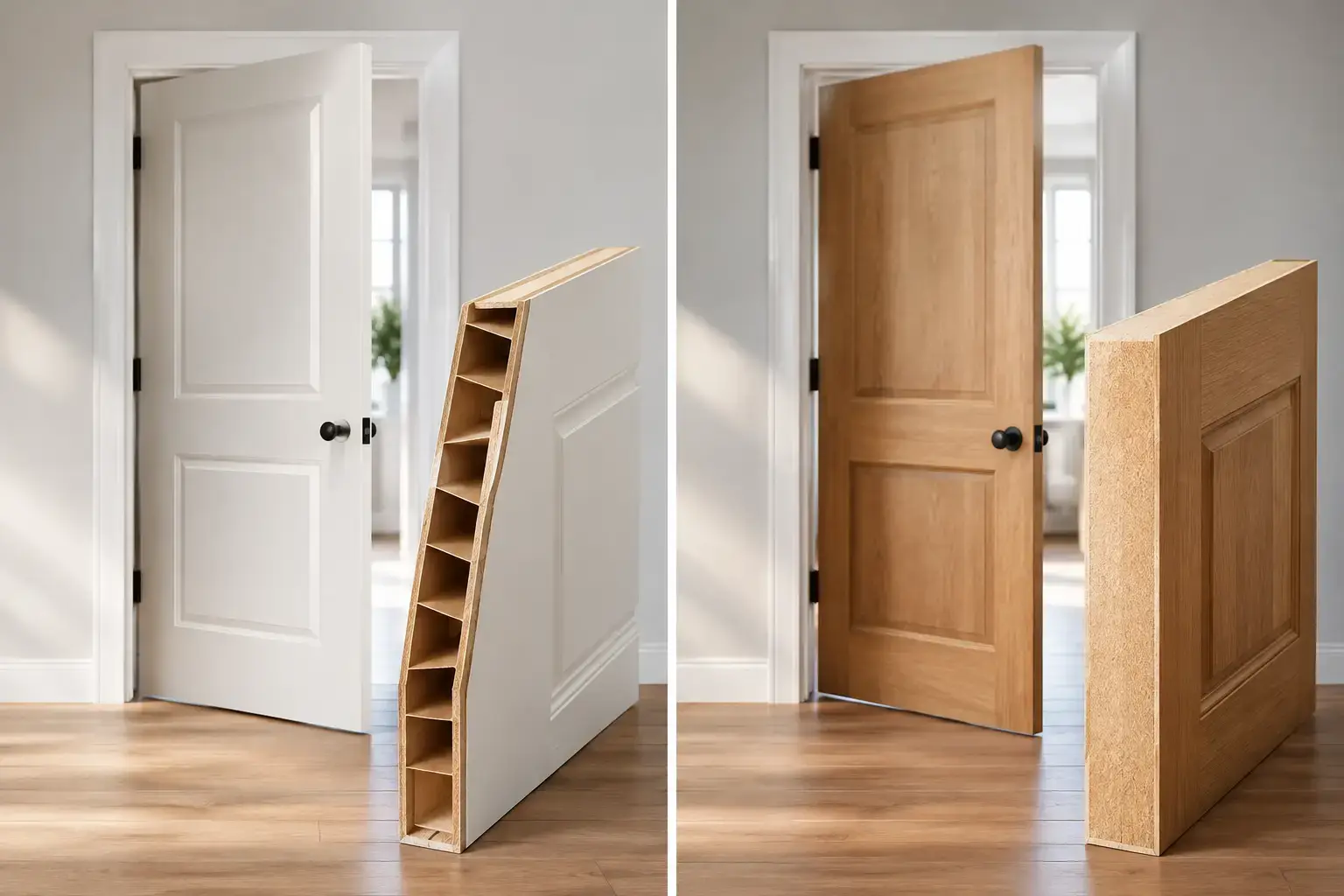
Hollow Core vs Solid Core: Which Door Fits?
Compare hollow core vs solid core doors for sound, durability, cost, and everyday use, then choose the right interior door for your next home renovation.