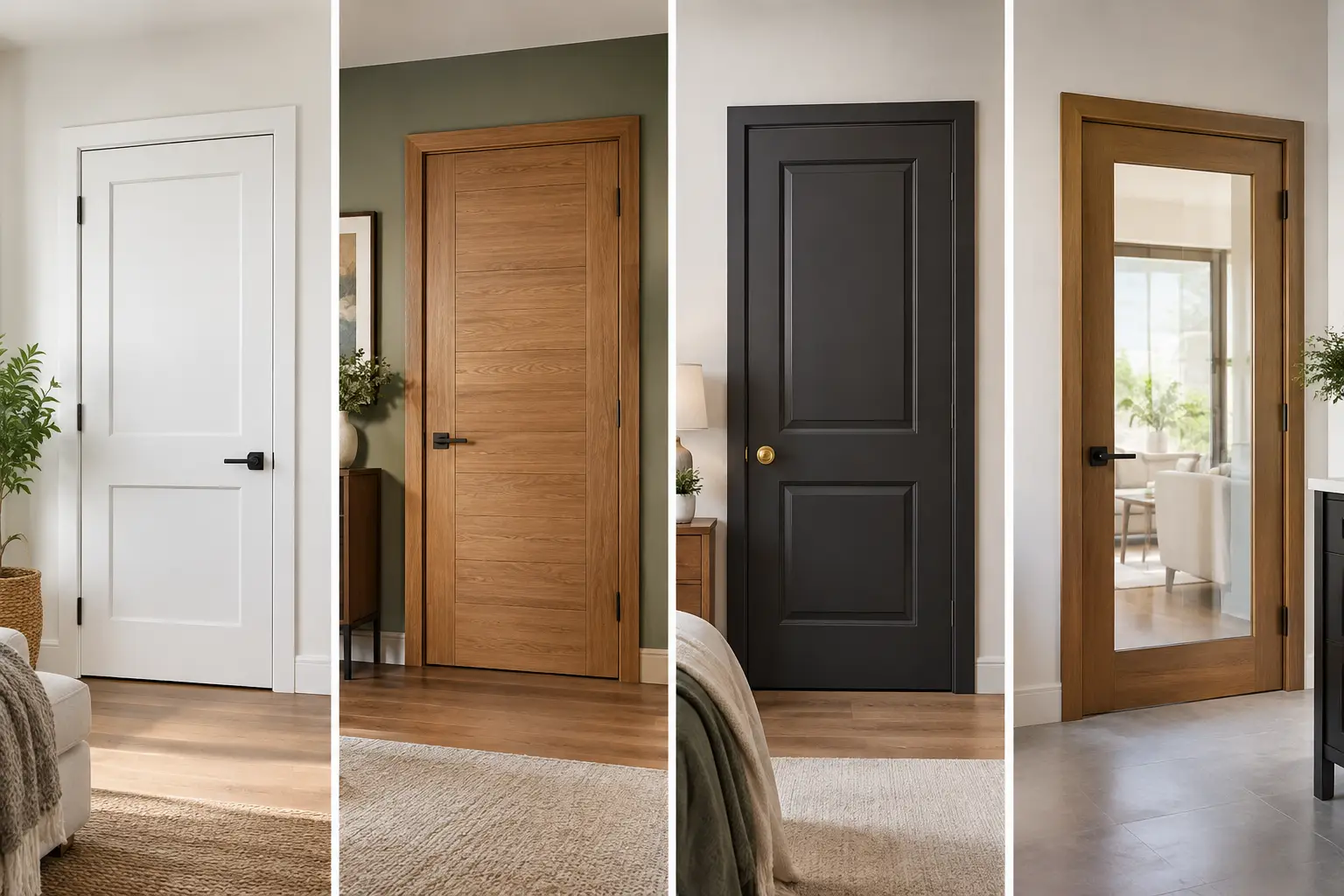
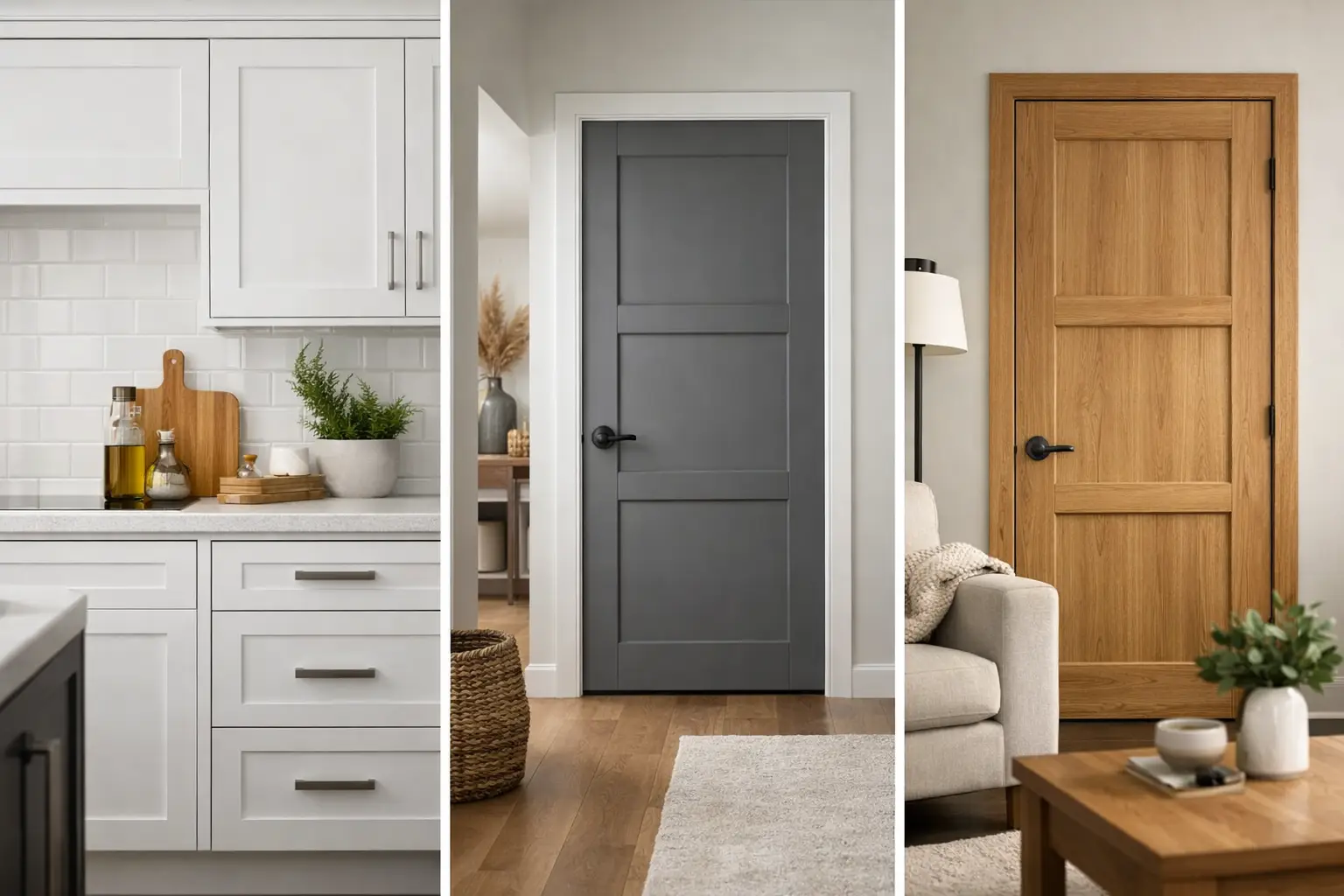
A well-chosen door does more than close off a room. It sets the line, proportion, and level of finish for the entire space around it. This guide to shaker door designs helps homeowners, renovators, and builders choose panel layouts, materials, and finishes that feel considered from the entryway to the back bedrooms.
Shaker doors have endured because their design is simple without being plain. Their framed construction and recessed panels add shadow, depth, and order to a wall, yet they work across traditional, coastal, farmhouse, transitional, and contemporary homes. The key is selecting the right version of the style rather than assuming every shaker door delivers the same result.
What Defines a Shaker Door Design?
A shaker door is built around a frame of vertical stiles and horizontal rails, with one or more flat recessed panels set between them. The look is clean and architectural. Unlike heavily decorative doors, shaker designs rely on balanced proportions and crisp joinery to make an impression.
That restraint is what gives the style its flexibility. A narrow-profile, single-panel shaker door can look calm and modern in a new build. A taller four-panel design with traditional molding can sit naturally in a character renovation. The construction principle stays familiar, but the panel count, rail width, edge detail, color, and hardware shift the personality of the door.
For a polished result, view the door as part of a complete opening. The jamb, hinges, handle, architrave, wall color, flooring, and nearby cabinetry all influence how the finished shaker design reads.
Guide to Shaker Door Designs by Panel Layout
Panel arrangement is usually the first decision, and it has a greater visual effect than many homeowners expect. It changes the apparent height and width of the door, as well as the formality of the room.
One-panel shaker doors
A single large recessed panel creates the cleanest interpretation of the shaker style. It is a strong choice for modern interiors, wider openings, and rooms where you want the door to feel quiet rather than decorative. The uninterrupted panel can also make a standard-height door look more generous.
This design works particularly well in white, soft gray, warm neutral, or deep painted finishes. It can feel minimal, though, so proportion matters. A very wide flat panel on a narrow door may appear less refined than a carefully divided layout.
Two-panel shaker doors
Two-panel doors offer a balanced middle ground. Panels may be stacked vertically or divided into equal sections, depending on the design. A vertical stacked layout adds height and suits bedrooms, hallways, and linen closets, while even panels provide a more structured, classic appearance.
For many homes, a two-panel door is the most versatile option. It has enough detail to give an interior character but does not compete with feature tiles, statement lighting, or detailed cabinetry.
Three- and four-panel shaker doors
Three- and four-panel configurations bring more rhythm to the door face. They are well suited to larger homes, traditional renovations, and spaces with higher ceilings, where a one-panel door may feel too sparse. Four-panel doors often pair beautifully with classic architraves and more substantial skirting.
The trade-off is visual density. In a compact apartment or a very contemporary interior, multiple panels can make a door feel busier. Matching the panel count to the scale of the room is more effective than choosing a layout simply because it is familiar.
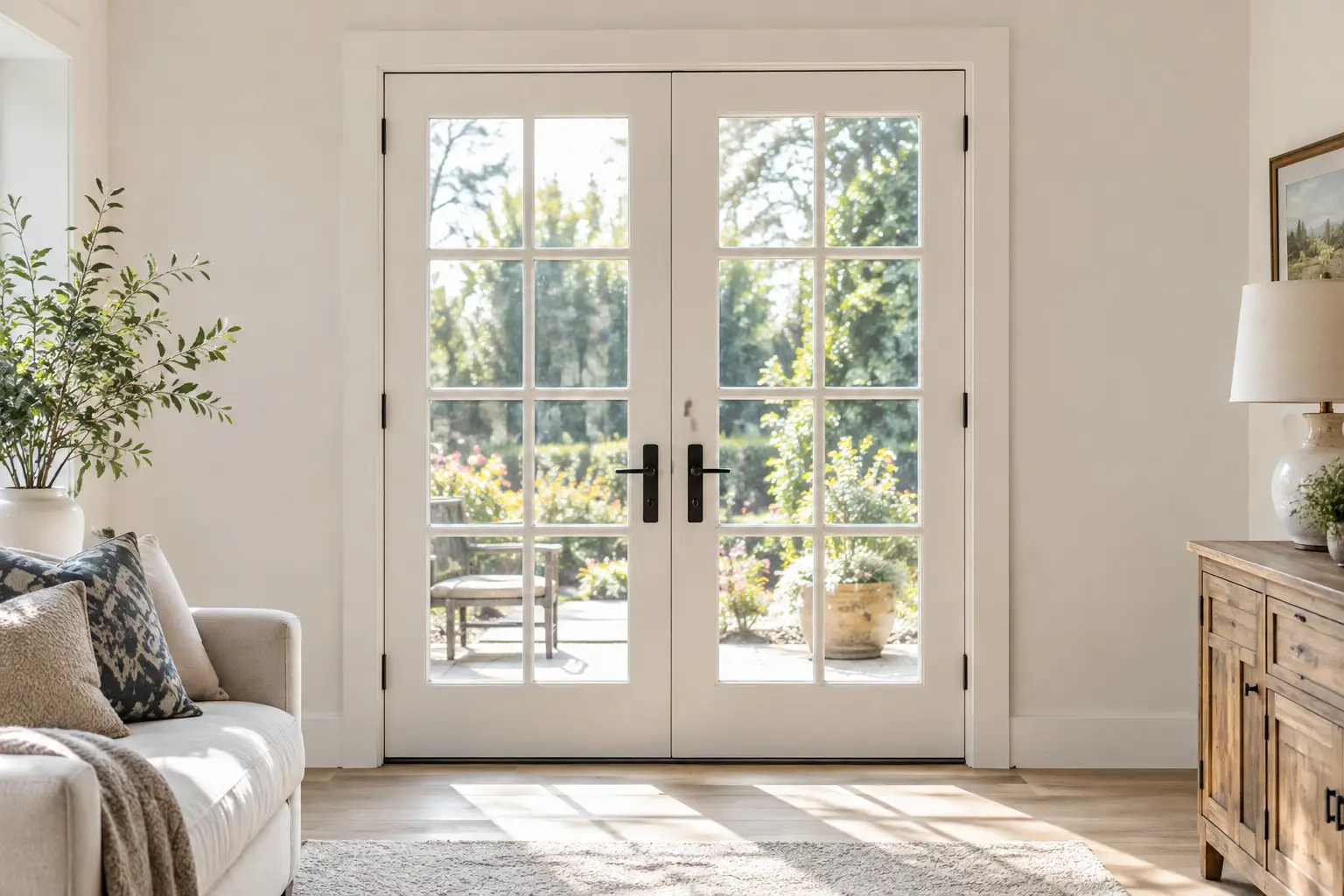
Shaker French and glazed doors
Shaker styling also translates exceptionally well to French doors and glazed internal doors. The same square or rectangular divisions can frame clear, frosted, reeded, or obscure glass. This allows light to move between spaces while preserving the strong geometry that makes shaker designs so appealing.
Glazed shaker doors are practical for home offices, dining rooms, living areas, and hallways with limited natural light. Clear glass provides openness, while frosted or textured glass adds privacy. Consider the function of both rooms before deciding. A bright office may benefit from clear panels, but a bathroom or private study generally needs obscured glazing.
Choosing the Right Material for the Job
A shaker door should look good on installation day and continue to perform through everyday use. Material selection affects cost, stability, weight, paint finish, and suitability for different parts of the home.
Solid timber doors provide natural character, weight, and long-term repairability. They are an excellent option where a stained or clear finish is part of the design direction. Timber also suits premium entrance doors and feature internal doors, although it requires appropriate sealing and maintenance, particularly where moisture, direct sun, or changing temperatures are involved.
Engineered timber and MDF-based painted doors are popular for interior shaker applications because they provide a smooth, consistent surface. They are especially effective when the goal is a crisp painted finish with clean panel edges. Quality construction matters here. A well-made engineered door offers reliable stability, while a lower-grade product may be more vulnerable to swelling or damage in damp environments.
For bathrooms, laundries, and other moisture-prone areas, select a door and finish designed for the conditions. Good ventilation helps, but it does not replace proper material choice, edge sealing, and professional installation.
Finish and Color: Where Shaker Doors Gain Character
White shaker doors remain popular for good reason. They brighten hallways, coordinate easily with trim, and give a home a fresh, enduring finish. A warm white can soften a traditional setting, while a cleaner white suits contemporary spaces with cooler undertones.
Painted color is an opportunity to make the door part of the design rather than a background element. Deep green, charcoal, navy, and muted clay tones can turn a pantry, study, or entrance door into a feature. In a home with white walls, a darker shaker door emphasizes the recessed panel detail and adds welcome contrast.
Natural timber finishes take a different approach. Instead of emphasizing color, they highlight grain and craftsmanship. This can create warmth in homes with stone, concrete, or neutral tile finishes. Keep in mind that not every shaker door is intended for staining. If a timber look is important, confirm that the selected material and construction will produce the finish you expect.
Consistency is usually the safest path for internal doors. Matching door color, architraves, and skirting creates a cohesive backdrop. Contrast can be highly effective, but it should be intentional and repeated elsewhere through cabinetry, window frames, or hardware.
Details That Make the Installation Look Complete
Even a premium door can look unfinished if the surrounding details are overlooked. Architraves should suit the door profile and the era of the home. Slim, square-edged trim supports a contemporary shaker look, while more substantial profiles can bring a classic four-panel door into balance.
Hardware is equally influential. Matte black levers create a sharp contemporary contrast against white doors. Brushed nickel and satin chrome are versatile and understated, while warm brass can add a more elevated, traditional feel. For a cohesive project, carry the same hardware finish across hinges, levers, privacy sets, and door stops where practical.
Door swing and clearance deserve attention before ordering. A panel layout may look perfect in a showroom but be less practical if it clashes with a nearby vanity, obstructs a corridor, or limits furniture access. Barn doors, bi-fold doors, or French doors may be better alternatives in tight or flexible spaces, while still carrying a shaker-inspired design language.
Professional measuring and fitting are particularly valuable when replacing doors in an older home. Openings are not always square, wall thicknesses vary, and existing frames may need adjustment. Precision in the jamb, reveals, hinges, and latch alignment is what gives a shaker door its clean, assured finish.
Matching Shaker Doors to Your Home Style
For a modern home, choose simple one- or two-panel doors, narrow rails, square trim, and restrained hardware. For a transitional home, two- or four-panel doors in soft neutrals bridge contemporary furnishings and more classic architectural elements.
Farmhouse and coastal interiors can carry slightly wider rails, warm whites, natural timber accents, and glazed shaker doors. In period-inspired homes, taller panels, substantial architraves, and carefully selected traditional hardware can create a more established look without resorting to unnecessary ornament.
The best shaker door design is rarely the most elaborate one. It is the one that fits the scale of the opening, performs properly in its location, and makes the surrounding room feel more complete. When the proportions, materials, and installation are handled with care, a shaker door becomes a lasting piece of the home rather than a finishing detail you notice only once.