A renovation can have new flooring, fresh paint, and beautiful cabinetry, yet still feel unfinished when the internal doors are dated, damaged, or poorly fitted. Choosing the best internal doors for renovations is about more than replacing a door leaf. It is an opportunity to improve privacy, reduce noise, bring consistency to the home, and give every room a more considered finish.
The right choice depends on how each room is used, the style of the property, and the condition of the existing frames, jambs, and trim. A door that looks right in a display can be the wrong choice if it is too light for a busy household, too detailed for a compact room, or unsuitable for an uneven older opening. A careful selection process delivers a result that looks intentional and performs well for years.
Start With How the Door Needs to Perform
Before comparing profiles and colors, consider what each door needs to do. A bedroom door should offer privacy and a sense of quiet. A bathroom door must suit a humid environment and allow for appropriate ventilation. A pantry, laundry, or linen closet may benefit from a practical, space-saving configuration rather than a conventional swing door.
This is particularly important in renovations where one home may have several different needs. A solid, sound-reducing door can make a meaningful difference between bedrooms and living spaces, while a glazed door can bring natural light into a dark hall or study. The best choice is rarely one door type used without thought throughout the entire house.
Think about daily traffic as well. Doors in hallways, children’s rooms, and frequently used bathrooms receive more knocks, closing force, and general wear than a guest room door. Investing in a more durable construction for these areas can prevent early dents, swelling, and alignment issues.
Choose the Right Door Construction
Door construction has a major effect on feel, longevity, sound control, and price. Two doors with a similar finish can perform very differently once installed.
Hollow-Core Doors for Budget-Focused Updates
Hollow-core doors are lightweight and cost-effective. They are often a sensible option when updating several low-traffic rooms, particularly when budget is a priority. Their lighter weight also makes them easier to operate and can reduce strain on hinges.
The trade-off is that hollow-core doors provide limited acoustic separation and are more susceptible to damage from hard impacts. They can be suitable for closets or secondary rooms, but may feel less substantial in a renovated home where the goal is a premium finish.
Solid-Core Doors for Everyday Comfort
Solid-core doors are one of the strongest choices for bedrooms, home offices, media rooms, and family living areas. Their denser construction gives them a noticeably weightier, more substantial feel and helps reduce the transfer of everyday noise.
They also tend to withstand regular use better than lighter alternatives. While the initial investment is higher, solid-core doors often provide better long-term value in homes where comfort, privacy, and durability matter. Correct hinge selection and professional fitting are essential because of their weight.
Engineered and Timber Options
Engineered doors provide stability and a refined appearance, making them well suited to many contemporary and traditional renovation projects. Depending on the product, they may be painted, veneered, or finished to show the character of the timber.
Timber doors bring warmth and individuality, especially in heritage homes or interiors with natural flooring and detailed trim. They do require careful finishing and ongoing consideration of moisture, temperature changes, and maintenance. In a high-humidity location, the door material and coating should be selected with the room conditions in mind.
Match the Door Style to the Renovation
Internal doors should support the architecture rather than compete with it. A well-chosen style can make a modest renovation feel more cohesive, while a mismatched profile can interrupt the visual flow from room to room.
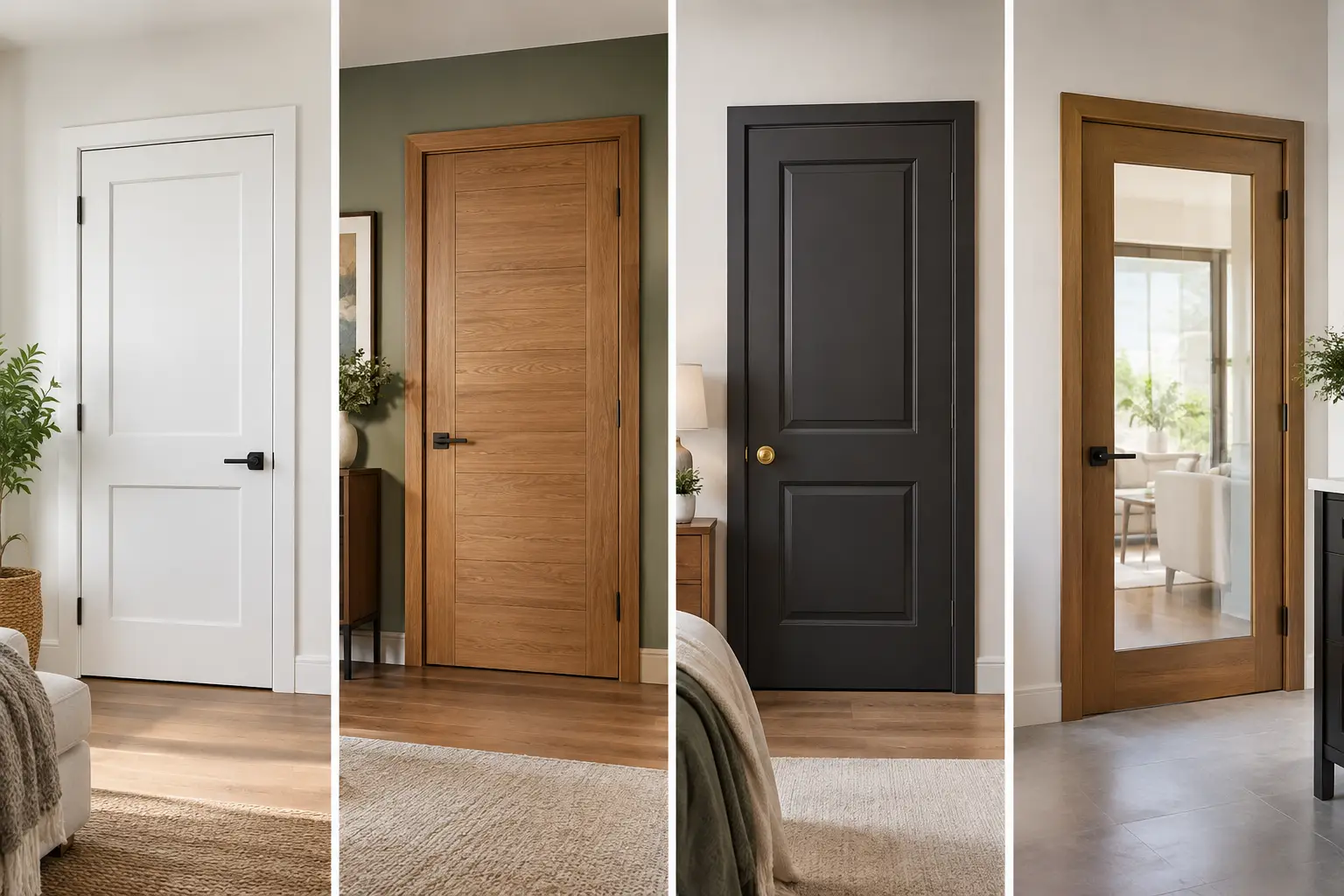
Flush doors are a strong choice for contemporary homes, apartments, and minimalist interiors. Their clean, flat surface works well with modern hardware and allows wall colors, flooring, and joinery to take center stage. They are also easy to maintain, which makes them practical for rental properties and busy households.
Shaker doors offer more detail without becoming overly ornate. Their simple recessed panels suit Hamptons, transitional, cottage, and modern farmhouse-inspired interiors. The profile adds character, particularly when paired with coordinated architraves and quality handles, but it still feels timeless enough for broad appeal.
For homes with traditional proportions or a more decorative interior, panel doors can create a sense of depth and craftsmanship. The key is choosing a panel layout that suits the scale of the room. A highly detailed door may look impressive in a large home with high ceilings, but can overwhelm a smaller hallway.
French doors are ideal when a room needs separation without losing light. They work beautifully between living areas, studies, dining rooms, and sunrooms. Clear glass creates an open feel, while textured, frosted, or reeded glass can provide more privacy. Keep in mind that glazed doors offer less acoustic control than solid-core doors, so they may not suit a home office used for confidential calls.
Consider Space Before Choosing a Configuration
A standard hinged door is reliable, versatile, and often the best option when there is enough clearance for it to open comfortably. However, renovations frequently uncover tight corners, narrow hallways, or furniture layouts that make a conventional swing impractical.
Barn doors can be an attractive solution for pantries, laundries, and feature openings. They create a strong design statement and do not require floor space for a door swing. However, they sit in front of the wall rather than sealing into a frame, so they are not the best choice where complete privacy, sound reduction, or odor control is required.
Bi-fold doors are useful for closets, laundries, and compact storage areas. They provide broad access without the full swing clearance of a hinged door, although they need quality tracks, hinges, and accurate adjustment to operate smoothly. For larger openings, paired doors or French doors can create a more balanced and generous result.
Do Not Overlook Frames, Trim, and Hardware
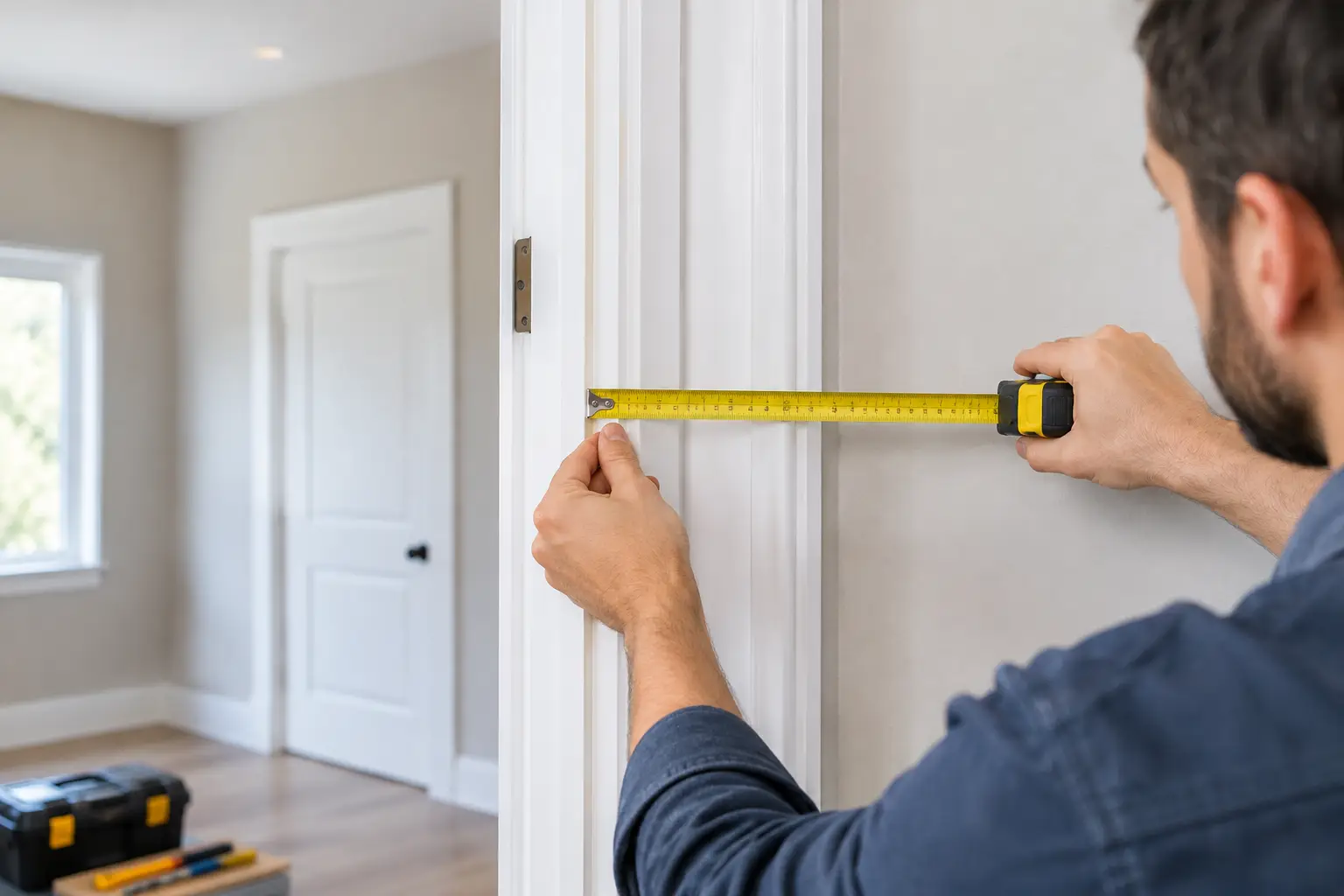
Even the best internal door can look disappointing if the jamb is out of square, the gaps are uneven, or the architraves do not match the renovation. Existing frames should be assessed before ordering doors. In older homes, openings are not always standard sizes, and a replacement door may require trimming, frame repair, or a new jamb for a precise fit.
Coordinating the door with skirting boards, architraves, and hardware gives the project a finished appearance. For example, a crisp white Shaker door with simple square trim creates a different effect from the same door paired with decorative molding and traditional lever handles. The details should work together rather than being selected separately.
Hardware also needs to match the room’s purpose. Privacy sets suit bedrooms and bathrooms, while passage handles work for general internal doors. Consider lever style, finish, latch quality, and hinge strength early, especially when installing heavier solid-core doors. Consistent hardware across the home is a small detail that makes a renovation feel professionally planned.
Plan Early, Install at the Right Stage
Door choices should be made early in the renovation, even if final installation happens later. This allows time to confirm opening sizes, door swings, hinge positions, finishes, and lead times. It also prevents flooring, cabinetry, or wall features from creating clearance conflicts.
Doors are typically fitted once major structural work, plastering, and messy trades are complete. Final painting and hardware installation may follow, depending on the door finish and project sequence. Professional installation is valuable because it addresses the details that determine performance: plumb frames, consistent reveals, smooth operation, secure hinges, and clean trim work.
If a door forms part of a required fire or smoke barrier, or if you are changing a room’s use, confirm the relevant building requirements before selecting a product. Appearance matters, but compliance and safety cannot be treated as an afterthought.
Invest Where You Will Feel the Difference
Not every internal door needs the same budget. It is often sensible to prioritize solid-core construction for bedrooms, offices, and high-use areas, then choose simpler options for closets or less frequently used rooms. This approach keeps the renovation balanced without compromising the spaces where better performance is most noticeable.
A professional measure, product recommendation, and installation service can also reduce costly rework. Meriton Doors helps homeowners and renovators select door styles, frames, trim, and hardware that suit both the home and the way it is used.
The most successful renovation doors do not simply fill an opening. They close quietly, sit squarely, suit the architecture, and make each room feel complete every time you walk through them.